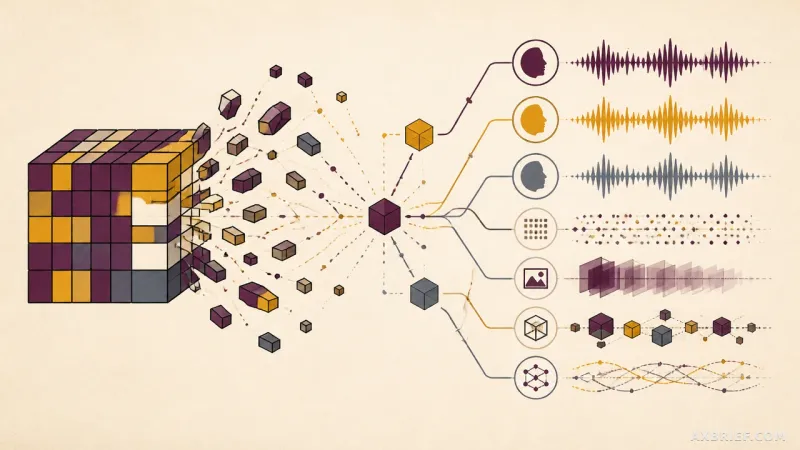
The modern AI developer lives on a treadmill of perpetual updates. Every few months, a new frontier model arrives, promising a leap in reasoning or a drop in latency, but the cost of upgrading is rarely just a version number change. For most teams, switching from one large language model to another means auditing hundreds of prompts, rewriting API integration logic, and enduring a grueling cycle of regression testing and redeployment. The friction of the upgrade process often outweighs the marginal gains of the new model, leaving enterprises stuck with aging tech because the cost of change is too high.
The Architecture of Capella iQ and the 76 Percent Benchmark
Couchbase has addressed this operational bottleneck through the development of Capella iQ, an AI-powered assistant designed to streamline the complexities of database administration. Rather than building a rigid pipeline tied to a single provider, Couchbase leveraged Amazon Bedrock to create a model-agnostic environment. Capella iQ is tasked with five critical high-stakes workflows: generating SQL++ queries (Couchbase's proprietary query language), recommending optimal indexes, providing detailed query explanations, generating iQ Insights, and maintaining context across multi-turn conversations. These are not simple chat tasks; they require high precision where a single hallucinated character in a query can lead to system errors.
To ensure these workflows met production standards, Couchbase did not rely on generic benchmarks. Instead, they developed an internal evaluation suite inspired by BIRD, a rigorous methodology for evaluating large-scale database Text-to-SQL performance. Through this framework, Anthropic's Claude Sonnet 4.5 emerged as the primary driver, achieving an internal accuracy rate of approximately 76%. This figure was not reached by simply measuring if the answer looked correct, but by applying a strict set of performance metrics. The team measured functional correctness, deterministic responses—ensuring the same input consistently yields the same output—latency for real-time responsiveness, and format consistency to ensure the system could programmatically parse the model's output.
This 76% accuracy mark serves as a baseline for a broader operational strategy. By establishing a standardized evaluation pipeline, Couchbase transformed model selection from a guessing game into a data-driven process. The ability to quantify performance across specific DB workflows means the team can evaluate any new model release against the same BIRD-inspired criteria and decide on an upgrade based on empirical evidence rather than marketing claims. This decoupling of the evaluation process from the model itself allows the organization to maintain a high quality bar while remaining agile enough to adopt the latest AI breakthroughs.
Decoupling Logic from Infrastructure via Provider Abstraction
While many organizations treat the LLM as a hard-coded dependency, Couchbase treats it as a swappable component. The core of this strategy is a provider-agnostic abstraction layer that separates the application logic from the underlying model API. In a traditional setup, changing a model might require a developer to modify the API endpoint, update the request payload structure, and redeploy the entire service. Couchbase eliminated this by running Capella iQ as a microservice within an Amazon EKS cluster, connecting to the Bedrock runtime via private Amazon VPC interface endpoints.
This architectural choice shifts the power of model management from the code to the configuration. When a new model version is released or a different provider is preferred, the transition happens at the namespace level. A simple configuration update redirects the traffic to a new model without requiring a single line of code to be changed or the service to be taken offline. This eliminates the risk of deployment errors and allows the engineering team to focus on prompt optimization and performance tuning rather than the plumbing of API integrations.
To ensure this flexibility does not come at the cost of reliability, Couchbase implemented a Cross-Region Inference (CRIS) structure. By distributing inference requests across us-east-1, us-east-2, and us-west-2, the system avoids the pitfalls of single-region dependency. CRIS provides an automated failover mechanism; if an endpoint in one region experiences performance degradation or hits a throttling limit, the system intelligently routes traffic to a healthy region. This prevents the cascading failures often seen when a single AWS region faces congestion, ensuring that Capella iQ remains available regardless of localized infrastructure stress.
This shift toward serverless inference via Amazon Bedrock further reduces the operational burden. By removing the need for pre-provisioning server capacity or managing GPU clusters, Couchbase can handle sudden bursts in traffic without manual intervention. The combination of a provider-agnostic layer and a multi-region serverless backend transforms the LLM from a fragile dependency into a resilient utility. The real insight here is that the value of an AI system is not just in the intelligence of the model it uses today, but in the ease with which it can adopt the intelligence of tomorrow.
Beyond the technical routing, the architecture addresses the stringent demands of enterprise security. By keeping all inference traffic within the AWS environment, Couchbase inherits the security posture of Amazon Bedrock, including compliance with SOC, HIPAA, and ISO standards. This is a critical requirement for database customers who demand strict data residency controls and guaranteed privacy. The team also recognized that the most dangerous failures are not total outages, but partial degradations—where a region becomes slow but not dead. To combat this, they built a custom test harness in collaboration with AWS to simulate throttling and latency spikes, fine-tuning timeout and retry settings to ensure the CRIS failover triggers before the end user notices a delay.
Ultimately, the transition from a model-centric to an architecture-centric approach solves the fundamental tension of the LLM era: the need for stability versus the need for rapid evolution. By investing in an abstraction layer and an automated benchmarking pipeline early, Couchbase has reduced the cost of model migration to a simple configuration change. This ensures that the system can evolve as quickly as the underlying models, without the recurring tax of total re-engineering.