Every software engineering lead has faced the same invisible ceiling: the senior engineer bottleneck. In most high-performing teams, the speed of delivery is not limited by the number of keyboards clicking, but by the availability of the one or two architects who actually understand the systemic implications of a design choice. For years, the only way to scale this expertise was through the slow, organic process of pair programming and grueling code reviews, a transfer of tacit knowledge that takes years to mature. The industry has long accepted that senior judgment is a scarce, non-scalable resource.
The Architecture of an Agentic Organization
Endava, a global software services provider operating across Europe, the Americas, and Asia, is attempting to break this bottleneck by redefining its operational identity as an Agentic Organization. Rather than treating AI as a mere autocomplete tool for syntax, Endava has integrated Codex into the very fabric of its delivery lifecycle. The goal is the systemic replication of senior-level expertise, effectively embedding the decision-making frameworks of veteran architects into AI agents that can guide junior developers in real-time.
Joe Deranby, CTO for Europe, notes that the fundamental nature of engineering work at the firm has shifted. The primary activity is no longer the act of writing code from scratch, but the supervision of outputs generated by Codex. In the traditional model, the path from requirement analysis to design and finally to build was a sequential chain, with each stage requiring a hand-off between specialists. This linear progression created natural friction and delays. By utilizing Codex, Endava has collapsed these stages into a unified flow where analysis, design, and construction happen almost simultaneously.
This shift is most evident in the firm's handling of massive documentation tasks. In one specific instance, the engineering team was tasked with analyzing thousands of pages of legal contracts to derive software requirements. In a traditional setting, this would be a multi-week endeavor involving constant back-and-forth between legal and technical teams. Endava replaced this slog by feeding the transcripts of two-hour deep-dive meetings into Codex. The AI processed the nuance of the discussions and the complexity of the contracts, compressing weeks of analysis into just two one-hour follow-up meetings to finalize the specifications.
Beyond internal efficiency, this approach has transformed client interactions. During live sessions, Endava engineers now use Codex to generate software architecture diagrams and design documents in real-time. Instead of presenting a static document and waiting days for feedback, the team iterates on the architecture visually and textually while the client is still in the room. This immediate feedback loop eliminates the ambiguity that typically plagues the early stages of the software development lifecycle.
From Labor Supply to Knowledge Assets
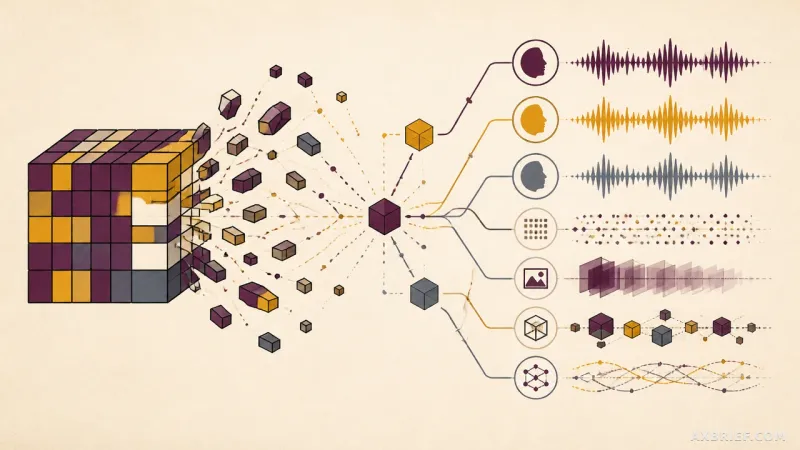
The critical distinction in Endava's approach lies in the mechanism of knowledge transfer. Most AI implementations focus on productivity—doing the same task faster. Endava is focusing on judgment—doing the task at a higher level of sophistication. Mike Krolnik, SVP of Agentic Architecture, has designed a system where the implicit knowledge of a senior architect is converted into explicit rules and prompts within Codex. When a senior architect defines a specific design direction or a set of constraints, Codex translates that high-level intent into actionable guidance for a junior developer.
This creates a reversal of the traditional mentorship dynamic. Previously, a junior developer would encounter a complex architectural problem, stop working, and wait for a senior's availability to receive guidance. Now, the junior developer accesses the senior's judgment via Codex in real-time. The AI doesn't just provide the answer; it applies the specific architectural principles and best practices favored by the firm's top experts. This effectively raises the floor of the entire engineering organization, allowing junior staff to execute high-complexity tasks that were previously the exclusive domain of senior architects.
This capability signals the beginning of the end for the man-month billing model that has dominated the system integration and outsourcing industry for decades. The man-month model is predicated on the idea that value is proportional to the number of hours worked by a specific grade of engineer. However, when the judgment of one senior architect can be replicated across ten different teams simultaneously via an agent, the scarcity of senior labor vanishes. The bottleneck is no longer the number of experts available, but the speed at which those experts can codify their judgment into the AI system.
By unifying analysis, design, and build into a single toolset, Endava has removed the transition costs associated with professional hand-offs. The friction of moving a project from a business analyst to an architect and then to a developer is replaced by a continuous stream of data. The result is a project lead time that is drastically shorter and a quality level that is standardized across the organization, regardless of the individual developer's years of experience.
Endava has effectively turned senior engineering experience into a product. By treating judgment as data that can be scaled, the firm is moving away from a labor-supply model toward a knowledge-asset model. In this new paradigm, the competitive advantage of a software firm is no longer determined by the size of its payroll or the prestige of its individual hires, but by the density and replicability of the judgment embedded in its agentic systems.