The cycle of hardware obsolescence has long been the most expensive part of the gaming experience. For years, the ritual remained the same: wait for a new GPU architecture, save thousands of dollars, and rebuild a PC just to maintain a playable frame rate in the latest AAA titles. This hardware treadmill creates a massive barrier to entry, where the quality of a player's experience is dictated by the size of their wallet and the availability of silicon. This week, NVIDIA is doubling down on a different philosophy, attempting to decouple high-end performance from physical ownership.
The Expansion of the Cloud Library and the Indian Market
NVIDIA is aggressively expanding the reach of GeForce NOW, beginning with a significant content update and a strategic geographic push. On September 3, the service adds Onimusha: Way of the Sword, Capcom's latest action-adventure title. Set in a dark fantasy version of Edo-period Japan, the game tasks players with using the legendary Oni Gauntlet to battle Genma demons. To build momentum before the full release, NVIDIA is providing a playable demo available through the GeForce NOW app's demo row, allowing users to add the title to their wishlists immediately.
Beyond Onimusha, the library grows with five new additions, most notably Denshattack!. This physics-based destruction game focuses on the chaotic art of derailing trains to cause massive collisions. Because the game is designed for quick sessions and high-impact visuals, it serves as a primary showcase for the low-latency streaming capabilities of the platform across various devices.
Simultaneously, NVIDIA has transitioned its Indian operations from beta to a full official launch. The move removes the previous waitlist system, granting immediate access to millions of potential users in one of the world's fastest-growing gaming markets. To ensure this growth isn't throttled by payment friction, NVIDIA has integrated the Unified Payments Interface (UPI), India's dominant real-time payment system. By allowing users to purchase memberships and daily passes via UPI, NVIDIA is removing the traditional credit card barrier that often hinders subscription growth in the region.
The Shift Toward GPU-as-a-Service
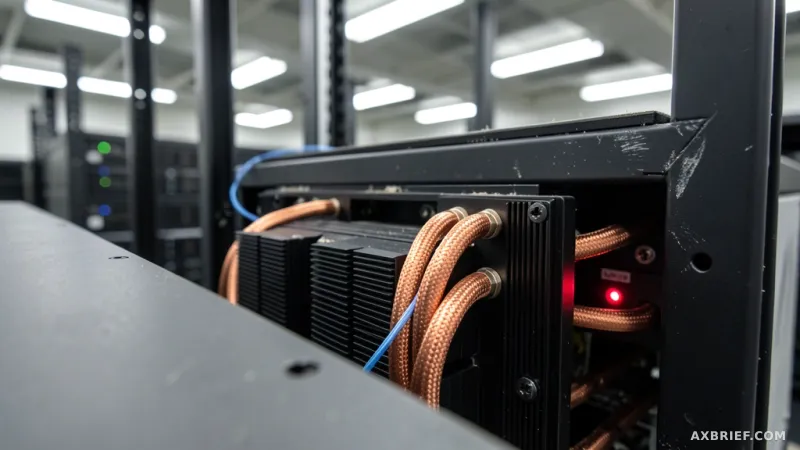
While the new games and market expansion are the immediate news, the real story lies in the technical tiering of the service. Users on the Ultimate membership now have access to RTX 5080-class performance. This is not a local hardware upgrade but a shift in where the computation happens. The heavy lifting is performed on remote servers equipped with high-end GPUs, with only the resulting video stream sent to the user's device.
To make a cloud-based experience feel indistinguishable from local hardware, NVIDIA is deploying a specific stack of acceleration technologies. Ray Tracing handles the physical simulation of light, while NVIDIA DLSS (Deep Learning Super Sampling) uses AI to upscale images, maintaining high visual fidelity while boosting frame rates. The most critical component for the cloud, however, is NVIDIA Reflex. By optimizing the pipeline between input and output, Reflex minimizes the inherent latency of streaming, reducing the input lag that typically plagues cloud gaming.
This architecture transforms the GPU from a product you buy into a utility you rent. The service is structured into four distinct tiers to accommodate different budgets and needs: a free Basic plan, a Performance tier, the high-end Ultimate membership, and flexible Day passes. This allows users to bypass the massive upfront cost of a gaming rig and instead opt for a monthly or daily operational expense.
This is the practical application of GPU-as-a-Service (GPUaaS). By treating compute power as a streamable resource, NVIDIA is mirroring the shift seen in the enterprise AI sector, where companies rent H100s rather than building their own data centers. The integration of local payment infrastructures like UPI in India is a calculated move to accelerate this transition from ownership to subscription. For the user, the benefit is clear: the ability to run a high-end game on a Mac, a mobile phone, a handheld device, or a TV without worrying about SSD space or thermal throttling.
The era where a gaming experience was defined by the components inside a chassis is ending. The new benchmark for high-end gaming is no longer the hardware you own, but the subscription tier you choose.