For any developer building video-native AI applications, the token tax has always been the primary bottleneck. Until now, analyzing a long-form video meant a brutal trade-off: either pay a massive premium to process every frame or aggressively downsample the footage and hope the model didn't miss the one critical second that mattered. This linear relationship between video length and cost has effectively capped the scalability of autonomous video agents, turning a 90-minute lecture or a three-hour security feed into a financial liability.
The Efficiency Leap in the Gemini Flash Lineup
Google is attempting to break this linear cost curve with the introduction of agentic video understanding across its Flash model family. The update spans Gemini 3.7 Flash, 3.6 Flash, and 3.5 Flash-Lite, introducing a system that allows the model to autonomously decide which segments of a video require attention. The results are stark. According to Google, this approach reduces token consumption by up to 88 percent, which translates to a cost reduction of up to 66 percent, all while simultaneously increasing accuracy by up to 7 percent.
These capabilities are immediately available via the Gemini API through Google AI Studio and the Gemini Enterprise Agent Platform. The system supports both direct video file uploads and YouTube URLs. Crucially, Google is not charging a premium for this agentic functionality; it follows standard Gemini API token pricing, making the cost savings a direct benefit to the developer's bottom line. For enterprise users, the Gemini Enterprise Agent Platform provides the infrastructure to integrate these agentic workflows into company-wide video analysis pipelines.
[IMG:https://storage.googleapis.com/gweb-uniblog-publish-prod/images/agentic-video___keyword__blog-he.width-2200.format-webp.webp]
From Static Sampling to the Agentic Loop
To understand why this is a fundamental shift, one must look at how AI has traditionally handled video. The industry standard has been static processing, where a model reads a video at a fixed rate—typically one frame per second (FPS). In this regime, the model is a passive observer, consuming a predetermined sequence of images regardless of whether the scene is a static wall or a high-speed car chase.
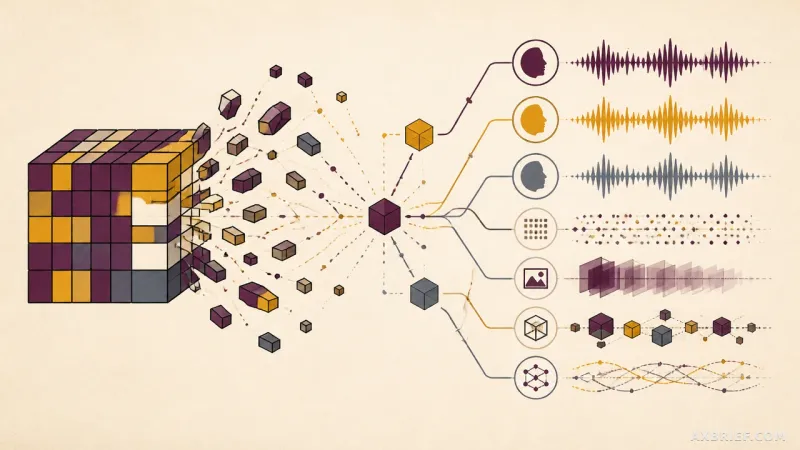
Gemini 3.7 Flash replaces this passive consumption with an Agentic Loop. Instead of reading the whole file, the model uses native video tools to dynamically search and scan for target segments. It treats the video as a database to be queried rather than a stream to be absorbed. The model can selectively trigger different modalities, choosing when to rely on visual frames, when to pivot to the audio track, and when to lean on the transcript to find the necessary signals.
This process operates through a three-stage hierarchy: search, scan, and inspect. First, the model performs a search using low-resolution frames or transcripts to identify a general area of interest. Once a potential lead is found, it enters the scan phase, skimming the segment to pinpoint the exact moment of relevance. Finally, it performs an inspection, loading high-resolution frames or conducting a deep audio analysis of that specific slice of time. This removes the need for developers to manually clip videos before sending them to the API.
Implementing this shift is a simple configuration change. Developers only need to set the processing parameter to agentic in their API call:
{
"processing": "agentic"
}
This single line of code transforms the model from a linear reader into a goal-oriented investigator. The model can now grasp the overall flow of a video and then decide to re-read a suspicious segment or hunt for a specific keyword in the audio track based on its own reasoning.
Breaking the Pareto Frontier of Video AI
This dynamic approach solves the dilemma of long-form content. In a 10-minute guide or a multi-hour recording, static processing forces a choice between exorbitant costs or missing fine-grained details. By decoupling the analysis resolution from the total video length, Gemini 3.7 Flash avoids the linear token explosion that typically accompanies longer files.
On the LongVideoBench, a benchmark designed to test the understanding of extended video content, Gemini 3.7 Flash demonstrated a superior ability to synthesize information scattered across different timestamps. It successfully performed high-difficulty reasoning tasks while using significantly fewer tokens than static analysis.
[IMG:https://storage.googleapis.com/gweb-uniblog-publish-prod/images/agentic-video__evals.width-1200.format-webp.webp]
In the world of AI optimization, there is usually a Pareto Frontier—a limit where you cannot increase accuracy without increasing cost. Gemini 3.7 Flash effectively shifts this frontier. It achieves higher accuracy and lower costs simultaneously, making it a viable option for enterprise environments that must process massive libraries of video data without bankrupting their compute budget.
[IMG:https://storage.googleapis.com/gweb-uniblog-publish-prod/images/agentic-video__evals_table2.width-1200.format-webp.webp]
Sub-Second Precision and Industrial Application
Beyond cost, the agentic loop enables capabilities that were previously nearly impossible with sampled frames. The model can now perform sub-second moment retrieval, capturing events that occur in a fraction of a second. This is critical for detecting anomalies in security footage or performing precise object counting.
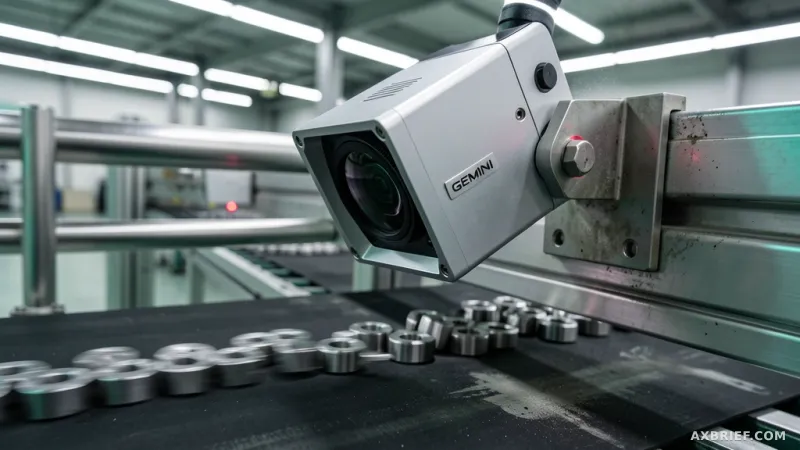
When the model detects fast motion, it can dynamically increase the FPS for that specific segment. By zooming in temporally, it can accurately count repetitions or track rapid movements without needing to process the entire video at a high frame rate. This makes the model an ideal tool for sports analytics or industrial quality control on assembly lines, where a missed frame could mean a missed defect.
This efficiency also extends to the needle-in-a-haystack problem. When searching for a tiny piece of information within hours of footage, the agentic model avoids the waste of processing the entire dataset. It navigates the video strategically, arriving at the correct answer with a fraction of the computational overhead.
[IMG:https://storage.googleapis.com/gweb-uniblog-publish-prod/images/agentic-video__diagram.width-1200.format-webp.webp]
The Path to Autonomous Video Knowledge Bases
This technology is moving quickly from the API to the consumer layer. Google is rolling out these agentic capabilities to Flash and Flash-Lite users within the Gemini app. More significantly, this logic will be integrated into the Ask YouTube feature in the coming months. Current YouTube AI tools rely heavily on text-based captions; the new system will allow the model to dynamically scan visual frames and audio, allowing it to answer questions about what is actually happening on screen rather than just what is being said.
For professional environments, this opens the door to automated video indexing. Companies with vast libraries of technical tutorials or manuals can now build knowledge bases where the AI automatically marks key scenes and extracts specific instructions without manual human tagging. By reducing the GPU resource consumption and processing time, the barrier to entry for large-scale video intelligence has effectively collapsed.
For those managing long-form educational content or corporate archives, the transition to agentic processing via Google AI Studio or the Gemini Enterprise Agent Platform represents the most viable path toward cost-effective, high-precision video automation.