
The current era of AI development has shifted from simple prompt-and-response interactions to the deployment of complex, autonomous agents. For developers building these agentic workflows, the primary bottleneck is no longer just model intelligence, but the compounding cost of high-frequency API calls. Every loop, every tool-use verification, and every iterative refinement adds to the token bill, often making sophisticated AI agents economically unviable at scale. This week, the industry is witnessing a calculated move to break that cost barrier while simultaneously pushing the compute boundary from the cloud directly into the user's pocket.
The Infrastructure of Efficiency
Google has released Gemini 3.7 Flash, a model specifically engineered to lower the financial barrier for high-volume AI operations. The most striking detail is the pricing: Gemini 3.7 Flash reduces the cost per million tokens by 50% compared to its predecessor, Gemini 3.6 Flash. This price cut arrives just three weeks after the release of 3.6 Flash, signaling an aggressive acceleration in Google's update cycle. The model is heavily optimized for coding automation and agent-based workflows where frequent, low-latency calls are the norm.
Beyond the cost reduction of the Flash series, Google is expanding its multimodal capabilities with Gemini 3.5 Transcribe. This model focuses on real-time speech-to-text (STT) conversion, maintaining high accuracy even in environments with significant ambient noise or heavy technical jargon. It is designed for industrial field-work and professional documentation where context-aware transcription is critical.
For visual content creators, Gemini Omni 1.1 Flash introduces studio-grade video production tools. The model supports 4K upscaling, scene expansion, and frame interpolation, allowing creators to extend the length of a shot or increase resolution with precision. This capability is integrated across Google Flow, Google AI Studio, the Gemini Enterprise Agent Platform, and the consumer Gemini app, ensuring a unified production pipeline from prototype to final asset.
Parallel to these cloud updates, the hardware ecosystem is evolving with the announcement of the Pixel 11 series at Made by Google 2026. The lineup includes the Pixel 11, Pixel 11 Pro, Pixel 11 Pro XL, and the Pixel 11 Pro Fold. At the heart of these devices is the Google Tensor G6 chipset. The Tensor G6 is designed to shift a larger portion of the AI workload from cloud servers to the device itself, primarily by powering Gemini Nano.
Gemini Nano serves as the lightweight, on-device inference engine. By processing data locally, it eliminates the need for external network requests, which significantly reduces latency and mitigates privacy risks associated with data transmission. [IMG:https://storage.googleapis.com/gweb-uniblog-publish-prod/images/1_46RzYzW.width-1200.format-webp.webp]
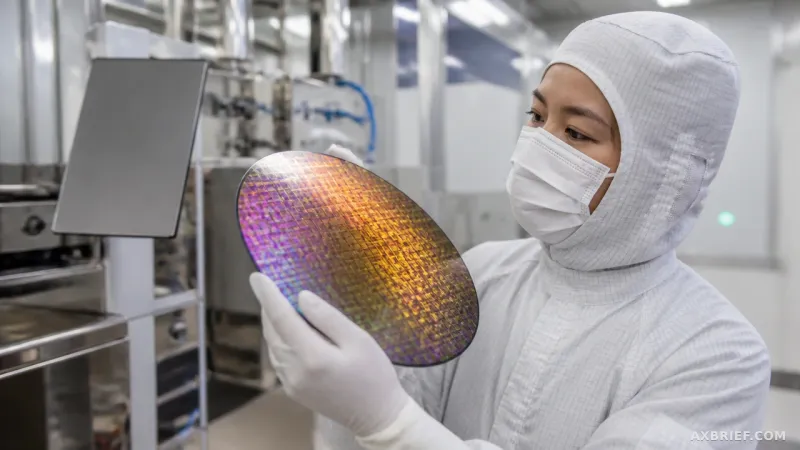
The technical efficiency of the Tensor G6 stems from its Neural Processing Unit (NPU). The NPU is a dedicated hardware accelerator optimized for matrix multiplication, the fundamental mathematical operation driving AI models. By offloading these tasks from the CPU, the Pixel 11 series can maintain real-time AI functionality while minimizing battery drain. This hardware standardization across the entire Pixel 11 range ensures that even the Pro Fold delivers consistent performance for text summarization and local reasoning without an internet connection.
The Vertical Integration Pivot
When viewed in isolation, a 50% price cut or a new NPU seems like incremental progress. However, the convergence of these updates reveals a broader strategy of vertical integration. Google is effectively creating a seamless continuum between the cloud and the edge. By slashing the cost of Gemini 3.7 Flash, they are encouraging developers to build more complex agents in the cloud, while the Tensor G6 ensures those same users have a high-performance, private entry point on their mobile devices.
This strategy is already reflected in user behavior. The Gemini app has surpassed 1 billion monthly active users (MAU), the fastest growth rate for any product in the company's history. The data reveals a fundamental shift in how humans interact with AI: 63% of users now prefer voice conversations over text input. Furthermore, there is a demographic divergence in usage, with parents utilizing AI for daily task management at a rate 43% higher than the general user base. This suggests that AI is moving away from being a search replacement and toward becoming a functional life-management layer.
Creative workflows are also consolidating. With over 150 million images generated daily, small business owners are emerging as power users, integrating Gemini's image, video, and audio generation into a single multimedia production pipeline. This transition from single-mode tools to multimodal ecosystems is further supported by Gemini Live, which now includes Personal Intelligence, Daily Brief, Spark, and hands-free inbox management. The AI is no longer just answering questions; it is executing delegated tasks.
To secure the next generation of this ecosystem, Google is offering a one-year free Google AI plan to eligible college students worldwide. This is a strategic move to embed high-performance AI tools into the academic and research workflow, ensuring that the future workforce is natively proficient in the Gemini ecosystem.
This openness extends to the developer community through Gemma. With over 1 billion downloads, Gemma's open-weight architecture allows developers to fine-tune models for specialized environments, ranging from medical facilities to underwater and space exploration. By enabling AI to run on low-power edge infrastructure, Gemma reduces the global dependency on centralized cloud clusters. [IMG:https://storage.googleapis.com/gweb-uniblog-publish-prod/images/AI-title_0_4.width-1200.format-webp.webp]
Perhaps the most significant application of this open approach is WeatherNext 2. This science-specific model, with its research published in Nature, provides precise predictions for cyclone paths, intensity, and wind structures. By open-sourcing the weights and architecture, Google allows the global scientific community to verify and refine the algorithms, directly improving public disaster response systems. [IMG:https://storage.googleapis.com/gweb-uniblog-publish-prod/images/2_WZr4kDi.width-1200.format-webp.webp]
This commitment to planetary-scale AI is further evidenced by Operation Blue Skies. In collaboration with the UK government and the aviation industry, Google is using AI to predict and avoid the formation of aircraft contrails. By adjusting flight paths based on AI forecasts, the project aims to reduce the contribution of aviation to global warming across the North Atlantic corridors. [IMG:https://storage.googleapis.com/gweb-uniblog-publish-prod/images/3_zmfCPTK.width-1200.format-webp.webp]
Google is no longer just competing on the intelligence of a single model, but on the accessibility and integration of an entire AI fabric that spans from the smallest edge device to the largest climate model.



