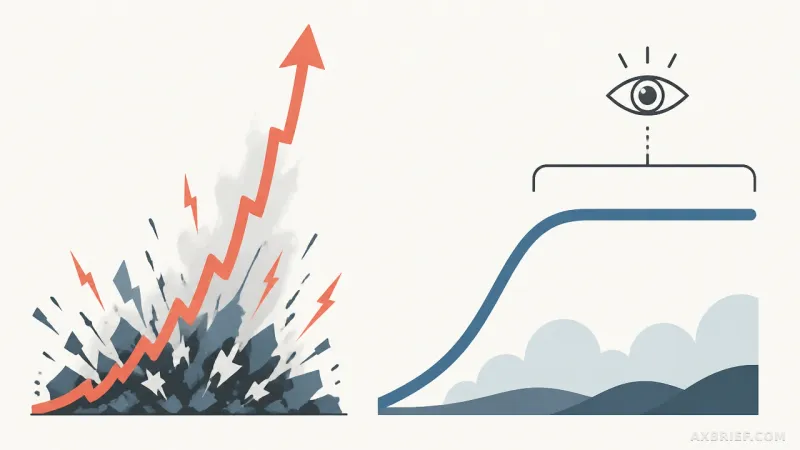
For years, the promise of open-weight models has come with a hidden tax: the infrastructure burden. To move a high-performance model into production, engineering teams typically face a grueling cycle of provisioning high-end GPU clusters, managing multi-gigabyte weight files, and optimizing CUDA environments. This operational friction often forces a compromise, pushing developers toward closed-source APIs not because the intelligence is superior, but because the deployment is seamless. This week, that trade-off effectively disappears as Google DeepMind's Gemma 4 family lands on Amazon Bedrock as a fully managed service.
The Architecture of Efficiency and Multimodality
Gemma 4 arrives as a suite of three distinct variants designed under the Apache 2.0 license, ensuring that the weights remain open for independent evaluation and fine-tuning. The lineup consists of Gemma 4 31B, Gemma 4 26B-A4B, and Gemma 4 E2B, each targeting a specific balance of intelligence and compute overhead. Beyond the raw parameter counts, the model family introduces native multimodal capabilities, allowing the simultaneous processing of text and images. This enables complex visual analysis and instruction-following tasks without requiring a separate vision encoder pipeline.
Language accessibility is another core pillar of the release. The models were pre-trained on over 140 languages, with immediate, high-proficiency support for more than 35. This makes the family particularly potent for global customer service systems and multilingual document understanding pipelines that previously required expensive, task-specific fine-tuning.
To handle massive datasets, Gemma 4 31B and 26B-A4B support a context window of up to 256K tokens. This is achieved through a hybrid attention mechanism that alternates between local and global attention. Local attention captures immediate token relationships to maintain precision, while global attention tracks the broader narrative arc, allowing the model to process vast amounts of data without the memory spikes typically associated with long-context windows.
Efficiency is further pushed through two distinct architectural innovations: Mixture-of-Experts (MoE) and Per-Layer Embeddings (PLE). The Gemma 4 26B-A4B model utilizes MoE, maintaining a total parameter count of 25.2B but activating only 3.8B parameters per token. This allows the model to retain the broad knowledge base of a large model while operating with the latency and cost profile of a 4B-class model. Similarly, the Gemma 4 E2B model employs PLE to optimize embeddings at each layer, reducing redundant parameters. While the total count is 5.1B, the effective operational parameters are lowered to 2.3B, drastically reducing GPU memory requirements for edge deployments.
Beyond static responses, Gemma 4 introduces a dedicated reasoning mode. When activated, the model outputs its internal thought process as text before delivering the final answer. This transparency allows developers to audit the logical steps and hypothesis testing the model performed, which is critical for debugging complex mathematical proofs or software engineering tasks. This is complemented by native function calling, enabling the generation of structured data to trigger external APIs and build autonomous agentic workflows.
The Shift from Infrastructure to Intelligence Validation
While the architectural specs are impressive, the real disruption lies in the performance-to-resource ratio. According to data from Artificial Analysis, the Gemma 4 31B model achieved an Intelligence Index score of 39. To put this in perspective, the median score for open-weight models in the 4B to 40B parameter class is 15. By more than doubling the class median, Gemma 4 31B proves that parameter efficiency can yield reasoning capabilities that rival much larger, more expensive models.
However, the most significant shift for developers is the introduction of the `bedrock-mantle` endpoint. Amazon Bedrock has implemented a specialized interface that allows Gemma 4 to be accessed via an OpenAI-compatible API. The connection URL is structured as follows:
`https://bedrock-mantle.{region}.api.aws/openai/v1`
By providing Chat Completions and Responses APIs that mirror the OpenAI standard, AWS has removed the need for developers to write custom API wrappers or rewrite their communication logic. If a team is already using the OpenAI Python or TypeScript SDKs, migrating to Gemma 4 is as simple as updating the base URL and the model ID. This transforms the process of model selection from a weeks-long infrastructure project into a configuration change that takes seconds.
Security and governance are handled through the existing AWS Identity and Access Management (IAM) framework. For teams requiring basic inference capabilities, the `AmazonBedrockMantleInferenceAccess` policy provides the necessary `bedrock-mantle:CreateInference` and `bedrock-mantle:CallWithBearerToken` permissions. For those managing the full lifecycle, including fine-tuning and project administration, the `AmazonBedrockMantleFullAccess` policy is available.
To mitigate the risk of credential leakage, the system utilizes short-lived API keys with a maximum validity of 12 hours. In environments relying solely on native AWS credentials, developers can use the `aws-bedrock-token-generator` package to programmatically generate bearer tokens, ensuring a secure and automated inference pipeline.
For practitioners deciding which variant to deploy, the choice depends entirely on the workload. Gemma 4 31B is the clear choice for deep analysis, microservice architecture design, and automated unit test generation where reasoning depth is paramount. The 26B-A4B model is optimized for production services that require a balance of high knowledge capacity and low latency. Finally, the E2B model serves as the engine for ultra-lightweight applications and edge environments where memory costs must be kept to an absolute minimum.
These models can be explored and integrated via the Amazon Bedrock model catalog. Because all three variants share a common interface—supporting system prompts, structured tool calls, and thought-process output—developers can build a single API surface and swap model IDs to find the optimal cost-to-performance ratio for their specific use case.
The era of managing weights and provisioning GPU servers as a prerequisite for using open models is ending. By combining Google's architectural efficiency with AWS's managed infrastructure and OpenAI's API ubiquity, the barrier to entry for high-performance AI has been lowered to a single URL change.