
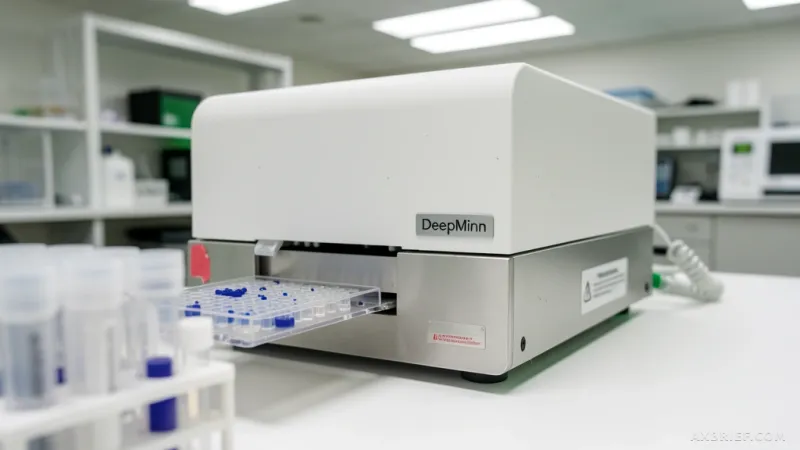
The conversation surrounding AI safety has long been dominated by the digital realm, focusing on chatbot hallucinations, prompt injections, and the filtering of toxic text. However, a more visceral tension is emerging in the laboratories where AI is no longer just predicting words, but designing the building blocks of life. As generative AI gains the ability to map protein structures and analyze genomic sequences with unprecedented precision, the industry faces a dual-use dilemma: the same tool that accelerates a life-saving vaccine can, in the wrong hands, be used to engineer a novel pathogen. This shift from digital risk to biological risk has moved the goalposts for safety, transforming AI governance into a matter of global biosecurity.
The Architecture of Bioresilience and the 15-Partner Coalition
To address these physical threats, Google DeepMind and Isomorphic Labs have spent the last 12 months building a comprehensive bioresilience strategy. This initiative is not a solitary effort but the result of deep integration with over 15 external partners, including government agencies, biosecurity organizations, and specialized research groups. The primary objective is to create a systemic shield that prevents malicious actors from using AI to design dangerous biological materials while simultaneously enhancing the global ability to detect and neutralize emerging diseases. This strategy moves beyond simple software patches, establishing a managed ecosystem where AI operates within a strict framework of biological oversight.
At the core of this strategy is a tripartite operational model consisting of prevention, detection, and response. Prevention focuses on the upstream side of the risk, identifying and blocking the pathways through which an AI model could be misused to create a biological threat. Detection involves the real-time monitoring of the biological environment to catch the emergence of new pathogens before they trigger a pandemic. Response is the final stage, leveraging AI to rapidly design and distribute medical countermeasures, such as vaccines or targeted therapeutics, to neutralize a threat once it is identified. To ensure these powerful tools do not leak into the wild, Google DeepMind and Isomorphic Labs have implemented a closed collaboration structure. Access to these AI models and autonomous agents is restricted to verified experts and trusted partners, ensuring that the capability to design biological systems remains in the hands of those committed to public safety.
This framework is powered by a suite of specialized AI tools that cover the entire biological pipeline. AlphaFold provides the foundational 3D mapping of nearly all known proteins, offering the structural data necessary to understand how a pathogen interacts with a human cell. Isomorphic Labs extends this capability through IsoDDE, an AI-driven drug design engine that explores biological systems with the precision required for actual clinical application. Complementing these is AlphaGenome, which analyzes and defines genomic functions to accelerate the discovery of treatments and the design of preemptive defenses. To handle the massive data requirements of metagenomic sequencing—the process of analyzing all genetic material in an environmental sample—the teams deployed AlphaEvolve. This agent optimizes the production and analysis algorithms of sequencing data, which significantly reduces the cost and time required to track the spread of infectious diseases and identify new biological patterns.
From Digital Filters to CBRN Risk Management
While the technical capabilities of AlphaFold and AlphaEvolve are impressive, the true innovation lies in the shift from performance-centric AI to safety-centric AI. The realization is that a model's value is no longer measured solely by its accuracy in predicting a protein fold, but by the robustness of the guardrails preventing its misuse. This is where the strategy pivots from biological research to national security. By integrating their efforts into the realm of CBRN (Chemical, Biological, Radiological, and Nuclear) risk management, Google DeepMind and Isomorphic Labs are treating AI misuse as a potential weapon of mass destruction rather than a mere software bug.
To manage this, Google has applied a rigorous four-stage safety process to its multimodal models, including Gemini. This process begins with threat modeling, where internal biologists and security experts simulate how a model could be exploited to design a bio-weapon. This leads to evaluation, where the model is stress-tested against these threats, followed by mitigation to build in hard technical barriers, and finally, continuous monitoring to ensure the model remains safe as it evolves. This engineering approach is codified under the Frontier Safety Framework, which mandates that potential risks are identified and removed before a model is ever released to a partner. It is a proactive rather than reactive stance, using simulations to verify safety before a single DNA strand is ever synthesized in a lab.
One of the most critical technical interventions in this framework is the application of SynthID to DNA sequences. SynthID, originally designed for watermarking digital content, now allows AI-generated DNA sequences to be digitally tagged. This creates a vital checkpoint at the point of synthesis. DNA synthesis providers can use these watermarks to screen sequences in real-time, identifying and blocking the production of dangerous genetic information designed by an AI. This effectively closes the loop between the digital design and the physical manifestation of a biological threat, ensuring that a malicious prompt cannot easily become a physical pathogen.
Furthermore, the operational impact of this system is felt in the speed of medical response. Isomorphic Labs has established a dedicated unit for the rapid deployment of Medical Countermeasures. By combining the drug design capabilities of IsoDDE with the genomic insights of AlphaGenome and protein function annotation, this unit can identify mutation patterns in new pathogens and design treatment strategies in a fraction of the time traditional methods require. The reduction in analysis costs provided by AlphaEvolve means that monitoring can be expanded to more regions and performed more frequently, turning the global health infrastructure into a high-resolution sensor network.
This evolution marks a fundamental change in the definition of AI security. The industry is moving away from the era of the chat filter and into the era of biological risk control. For researchers and practitioners, the priority is no longer just the computational power of the model, but the alignment between the tool's capabilities and the safety guidelines governing its use. The real-world utility of AlphaFold and IsoDDE is now inextricably linked to the sophistication of the 4-stage safety process and the CBRN management protocols that surround them.



