
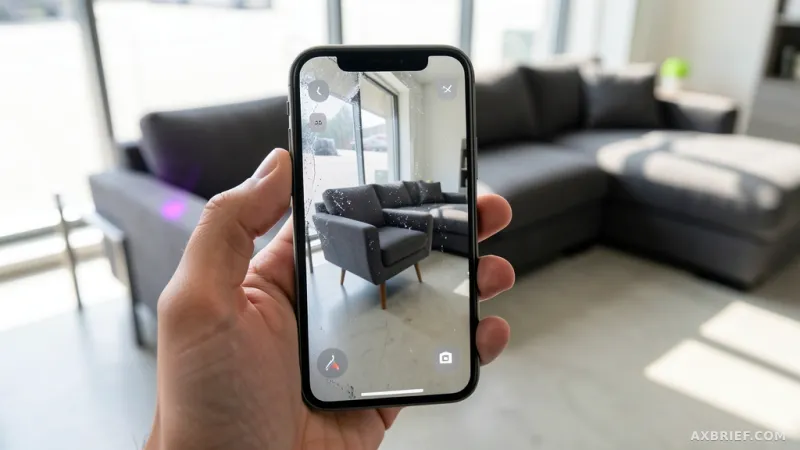
The modern home renovation process usually begins with a digital rabbit hole. Millions of users spend hours scrolling through curated feeds, saving images of mid-century modern living rooms or minimalist kitchens, only to face a harsh reality when they actually attempt to buy. The gap between a beautiful image on a screen and the physical constraints of a living room is where most home decor projects fail. This friction is evidenced by a recent 300% surge in searches for home decor inspiration over the last month, signaling a massive shift in consumer behavior. Users are no longer just looking for products; they are searching for a way to bridge the gap between digital inspiration and physical installation.
The Architecture of Visual Commerce
Google is addressing this spatial anxiety through a suite of AI-driven tools integrated directly into Search. The centerpiece is AI Mode, a conversational interface that transforms a static photo of a room into a dynamic simulation environment. The process begins when a user uploads a photo of their actual space. Rather than relying solely on visual estimation, the system allows users to input specific dimensions via text prompts. For instance, if a user specifies that a particular wall is 84 inches wide, the AI merges this numerical data with the visual perspective of the photo to calculate exactly what furniture sizes will fit without crowding the room. This removes the manual labor of measuring and re-measuring, replacing a tape measure with a data-driven recommendation engine.
Once the spatial constraints are established, the AI Mode moves from measurement to aesthetics. Users can request virtual mockups using highly specific descriptors. A request for an emerald green velvet sofa, for example, does not simply return a gallery of green sofas. Instead, the AI synthesizes the specific material and color onto the user's own room photo. By visualizing the texture of velvet and the vibrancy of emerald green against their existing wall paint and flooring, users can assess the aesthetic harmony of a piece before committing to a purchase, significantly lowering the risk of buyer's remorse.
For those hunting for unique or one-of-a-kind pieces, Google Lens has been optimized to handle the irregularities of the vintage market. When a user photographs a physical item in a vintage shop or a friend's home, the tool analyzes the object's shape, color, and texture to identify it. This is particularly effective for items that are difficult to describe in text, such as vintage braided rugs or weathered wooden coffee tables. The AI extracts the unique weaving patterns of a rug or the specific grain and finish of a wooden table to find visually similar alternatives across the web. Crucially, this search is filtered by the user's predefined price range, ensuring that the inspiration remains affordable.
Integration has moved even deeper into the operating system with Circle to Search, available on the latest Pixel and Samsung Galaxy S26 devices. By long-pressing the home button or navigation bar, users enter a search state without leaving their current app. This eliminates the traditional multi-step process of capturing a screenshot, opening a search app, and uploading a file. A simple circular gesture around an object on the screen—whether in a social media feed or a video—triggers an immediate identification. The utility of this is reflected in the 140% increase in searches for fish wallpaper over the previous month, as users instantly query complex patterns they encounter in their digital feeds.
Beyond static images, Search Live introduces a real-time, voice-activated DIY assistant. By tapping the Live icon in the Google app, users activate a mode that combines natural language processing with a live camera feed. This creates a continuous stream of visual context, allowing the AI to see what the user sees in real time. This is designed specifically for hands-on projects, such as installing floating shelves. As the user points the camera at the wall and their tools, the AI provides step-by-step voice guidance. If the AI detects a misalignment in a bracket or a leveling error through the video feed, it provides an immediate verbal correction, transforming the smartphone from a static manual into an interactive foreman.
Finally, the journey ends with a sophisticated shopping UX that aggregates commerce data. When a user selects a product, such as the recently trending harlequin wallpaper, Google provides a consolidated price comparison across multiple stores. A price dropdown menu reveals the Price History of the item, using time-series data to indicate whether the current price is high, low, or average compared to historical trends. For users not ready to buy, the Track price feature allows them to set a budget threshold, triggering a push notification the moment the item hits their target price.
From Keyword Queries to Spatial Intelligence
What is actually changing here is the fundamental nature of the search query. For decades, search was a linguistic exercise; you had to know the words to describe what you wanted. If you couldn't name the specific weave of a vintage rug or the exact shade of a wallpaper, you were limited by your vocabulary. Google is effectively replacing the text box with the camera and the microphone, shifting the burden of description from the human to the AI. The tension is no longer about finding the right word, but about capturing the right context.
This shift is most evident in the contrast between the old image search workflow and the new OS-level integration. The previous method required a conscious break in the user's flow—stopping the activity to perform a search. Circle to Search and Search Live remove this cognitive load by making the search an overlay of the experience rather than a destination. The AI is no longer a tool you visit; it is a layer of intelligence that sits on top of your visual field. By integrating real-time video and voice, Google is moving from providing information to providing active assistance.
Furthermore, the integration of price history and tracking transforms the search engine into a strategic procurement tool. By combining visual discovery with economic data, Google closes the loop between the moment of inspiration and the moment of transaction. The system does not just tell you what a product is; it tells you if now is the right time to buy it based on historical data. This creates a powerful lock-in effect, as the user relies on the system to monitor the market on their behalf.
This evolution represents a transition from information retrieval to spatial and commercial intelligence. The AI is now capable of understanding the physical dimensions of a room, the aesthetic properties of a fabric, and the fluctuating value of a commodity, all while maintaining a real-time dialogue with the user.
This trajectory suggests a future where the boundary between seeing an object and owning it is reduced to a single gesture.



