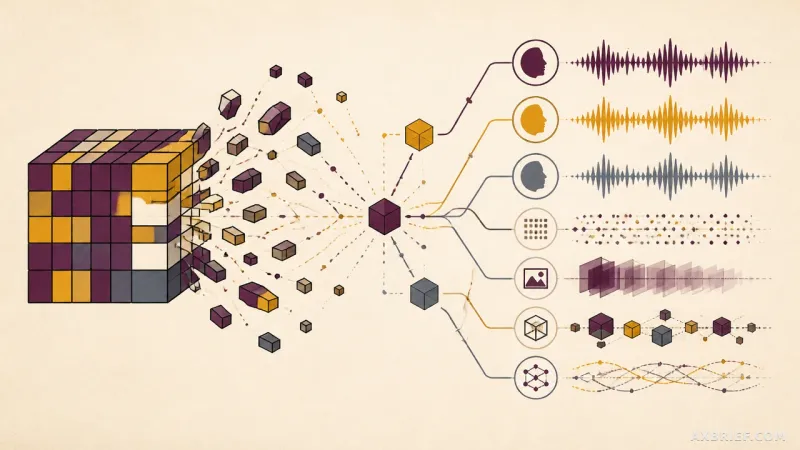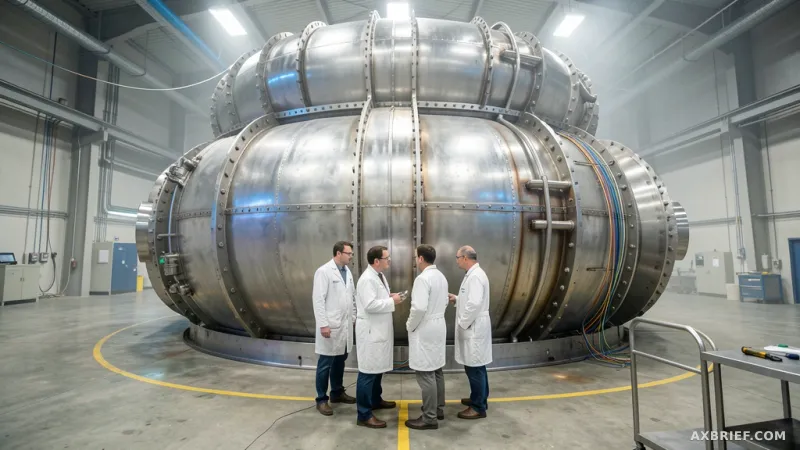
Modern scientific research has reached a critical bottleneck where the volume of data exceeds the human capacity to process it. In the halls of the United States Department of Energy national laboratories, researchers are currently grappling with exabyte-scale datasets—volumes of information so vast that traditional computing architectures struggle to keep pace. Whether simulating the volatile dynamics of nuclear fusion plasma or scanning an almost infinite search space for a new superconducting material, the friction is no longer just theoretical. It is physical, manifesting as hours of manual equipment calibration and years of iterative trial and error. The community is shifting away from simple data collection toward a desperate need for autonomous synthesis.
The Infrastructure of the Genesis Mission
To break this deadlock, Google is committing $40 million in AI tokens and cloud credits to support the Genesis Mission, a White House-led initiative designed to double the pace of scientific discovery within a decade. This resource injection is specifically targeted at 17 DOE national laboratories, providing the computational horsepower necessary to handle the most demanding simulations and data processing tasks in the federal portfolio. Rather than providing a lump sum of capital, Google is delivering the actual currency of the AI era: compute and model access. This allows researchers to bypass the prohibitive costs of infrastructure procurement and immediately integrate frontier AI models into their experimental pipelines.
The scale of the challenge these labs face is immense. Analyzing exabytes of data from world-class experimental facilities requires more than just storage; it requires the ability to identify patterns across dimensions that are invisible to human analysts. By providing these cloud credits, Google enables the deployment of high-performance computing environments where large-scale models can be trained and run in inference without the traditional budgetary constraints that often stifle high-risk, high-reward research. This strategic alignment ensures that the national scientific infrastructure is reorganized around an AI-centric model, effectively lowering the barrier to entry for complex hypothesis testing and pattern analysis in physical systems.
From Generative Text to Autonomous Lab Control
The true shift in this partnership is the transition of AI from a passive knowledge retrieval tool to an active participant in the scientific process. While the general public views AI as a means to summarize text or write code, the toolkit deployed across the DOE labs is fundamentally different. Google DeepMind has integrated a specialized portfolio including AlphaFold 3 for predicting the 3D structures of biomolecules, AlphaGeometry for solving complex geometric proofs, and AlphaEvolve for exploring the possibilities of mathematical systems. These are not general-purpose chatbots; they are precision instruments designed for specific scientific domains.
Complementing these specialized models is Gemini for Government, which provides a secure, unified AI backbone for tens of thousands of users across the DOE. This deployment spans the entire operational spectrum, from the researchers working at the lab bench to the administrative teams managing massive user facilities. By creating a single, secure environment, the DOE avoids the fragmentation of tools and ensures that data remains protected while flowing seamlessly through an AI-enhanced workflow. The tension here is between the need for open scientific collaboration and the strict security requirements of national laboratories, a gap that this secure backbone is designed to bridge.
This architectural shift allows AI to move beyond the screen and into the physical world. The most significant evolution is the emergence of autonomous discovery loops, where the AI does not just suggest a direction but actually executes the experiment. By integrating Gemini directly with laboratory hardware, the AI becomes a controller capable of observing real-time data, reasoning through the results, and deciding the next experimental step without human intervention. This transforms the AI from a research assistant into an autonomous agent capable of navigating the physical constraints of a laboratory.
Quantifying the Acceleration of Physical Science
The practical impact of this autonomy is already visible in concrete metrics. At the Pacific Northwest National Laboratory (PNNL), Dr. Henry Quinge utilized AlphaEvolve to automate the mapping of massive mathematical systems that were previously impossible for humans to navigate manually. In the field of combinatorics, where the number of possible combinations of discrete objects grows exponentially, AlphaEvolve can identify hidden connections within complex systems in minutes or hours—tasks that would have taken a human researcher years of manual cross-referencing. This represents a fundamental change in how mathematical hypotheses are verified, moving from manual search to automated mapping.
Even more striking are the results from the Rocky Mountain National Laboratory (NLR), where Dr. Steven R. Spurgeon deployed Gemini to run an autonomous materials discovery program. In this setup, Gemini acts as the brain of the hardware, managing the intricate process of equipment optimization. The results are measured in a dramatic reduction of downtime. Microscope calibration, a tedious process of aligning measurement values to standards, previously took over 90 minutes. With Gemini controlling the process, this time was slashed to 13 minutes, representing an eight-fold increase in speed. Furthermore, the manual process of adjusting image focus, which typically required a 50-step sequence of human adjustments, was compressed into just two steps.
These numbers are not merely efficiency gains; they are catalysts for discovery. By removing the 90-minute calibration bottleneck and the 50-step manual focus grind, researchers are liberated from the role of equipment operators. They can now spend their cognitive resources on high-level analysis, theoretical refinement, and the interpretation of results. The ability of the AI to understand physical constraints and precisely control hardware means that the search space for new materials has expanded to areas that were physically inaccessible through manual operation.
As the scientific community looks toward the Google Public Sector Summit in October, the trajectory is clear. The utility of frontier models is no longer being measured by the fluency of their prose, but by the minutes shaved off a calibration cycle and the number of mathematical combinations mapped per second. The integration of AI into the physical laboratory marks the beginning of an era where the loop between hypothesis and discovery is closed by autonomous agents.