
The modern AI developer spends an inordinate amount of time acting as a digital seamstress. To launch a single functional application, they must stitch together a model from one provider, a server environment from another, and a UI framework from a third. This fragmented ecosystem creates a persistent bottleneck where the actual engineering of the product is often overshadowed by the friction of integration. The struggle is not in the logic of the AI, but in the plumbing required to make disparate tools communicate without breaking.
The Four-Layer Architecture of Integrated Intelligence
Richard Seroter, the developer experience leader at Google Cloud, argues that the only way to break this bottleneck is through a full-stack AI approach. Rather than treating the AI pipeline as a collection of independent parts, Google is positioning its ecosystem as a single, cohesive system. This strategy is built upon a rigid four-layer architecture designed to eliminate the stitching process entirely.
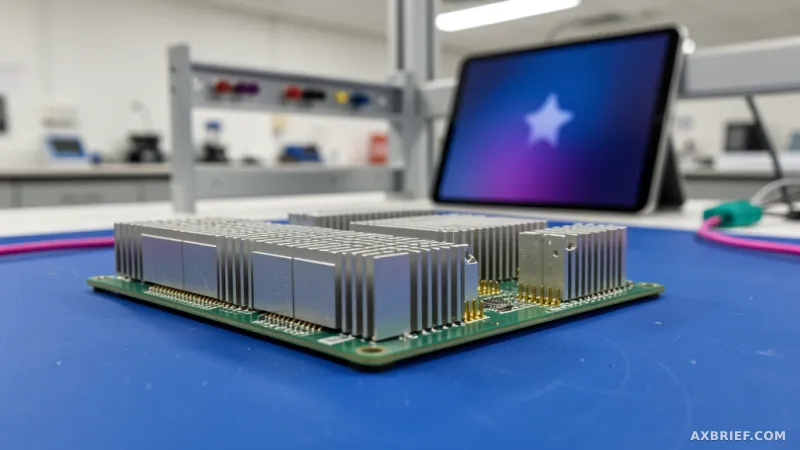
At the foundation lies the hardware layer, powered by Tensor Processing Units (TPUs). These AI-specific accelerators are not off-the-shelf components but the result of a decade-long investment in custom silicon. By owning the supply chain and the raw infrastructure, Google removes the dependency on external hardware vendors, allowing for tighter optimization between the chip and the code.
Sitting directly atop the hardware is the model layer, occupied by the Gemini family of models developed by Google DeepMind. Because these models are designed to run optimally on TPUs, the latency and throughput are managed within a closed loop. The third layer is the orchestration platform, specifically the Gemini Enterprise Agent Platform, which manages how the models are deployed and coordinated to perform complex tasks. Finally, the stack culminates in the user interface layer, where the AI is embedded directly into high-traffic services like Gmail and Google Maps. This vertical integration ensures that a prompt in a UI is processed by an orchestrator, executed by a model, and powered by a TPU without ever leaving the Google ecosystem.
The Shift From Fragmented Tools to Paved Roads
The critical distinction in this approach is the transition from a toolkit to a system. Most AI providers offer a model and an API, leaving the developer to figure out the rest. Google is instead adopting a batteries included philosophy, providing every necessary component for deployment out of the box. This creates a paved road for development, where the path from an idea to a production-ready app is pre-optimized.
However, this integration does not imply a walled garden. Google describes its architecture as opinionated but extensible. While the system suggests an optimized path using Gemini and TPUs, it remains open to external inputs. Developers can swap Gemini for a third-party model or connect external software plugins instead of using Google Workspace. The value proposition is not that you must use Google, but that using the full Google stack is simply the most efficient route.
This structural unity provides a significant advantage in system reliability. In a fragmented stack, a failure in the model layer often requires a coordinated fix across multiple vendors, leading to prolonged downtime. In a full-stack environment, Google can identify a failure at the interface level and implement a fix at the hardware or model level internally. This internal feedback loop accelerates recovery times and stabilizes the user experience. Furthermore, by removing the need for third-party licenses and middleman fees, Google can pass these cost savings directly to the customer, creating a pricing structure that is difficult for fragmented competitors to match.
Three Entry Points for Diverse Developer Needs
To ensure this complex stack is accessible, Google has established three distinct front doors based on the user's technical proficiency and goals.
For those in the rapid prototyping phase, Google AI Studio serves as the primary entry point. It allows developers to transform creative ideas into web app prototypes with minimal friction. Once a prototype is validated in AI Studio, it can be deployed to Cloud Run, Google's cloud-based app execution platform, with a single click. This removes the traditional DevOps hurdle of configuring servers and environments for early-stage testing.
For business users and non-coders looking to automate workflows, the Gemini Enterprise Platform provides a low-code environment. This allows users to build sophisticated automation, such as parsing complex spreadsheet data or organizing email inboxes, without writing a single line of code. The platform abstracts the underlying orchestration layer, turning complex AI agent logic into a manageable interface.
For professional engineers building high-complexity applications, the Antigravity platform provides the necessary depth. Antigravity focuses on advanced agent orchestration, allowing developers to coordinate multiple AI models and tools to achieve complex, multi-step goals. It provides a rich interface that enables the construction of sophisticated agentic systems without requiring the developer to manually manage every low-level API call between the model and the infrastructure.
This tiered access ensures that whether a user is a hobbyist in AI Studio or an enterprise architect on Antigravity, they are utilizing the same underlying full-stack synergy of TPUs and Gemini models.



