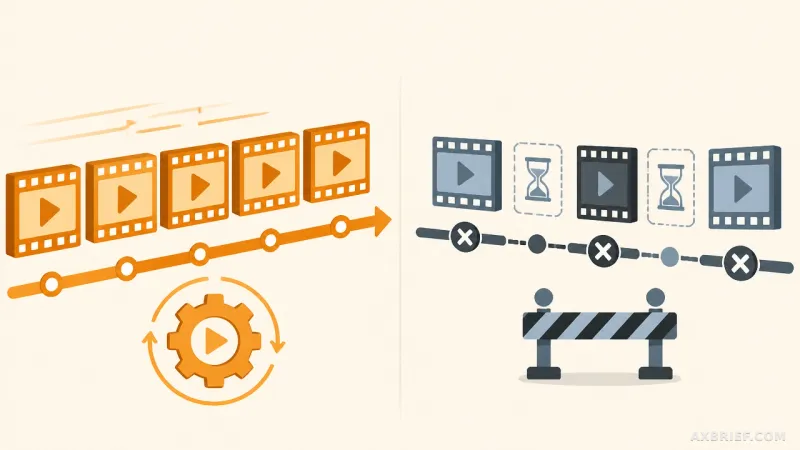
Security engineers are currently trapped in a widening gap between discovery and remediation. While AI has accelerated the speed at which vulnerabilities are identified to an almost instantaneous pace, the process of writing, testing, and deploying a patch remains a grueling manual chore. This imbalance has turned the patching phase into the primary bottleneck of modern cybersecurity, where a known flaw may sit exposed for weeks simply because the human workforce cannot keep up with the volume of AI-generated alerts. The industry is living through a paradox where we can see the fire everywhere but lack the hands to put it out.
The Architecture of Daybreak and Codex Security
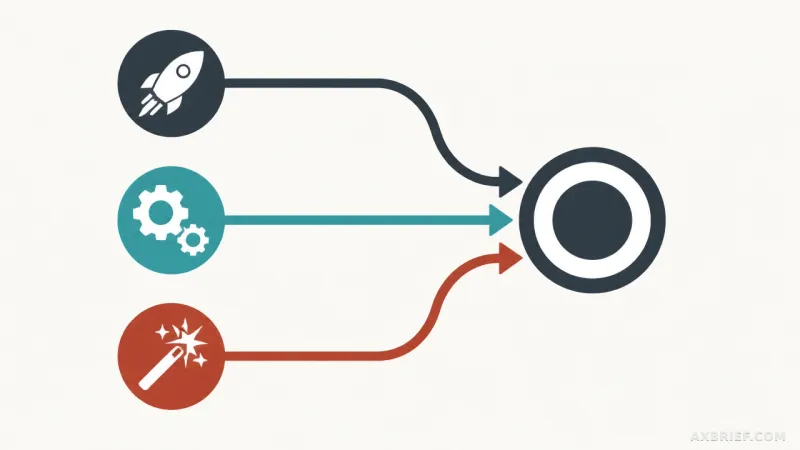
OpenAI is addressing this bottleneck with the introduction of Daybreak, a comprehensive security framework that integrates specialized models with a structured operational workflow. At the center of this ecosystem is GPT-5.5-Cyber, a model specifically tuned for verified security professionals. Unlike general-purpose models that often trigger safety refusals when encountering code that looks like an exploit, GPT-5.5-Cyber is designed to be more permissive for authorized users, reducing the friction that typically occurs when an AI refuses to analyze a potential vulnerability for safety reasons. This model is paired with Trusted Access for Cyber, a strict access control system, and the Codex Security workflow, which handles the actual modification and review of code.
The practical application of this system is already evident in critical infrastructure. Daybreak is currently being utilized to identify and patch vulnerabilities in major web browsers including Firefox, V8, and Safari, as well as core operating systems like OpenBSD and FreeBSD. It has even been applied to the complex implementations of the HTTP/2 network protocol. The goal is to move beyond simple discovery and achieve end-to-end patch automation, where the system not only finds the bug but generates the fix and verifies its efficacy before a human ever sees it.
To understand the scale of this operation, one only needs to look at the data from Codex Security. Since its research preview in March, the system has scanned over 30 million commits across more than 30,000 individual codebases. The results demonstrate a massive shift in productivity: human reviewers have manually marked over 70,000 cases as successfully fixed, while the system itself has automatically determined that over 500,000 instances were corrected. This volume proves that the system can handle the sheer scale of modern software repositories, which are far too large for manual auditing.
The technical loop begins with the analysis of code and the existing threat model to identify potential attack paths. If no threat model exists, the system generates one from scratch. It then performs a reachability analysis to determine if the identified vulnerability can actually be triggered by an external attacker in a real-world scenario. Once reachability is confirmed, the system collects evidence for verification and develops a target patch designed to fix the specific flaw without introducing regressions. To ensure these tools fit into existing developer pipelines, OpenAI provides the `Codex CLI` and a dedicated Codex app. The system supports the Static Analysis Results Interchange Format (SARIF) and CodeQL queries, allowing it to plug directly into the security tools teams already use. Users can trigger deep scans on the entire codebase or target specific commits, resulting in reports that include the severity of the flaw, the exact location of the affected code, and a detailed guide for the fix.
Breaking the Refusal Barrier and the Benchmark Leap
For years, the primary frustration for security researchers using LLMs has been the refusal response. A researcher might provide a snippet of vulnerable code and ask for a proof-of-concept to verify the risk, only for the AI to respond that it cannot assist with requests that could facilitate a cyberattack. This creates a productivity wall. GPT-5.5-Cyber breaks this wall by maintaining the general intelligence of GPT-5.5 while enhancing its ability to identify security components within massive codebases and providing a more permissive interface for verified experts. The shift is not just about intelligence, but about utility in a high-stakes professional environment.
The performance gains are quantifiable across three critical security benchmarks. In the CyberGym benchmark, which measures the ability to reproduce known software vulnerabilities, GPT-5.5-Cyber achieved an 85.6% accuracy rate, surpassing the 81.8% recorded by the standard GPT-5.5. This represents the highest score ever recorded for a single model in this category. In the SEC-bench Pro benchmark, which evaluates long-term vulnerability discovery and the generation of Proof of Concept (PoC) code, the model reached 69.8%, compared to 63.1% for GPT-5.5. This indicates a significant improvement in the model's ability to maintain a chain of reasoning while tracking attack paths through complex software targets.
The most dramatic difference appears in ExploitGym, which tests the ability to create exploits that allow unauthorized code execution. GPT-5.5-Cyber achieved a 39.5% success rate, a massive jump from the 25.95% seen in GPT-5.5. This leap is critical because it proves the model can perform sophisticated reachability analysis—determining not just that a bug exists, but that there is a viable path for an attacker to reach and trigger it. By thinking like an attacker, the model allows defenders to accurately measure the actual risk level of a vulnerability and prioritize their response based on real-world exploitability rather than theoretical severity.
This capability transforms the security engineer's daily routine. Instead of spending hours manually writing a patch and then another few hours testing it in a sandbox to ensure it works, the engineer now receives a complete package: the analysis of the flaw, the evidence of its reachability, the proposed patch, and the verification results. The human role shifts from the creator of the fix to the auditor of the fix. The cognitive load moves from the tedious implementation of code to the high-level verification of logic and security posture.
The Democratization of Frontier Defense
Historically, the ability to perform this level of deep security analysis was reserved for a small elite of researchers and state-sponsored actors. OpenAI is attempting to flip this script through the Daybreak Cyber Partner Program. This initiative allows security software and service providers to integrate GPT-5.5 and Trusted Access for Cyber into their own products. By doing so, OpenAI is effectively democratizing frontier-level security analysis, making it available to mid-sized companies and government agencies that lack the budget to hire dozens of world-class exploit developers.
The access model is tiered to maintain safety. General defenders use GPT-5.5 and Codex Security for routine scanning and patching. However, verified professional defenders are granted access to the more powerful and permissive GPT-5.5-Cyber. This tiered approach ensures that the most potent tools are in the hands of those who can use them responsibly, while still raising the baseline defense for everyone. This is a strategic move to ensure that the speed of defense finally matches or exceeds the speed of attack.
Collaboration with government bodies is already underway to standardize these AI-driven defenses. OpenAI is working with the Center for AI Safety and Innovation (CAISI) for pre-deployment testing, and is coordinating with the Office of the National Cyber Director (ONCD) and the Office of Science and Technology Policy (OSTP) to implement executive orders and establish industry standards. This institutional alignment suggests that AI-automated patching is not just a product feature, but a core component of national cybersecurity strategy.
The era of the manual patch is ending. The core competency of a security engineer is no longer the ability to write a perfect line of C++ to close a buffer overflow, but the ability to manage an AI-driven pipeline that identifies and closes thousands of such overflows in real-time. By shifting the focus to a verification-and-approval model, organizations can finally clear their vulnerability backlogs and move toward a state of continuous remediation. For any organization currently drowning in a sea of CVEs, the most immediate step is to integrate their backlog data into the Daybreak ecosystem and let the AI begin the process of automated triage and patching.