The modern patient experience often begins not in a clinic, but in a search bar. For millions, the gap between receiving a confusing lab report and the actual appointment with a specialist is filled by a frantic series of queries to an AI. This behavior has shifted from a niche curiosity to a global standard, as users seek to decode medical jargon or prepare for a consultation. The tension has always been the reliability of the answer. Until now, the highest levels of reasoning—the kind that mimics a doctor's internal deliberation—were reserved for high-tier, compute-heavy models. That barrier has just collapsed.
The Architecture of Global Medical Validation
Released in May 2026, GPT-5.5 Instant integrates a level of health intelligence previously exclusive to frontier Thinking models. These are models designed to engage in deep internal reasoning before producing a final answer, rather than predicting the next token in a linear stream. By bringing this capability to the Instant tier, OpenAI has effectively democratized high-performance medical assistance for its free user base. The scale of this deployment is massive, with over 230 million weekly users already leveraging ChatGPT for health and wellness queries. These users aren't just asking for definitions; they are interpreting complex test results, organizing insurance inquiries, and seeking guidance on habit formation.
To ensure this intelligence is safe, OpenAI moved beyond automated benchmarks. The company established a global network of over 260 medical specialists across 26 different fields, spanning 60 countries and 49 languages. This was not a simple auditing committee. These professionals reviewed more than 700,000 actual model responses to define what a correct medical answer looks like in a real-world context. This human-in-the-loop system allowed OpenAI to capture the nuance of clinical judgment—the subtle distinctions that a mathematical score cannot detect.
The technical evaluation relies on two primary datasets: HealthBench and HealthBench Professional. These are specialized problem sets designed to stress-test the model on accuracy, safety, communication, context awareness, and completeness. More importantly, the specialists developed a rigorous rubric based on ideal behavioral patterns and failure modes. By identifying the specific ways a model typically fails in a medical context, the researchers could bake clinical reasoning directly into the model's evaluation framework. This creates a continuous feedback loop where specialists review responses every few minutes, identifying instances where the model is overconfident or fails to ask for critical patient context, which then informs the next iteration of the model.
From Information Retrieval to Clinical Judgment
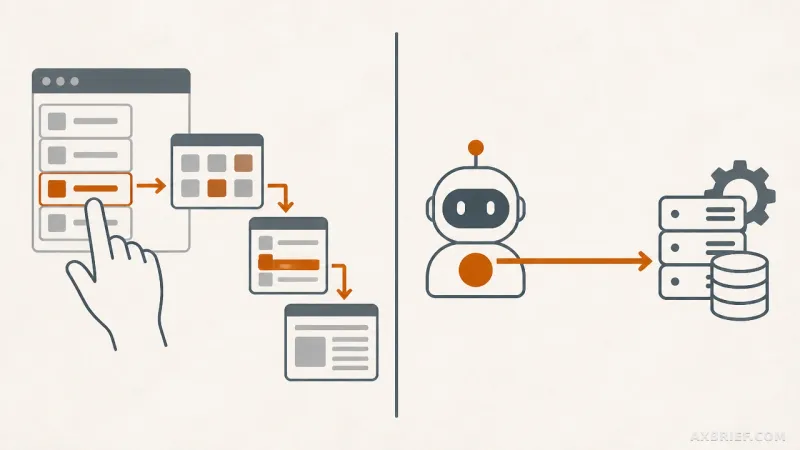
The critical shift in GPT-5.5 Instant is the transition from being a sophisticated encyclopedia to acting as a reasoning agent. In a blind comparison study involving 3,500 representative health consultation cases, a panel of specialists compared responses from GPT-5.5 Instant against answers written by human doctors. The doctors had unlimited time and full internet access to craft their responses. Despite this, the independent evaluation panel rated the model's performance as superior across five key metrics: accuracy, communication skills, completeness, instruction following, and the ability to assist in health-related decision-making.
This result suggests that the model is no longer just synthesizing data; it is optimizing the structure of medical advice for the end user. The most significant improvement is found in the reduction of failure modes. Previous iterations often struggled with regional medical variations or, more dangerously, missed red flags that indicate a need for immediate emergency care. GPT-5.5 Instant has significantly lowered the frequency of these errors. It has become more proactive in requesting missing context from the user, prioritizing safety and the guidance toward professional care over the simple desire to provide a quick answer.
Quantitative data from real-world traffic monitoring reveals the impact of these refinements. In the two months following the transition from GPT-5.3 Instant (released in March 2026), the rate of factuality issues—instances where the model provided objectively incorrect information—plummeted by 71 percent. This improvement is particularly striking because it occurs in a model available to free users. By aligning the Instant model with the same mechanisms used in ChatGPT for Clinicians and OpenAI for Healthcare, the company has bridged the gap between consumer-grade AI and professional medical tools.
The most vital evolution here is the concept of appropriate escalation. A truly intelligent health AI must know when to stop talking and tell the user to go to the emergency room. GPT-5.5 Instant has moved toward this clinical standard, treating the AI not as a replacement for a doctor, but as a triage layer that understands the urgency of a situation. This capability mirrors the actual workflow of healthcare delivery, where the goal is to move the patient to the right level of care as efficiently as possible.
As the boundary between professional and general-purpose AI blurs, the standard for what constitutes a reliable medical answer is being raised. The integration of specialist-level reasoning into a free model changes the power dynamic of health information. Users are no longer just receiving a summary of a medical website; they are interacting with a system that has been calibrated by hundreds of the world's leading doctors to think through a problem before speaking.
The era of using AI as a simple symptom checker is ending. With the validation of 700,000 expert reviews and the precision of HealthBench Professional, GPT-5.5 Instant transforms the act of querying a chatbot into a sophisticated exercise in medical triage.