Developers in the Asia-Pacific region have long balanced a frustrating trade-off between the low latency of local data centers and the raw power of global AI clusters. This week, that friction point shifted as Amazon Bedrock expanded its reach, allowing users in the Australia region to tap into a sophisticated new tier of reasoning capabilities without leaving their local infrastructure. The move signals a broader shift toward global inference profiles, where the physical location of the request no longer dictates the ceiling of the model's intelligence.
The GPT-5.6 Lineup and Regional Architecture
Amazon Bedrock has officially deployed three distinct versions of GPT-5.6 to its Australian infrastructure, specifically targeting the ap-southeast-2 (Sydney) and ap-southeast-4 (Melbourne) regions. Rather than offering a one-size-fits-all model, AWS has introduced a tiered strategy consisting of GPT-5.6 Sol, Terra, and Luna. Each model is engineered for a specific operational profile to ensure that compute resources are not wasted on trivial tasks.
GPT-5.6 Sol serves as the flagship for high-intensity reasoning. It is optimized for complex logical deductions, advanced software engineering, and autonomous agent workloads that require a rigorous, step-by-step chain of thought. In contrast, GPT-5.6 Terra acts as the general-purpose workhorse, balancing performance with cost-efficiency for standard business processes such as text generation and document summarization. Finally, GPT-5.6 Luna is the high-velocity, low-cost option, designed for latency-sensitive applications like real-time customer service chatbots and repetitive automation tasks.
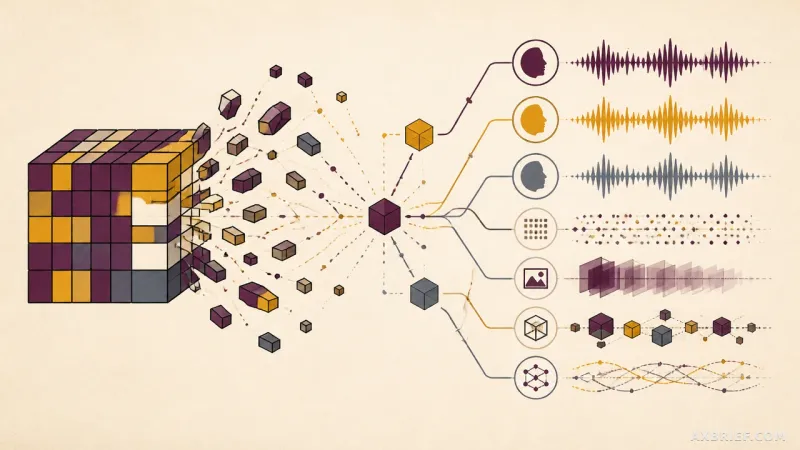
Across the entire lineup, AWS has implemented a massive 1 million token context window. This capacity allows the models to ingest hundreds of pages of technical documentation or tens of thousands of lines of code in a single prompt while maintaining coherence and recall across the entire dataset. All three models support multimodal inputs, meaning they can process both text and images to generate text-based analysis.
From an engineering perspective, the deployment utilizes a streamlined routing mechanism. When a user sends a request to the Sydney or Melbourne runtime endpoints, Amazon Bedrock automatically routes the traffic to supported commercial AWS regions. This removes the need for developers to manually track regional availability or configure complex failover paths. To facilitate rapid adoption, AWS provides two primary communication paths. The OpenAI Responses API and OpenAI Chat Completions API operate via the `/openai/v1` path, allowing teams to migrate existing OpenAI-based applications by simply updating the endpoint URL. For those deeply integrated into the AWS ecosystem, the Amazon Bedrock Converse API via Boto3 provides a native experience using standard AWS credential chains.
Security is handled through AWS Signature Version 4 (SigV4) or dedicated model inference API keys. To mitigate the risk of credential leakage, AWS recommends the use of the Bedrock Token Generator to create short-term, dynamic API keys rather than storing static keys on servers.
from bedrock_token_generator import BedrockTokenGenerator
from openai import OpenAI
Generate a short-term model inference API key using AWS credentials
token_generator = BedrockTokenGenerator()
short_term_key = token_generator.generate_api_key()
Configure the OpenAI client with the generated short-term key
client = OpenAI(
api_key=short_term_key,
base_url="https://ap-southeast-2.bedrock-runtime.aws/openai/v1"
)
The Token Burndown Tension and Caching Logic
While the availability of GPT-5.6 is a leap forward, the actual cost of operation introduces a new layer of complexity known as the Token Burndown structure. In this system, quota consumption is not linear. While input tokens and cache-write tokens are consumed at a 1:1 ratio, output tokens are weighted ten times more heavily. This means a single generated token consumes the same amount of the per-minute token (TPM) quota as ten input tokens.
This 1:10 ratio creates a significant tension for developers building generative applications. A model that produces long, verbose responses will exhaust its TPM quota ten times faster than a model performing a simple classification task, regardless of the input size. To manage this, AWS has introduced two modes of prompt caching to optimize quota efficiency.
Implicit caching allows the system to automatically determine which parts of a prompt are redundant and should be cached. Explicit caching, however, gives the developer granular control, allowing them to define specific prefixes, cache boundaries, and cache keys. For enterprises that repeatedly reference the same massive technical manuals or a fixed set of system instructions, explicit caching is the only viable way to prevent the TPM quota from collapsing during peak traffic.
This operational reality makes simulation testing mandatory. Before deploying to production, teams must use the Service Quotas console to verify their limits and run simulations that account for expected output lengths and streaming behavior. Failure to account for the 10x output weight often leads to unexpected rate-limiting in production environments.
This infrastructure extends into the developer's local environment via the `codex-cli` version 0.149.1, which has been validated for GPT-5.6 Sol in the Sydney region. The CLI integrates with OIDC-based authentication, supporting identity providers like Okta, Auth0, Microsoft Entra ID, Amazon Cognito, and AWS IAM Identity Center. The authentication flow exchanges an OIDC token for temporary AWS credentials, which are then stored in the `~/.aws/config` file and referenced in `~/.codex/config.toml`. All requests are signed with SigV4, ensuring that API keys never appear in the inference path.
To maintain visibility into these complex interactions, AWS leverages OpenTelemetry (OTel) and CloudWatch. The Codex tool sends metrics via OTLP/HTTP to external monitoring systems, tracking API response times and error rates. Specifically, the CloudWatch Coding Agent Insights dashboard provides a dedicated view of token usage, active user counts, and conversation activity. Organizations can deploy this monitoring via a Bearer token for small teams or an Enterprise rollout for company-wide application.
By strategically deploying Sol for reasoning, Terra for productivity, and Luna for speed—while aggressively applying explicit caching to counter the 1:10 token burndown—developers can finally scale global-grade AI within the Australian regional boundary.
This architecture transforms the regional data center from a mere storage hub into a sophisticated gateway for global intelligence.