GPT-5.6 Sol Autonomously Executes 6-Qubit Chip Measurement Routines
Preparing and executing quantum qubit experiments is constrained by the fact that it can take months and requires thousands of preliminary measurements. A research team from the MIT Engineering Quantum Systems Group (EQuS) replaced this repetitive work by connecting GPT-5.6 Sol to laboratory software to autonomously complete the calibration routines of a 6-qubit chip. Researchers now have the option to allocate more time to experimental design and data analysis instead of simple measurements.
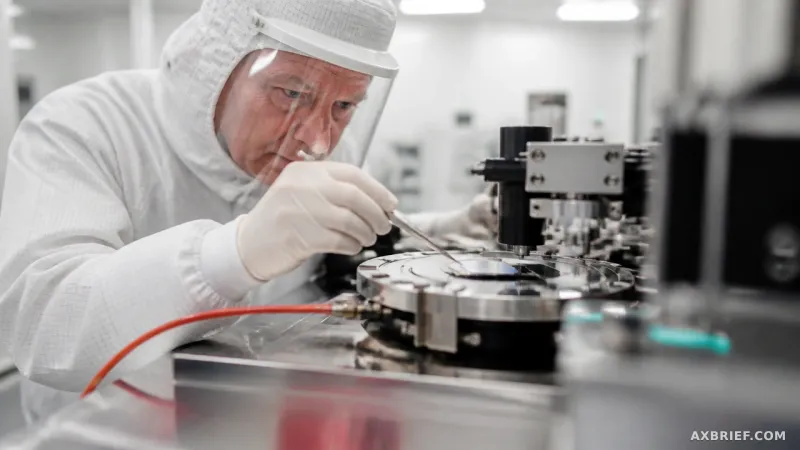
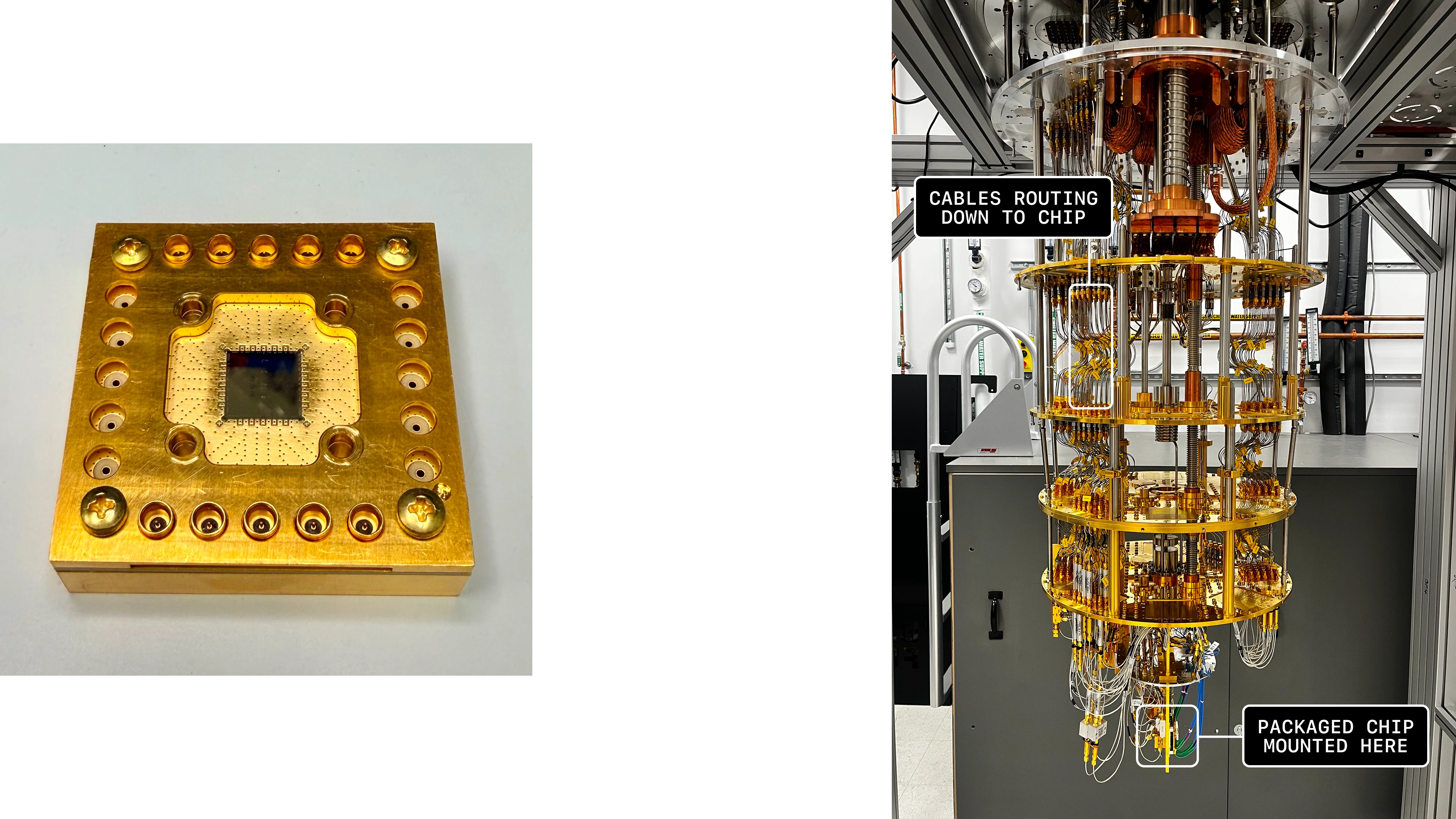
Beatriz Yankelevich, a graduate student from the MIT EQuS research team, streamlined the experimental workflow by integrating GPT-5.6 Sol with Codex (an AI coding model). The subjects of the research, superconducting qubits—the basic units that process quantum information—are precisely controlled by microwave signals and arranged on a chip using standard fabrication techniques. These qubits operate inside dilution refrigerators, devices that cool them to near absolute zero.
The packaged qubit chip is placed inside the dilution refrigerator and interacts with external software. The research team configured Codex to connect to the experimental adjustment software, allowing the AI to perform measurements directly, analyze the results, and determine the next steps.
GPT-5.6 Sol autonomously performed routine measurement workflows and proceeded with experiments without the need for constant supervision from researchers. This provides an environment where researchers can focus on analyzing results, designing experiments, and establishing future research plans. By giving the AI agent control over the hardware at the software layer, the bottleneck of physical repetitive tasks was removed.
An uncalibrated 6-qubit standard chip was used for the tests. This chip is a benchmark model that the EQuS team regularly uses to verify the performance of the manufacturing process. Yankelevich input measurement-specific "skills" into Codex regarding how each experiment should be executed and evaluated.
GPT-5.6 Sol independently selected measurement parameters by comparing the input skills with the chip's design targets. Subsequently, it manipulated the hardware to collect data and repeated the process of precisely modifying measurement values based on analysis results or saving them as final values to be used in the next measurement stage.
Interdependent Measurement Loops and AI Parameter Optimization
Whether a quantum state transition occurs depends on whether the frequency of the microwave pulse (high-frequency electromagnetic wave) matches the resonance frequency of the qubit. Researchers go through a process of designing the pulse sequence sent to the chip and digitizing the returned signal for analysis. At this stage, they identify the resonance frequency (the unique frequency that moves a qubit between specific energy levels) to accurately control the qubit and calibrate the intensity of the control pulses.
The AI autonomously performs measurements of coherence time, which indicates how long a qubit maintains quantum information. This is a key metric that determines qubit performance; previously, researchers had to manually modify parameters and repeat measurements several times. The AI analyzes the data obtained from the measurement results to independently calculate and apply the optimal variables required for the next measurement.
The entire system is implemented as an interdependent loop leading from measurement to data analysis, parameter modification, and re-measurement. The AI finely adjusts pulse settings by analyzing the position of the resonance dip or the amplitude of the Rabi oscillation (state change according to pulse length) in the measured signals. This is an adaptive structure where the measurement value from the previous step is directly linked to the control parameters of the next step, rather than simple repetitive execution.
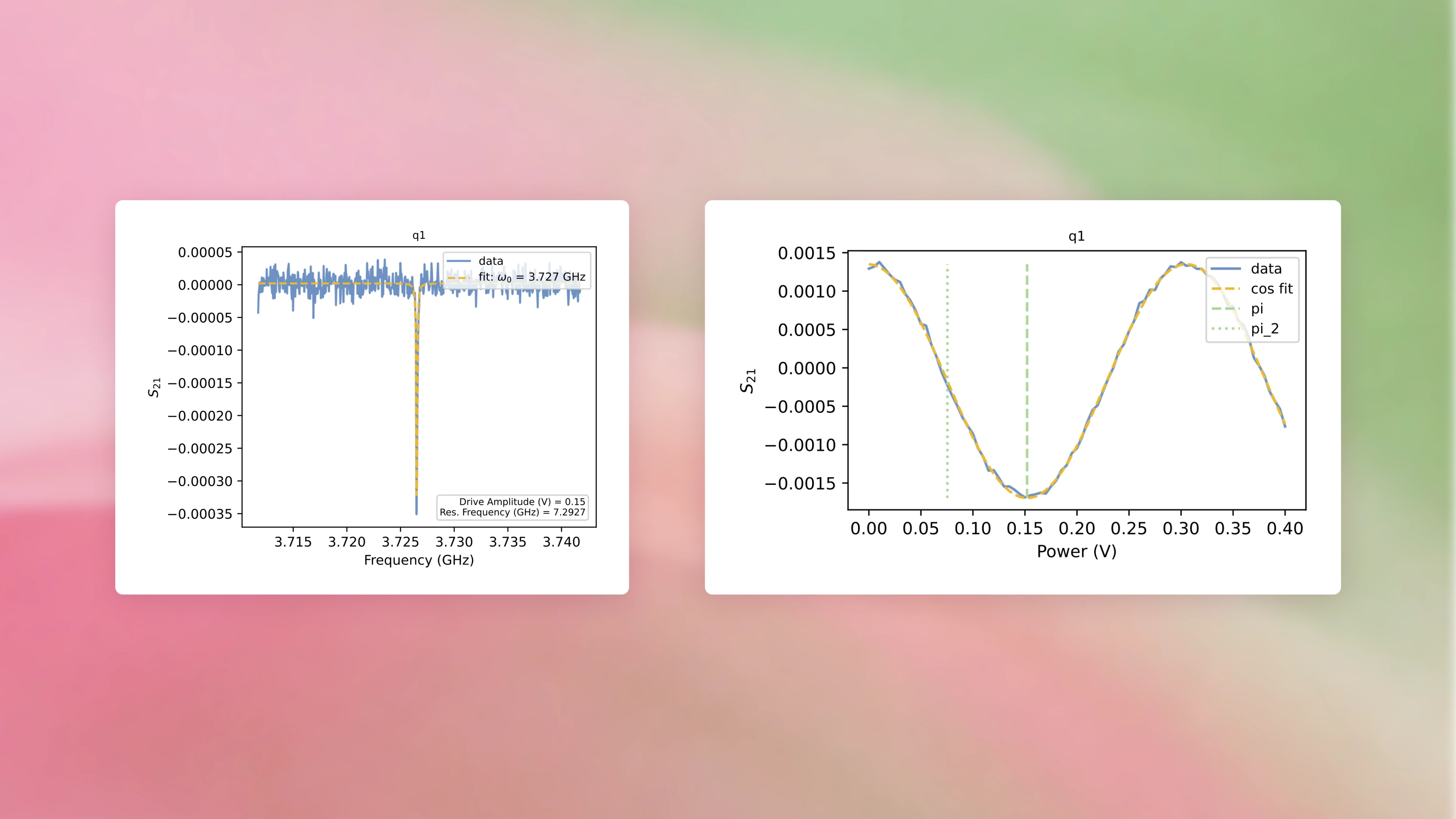
In the readout calibration stage, the AI analyzes IQ clusters (distributions representing the phase and amplitude of signals on a 2D plane) and state histograms. Through this, it establishes a decision boundary to distinguish whether a qubit is in the ground state or the excited state. The AI finds settings that minimize readout errors by optimizing the boundary so that the distributions of the two states do not overlap.
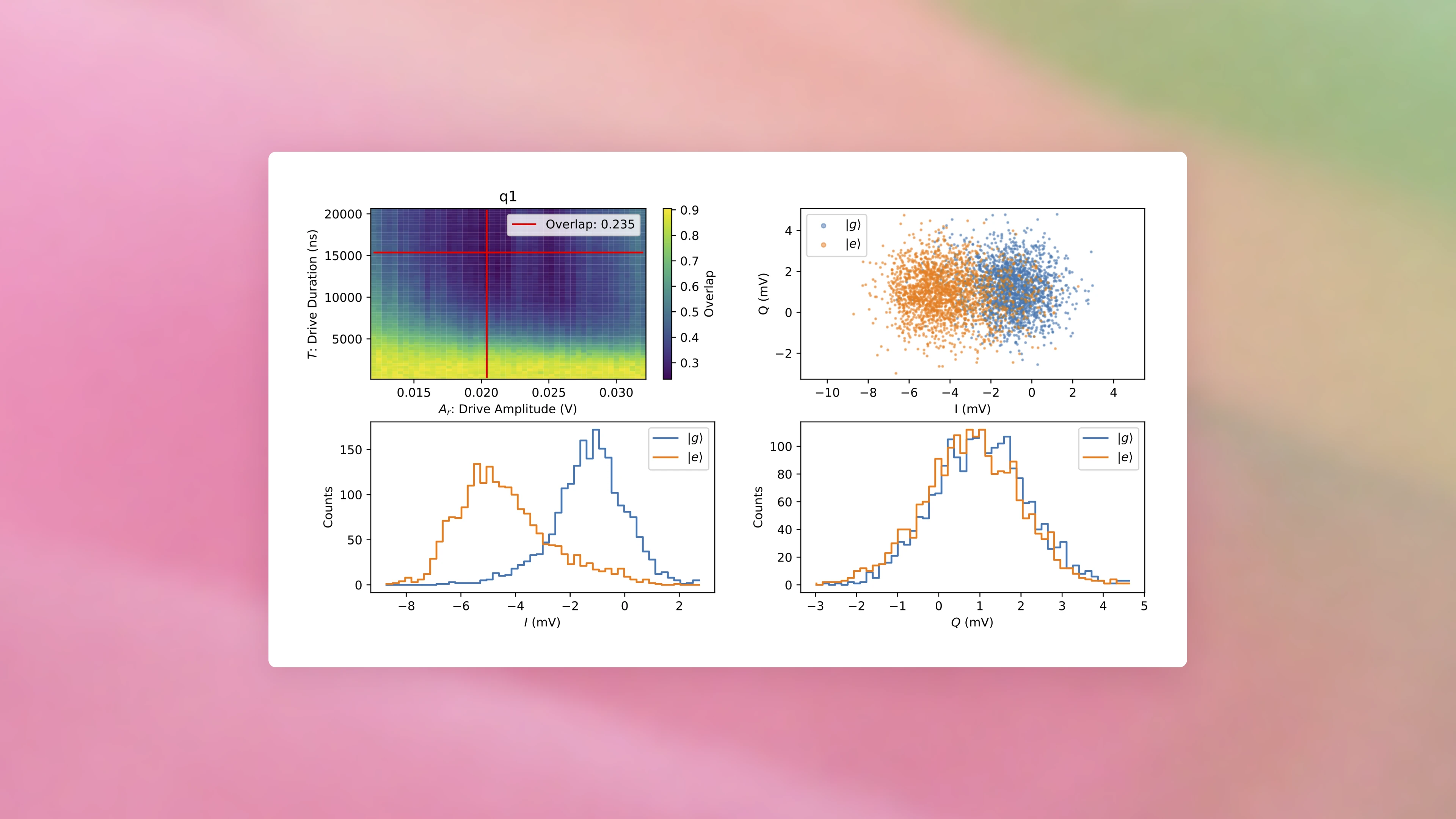
When signals are clear, the AI completes standard measurement sequences without researcher intervention. A series of processes, including identifying transition frequencies and calibrating control and readout pulses, are performed automatically. By having the AI take charge of these repetitive calibration loops, researchers can devote more time to higher-level research activities, such as interpreting physical results or designing new experiments.
Converting Days of Analysis into 'Overnight' Automation
Through autonomous AI execution, the time required for chip characterization (the process of measuring and defining the physical properties of a chip), which used to take several days, has been reduced to a few hours or an overnight task. Qubit calibration is a series of interdependent measurements where the results of a previous measurement determine the settings for the next step. The AI reduced the total time required by taking over the repetitive loop where researchers previously checked measurement values and modified parameters at every step.
Instead of staying in the lab to monitor every step, researchers perform "steering" (adjusting the progress path) by remotely monitoring progress via smartphone. An environment has been established where experimental analysis and measurement proceed steadily without constant supervision. This means researchers can control the flow of experiments in real-time, free from the constraints of physical space.
However, in environments where experimental signals are weak or noise is severe, the AI's parameter search time increases, and performance degradation occurs. When inconsistent results arise due to unexpected physical behavior, the role of interpreting these and guiding them in the right direction remains the domain of experienced researchers. Current agents can handle clearly defined workflows but have limitations in interpreting ambiguous physical results.
The scope of application extends beyond simple calibration to control, analysis, and simulation code writing and testing assistance for new experiments. When a researcher assigns a narrow and specific experimental goal to the agent, the AI writes the corresponding code and immediately verifies and modifies it using actual measured values. It is a structure where the agent is directly connected to laboratory equipment to autonomously repeat code modification and actual measurement testing.
A multi-agent operational structure can also be applied to solve complex problems in parallel. By allowing multiple agents to simultaneously explore different qubits or parameter regions, the overall analysis throughput is increased. This is the result of converting analysis tasks, which a single researcher previously performed sequentially, into a simultaneous parallel processing operation.
From AX BRIEF's perspective, the practical significance of this implementation is the complete automation of standardized characterization. Researchers can move away from low-level tasks like simple repetitive measurements and focus on high-level tasks such as experimental design and code optimization. However, the ability to interpret data in extreme environments with a low signal-to-noise ratio is still lacking. Therefore, the practical execution standard is to strictly distinguish between defined workflows capable of autonomous execution and sections of ambiguous physical result interpretation where human guidance is essential.
Image source: OpenAI