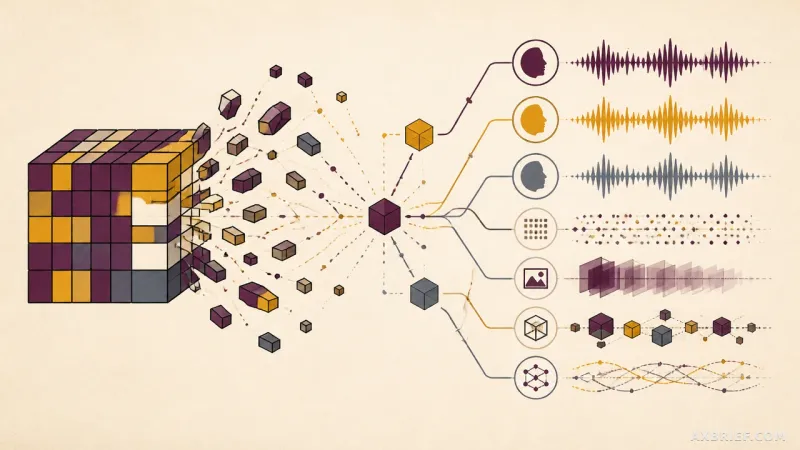
The era of the AI chatbot is ending, replaced by the era of the AI agent. For the past year, developers and enterprise teams have treated large language models as sophisticated interfaces for information retrieval or text refinement. However, a subtle shift has occurred in the way power users interact with these systems. They are no longer asking the AI to write a draft; they are asking it to manage a workflow. This transition from passive generation to active execution is the current frontline of the industry, where the goal is no longer a better answer, but a completed task.
The Scale of GPT-6 Astra and the Agentic Ecosystem
OpenAI has introduced GPT-6 Astra, a model designed to move beyond text generation and into the realm of direct computer interaction. The model achieves state-of-the-art performance across several critical technical domains, including computer use, web browsing, software engineering, cybersecurity, and scientific research. By enabling the AI to manipulate computer interfaces directly, OpenAI is shifting the paradigm from a tool that suggests code to a system that can actually deploy it, analyze security vulnerabilities in real-time, and execute professional-grade technical workflows. This capability allows specialized personnel to delegate high-friction technical processes to the AI, effectively transforming the model into a digital employee capable of autonomous operation.
This technical leap is supported by a massive distribution engine. OpenAI currently maintains a user base of 1 billion weekly active users and 2.5 million corporate customers. The company utilizes a strategic architecture where a single investment in core model research flows simultaneously into ChatGPT, ChatGPT Work, Codex, and a vast array of third-party applications via API. This creates a virtuous cycle where research breakthroughs immediately enhance the entire product suite, diversifying revenue streams while accelerating the collection of real-world interaction data. The API ecosystem is particularly vital, as external developers identify and fill niche market needs that OpenAI might not have prioritized, effectively expanding the model's reach into every corner of the professional world.
Data on user behavior reveals a clear trend in AI adoption. As users become more proficient with these tools, both the volume and the complexity of their work increase. For individual ChatGPT plan users, the volume of daily messages increases by approximately 50 percent after six months of use, while the variety of tasks they attempt doubles. This suggests that users are moving past the initial learning curve and are beginning to restructure their daily habits around AI-centric workflows. The boundary between personal and professional AI use is also blurring. Individuals who use AI at home bring those expectations to the office, and those who experience high-end agentic tools at work apply those patterns to their personal lives, creating a rising tide of expectation for autonomous AI agents that understand both public and private contexts.
The 3.1x Productivity Multiplier and the Jalapeño Hardware Pivot
The most provocative metric emerging from OpenAI's research is the implementation of a productivity ratio where one human worker's day of effort is matched by 3.1 agent-workdays of output. An agent-workday is defined as the volume of work processed by an AI agent, converted into standard human labor hours. This is not merely a result of faster typing or basic automation, but the result of delegating complex, multi-step tasks to agents that operate independently of human rhythms. While a human researcher sleeps or focuses on a single problem, a fleet of agents can explore dozens of parallel paths, testing hypotheses and refining code in a 24-hour cycle.
This shift is most evident in infrastructure management, a domain that previously required constant intervention from specialized engineers. Tasks such as server configuration, network setup, and GPU cluster resource allocation often created bottlenecks where researchers had to wait for an engineer to fix a memory leak or a version conflict. Now, agents analyze system logs in real-time, diagnose the root cause of failures, and apply fixes automatically. [IMG_N: https://images.ctfassets.net/kftzwdyauwt9/2uvvRNdvFkdWWXNtANgtAF/36e0f8b6a0c35abf88eec71519823409/Option_70___1080_1080.png?w=3840&q=90&fm=webp] By removing these infrastructure hurdles, OpenAI has significantly accelerated the rate of code contributions and experimental cycles. Agents now handle the grunt work of drafting initial code, running unit tests, and reviewing style guides, allowing human researchers to focus exclusively on high-level algorithmic design and optimization. [IMG_N: https://images.ctfassets.net/kftzwdyauwt9/3CsHxgcoiHHUUaYOB1FNiq/38e90de831dad795965ed98ffdd3a95a/Frame.png?w=3840&q=90&fm=webp]
The operational logic follows a pattern of sub-task decomposition. A researcher sets a final goal, and the agent breaks that goal into smaller, executable units. The agent then enters a loop of execution and self-correction, fixing runtime errors as they appear. The human's role has evolved from a writer of code to an orchestrator of agents, overseeing the direction and providing final approval. However, scaling this level of autonomy requires more than just better software; it requires hardware that can handle the unique demands of inference at scale.
To solve this, OpenAI has developed Jalapeño, its first custom inference chip. In InferenceX tests across three public models, Jalapeño demonstrated a peak token throughput per watt that is 1.5x to 1.9x higher than commercial systems. More importantly, end-to-end latency—the time from input to final response—was reduced by 1.7x to 3.6x. [IMG_N: https://images.ctfassets.net/kftzwdyauwt9/3gFEgHvtA7Rsa5yUen97p5/b78a11ad81397a4003b879160e5a19b3/index-our-decision-on-cursor-following-its-acquisition-by-spacex-cover.png?w=3840&q=90&fm=webp] These chips are scheduled for data center deployment by the end of the year, working alongside accelerators from partners like NVIDIA and AMD.
Complementing the hardware is GPT-5.6 Sol, a serving software optimization that has reduced end-to-end serving costs by 20 percent. By optimizing the software layer that manages how requests are processed and delivered, OpenAI improved token generation efficiency by over 15 percent without changing the model's weights. This means the system can produce more text using the same amount of computing power, effectively increasing the capacity of existing hardware. This dual approach of custom silicon and software optimization ensures that as the demand for agentic work grows, the cost per task continues to drop.
OpenAI's strategy is now a full-stack computing play. By controlling everything from the data center and the chip to the software, the model, and the final product, the company can optimize for the specific needs of different workloads. Frontier model training and interactive agent execution have vastly different infrastructure requirements; a one-size-fits-all approach is no longer viable. The company builds its own components where it can gain a competitive edge in cost or performance and partners with others where external options are superior. This flexibility allows them to maintain strict capital discipline, expanding only when the productivity gains justify the investment.
This integrated vertical approach transforms the economics of AI adoption for the enterprise. As costs drop and capabilities rise, more tasks become economically viable to automate. The resulting increase in usage generates the revenue necessary to fund the next generation of chips and models, creating a closed-loop system of growth that expands the very definition of human productivity.