
The current bottleneck in robotics is not the lack of powerful actuators or sophisticated neural networks, but the scarcity of high-quality demonstration data. For years, the industry standard for teaching a robot a new task involved building teleoperation rigs costing tens of thousands of dollars or spending hundreds of hours manually guiding a robot arm through a repetitive motion. This high barrier to entry has effectively siloed robot learning within a few elite laboratories and well-funded corporations, leaving the broader developer community on the sidelines of the manipulation revolution.
The Architecture of Robot-Free Data Collection
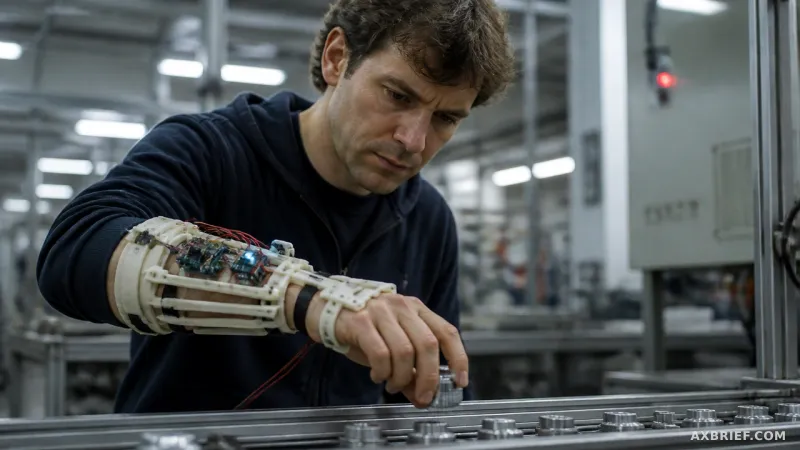
Grabette emerges as a strategic pivot in this landscape, offering an open-source system designed to collect 6-DoF manipulation data using only human hands and low-cost sensors. By removing the robot from the data collection phase entirely, Grabette allows users to record complex tasks in their own environment and transform those human movements into a dataset that a robot can learn from immediately. The 6-DoF capability is central here, capturing both the 3D position and the rotation of the hand in space, which is essential for tasks requiring precision and orientation.
The hardware is intentionally designed to avoid the trap of proprietary ecosystems. Instead of custom-fabricated parts, Grabette utilizes a handheld gripper form factor built from standard, off-the-shelf components. The core consists of a Raspberry Pi and a standard Pi camera, paired with an OAK-D depth camera and magnetic encoders to measure rotation angles. By relying on parts that anyone can order online, the project eliminates fork lock-in, ensuring that researchers are not forced into a specific vendor's ecosystem to maintain their hardware.
To ensure the data is actually usable, Grabette adheres to the LeRobot dataset standard and leverages the Hugging Face Hub for distribution. The software pipeline is designed for maximum accessibility; there is no need to install complex local environments or manage conflicting library dependencies. Instead, the system uses a browser-based processing pipeline. Users can select recorded episodes and perform post-processing with a single click via HF Space, which converts raw demonstrations into a format ready for model training. This infrastructure transforms data collection from a specialized engineering task into a community-driven effort, where diverse manipulation datasets can be crowdsourced and shared globally.
Breaking the Vendor Lock-in with Robot-Agnostic Design
While many existing capture tools provide precision, they often do so within a closed loop. Industry tools like Agibot's MEgo gripper, Genrobot's DAS gripper, and Sunday Robotics' skill capture glove offer high-fidelity data, but their source code remains proprietary. This creates a classic vendor lock-in scenario where the user is tethered to the manufacturer's software and hardware specifications. Grabette breaks this cycle by drawing inspiration from Stanford University's Universal Manipulation Interface (UMI), which uses handheld grippers and fisheye cameras combined with SLAM-based trajectory reconstruction to extract learnable data.
The technical differentiation of Grabette lies in its dual-camera strategy and its approach to synchronization. The system employs a wide-angle fisheye camera to provide contextual information, mimicking the perspective of a robot's wrist camera. This allows the model to understand the relationship between the gripper and the surrounding environment. Simultaneously, the RGBD camera handles the robust 6-DoF tracking, capturing the X, Y, Z coordinates and the Roll, Pitch, and Yaw of the movement. To prevent the temporal drift that often ruins robot policies, Grabette implements a single shared clock. This ensures that the video feed, depth data, IMU readings, and gripper encoder values are all timestamped identically on the Raspberry Pi, creating a seamless, continuous trajectory.
Perhaps the most significant shift is the adoption of a robot-agnostic design. Traditional data collection often records joint angles specific to a particular robot arm's kinematics. If you change the robot model, the data becomes useless. Grabette ignores the robot's internal joints during collection and instead records local 6-DoF Cartesian poses and the open/close state of the gripper. This separation of physical hardware from data format means a single dataset can be applied to various robot arms regardless of their manufacturer.
To bridge the gap between human recording and robot execution, the system introduces Gripette. Gripette is an end-effector designed to be mounted on a robot arm, serving as the physical twin to the Grabette handheld tool. Because the recording device and the execution device share the same physical dimensions and sensor characteristics, the geometric error during the transfer from human demonstration to robot action is minimized. This allows a practitioner to record a movement with Grabette and have a robot equipped with Gripette replicate that exact trajectory in Cartesian space.
Scaling the Learning Loop from 200 Demonstrations
The efficiency of this pipeline is evidenced by the project's ability to implement an end-to-end learning loop using only 200 recorded demonstrations. In the past, achieving a functional policy often required tens of thousands of iterations or expensive remote-control setups. By streamlining the path from task definition to model deployment, Grabette proves that the ease of collection is now a more critical variable than the sheer volume of data. The resulting datasets and models are hosted on the Hugging Face Hub, allowing the community to verify the results and build upon them.
This ecosystem is designed to expand. The development of Casquette, a head-mounted POV (Point of View) device, aims to add a first-person perspective to the data. By combining the wrist-view data from Grabette with the eye-level data from Casquette, robots can better understand human intent and the broader spatial context of a task. This multi-modal approach moves the field closer to a world where robot learning is not the exclusive domain of a few labs, but a collaborative effort powered by a global library of open manipulation data.
By replacing closed toolchains with standard components and a browser-based pipeline, Grabette reduces the time and cost of data acquisition to a benchtop level. It transforms the act of showing a robot how to move from a high-stakes engineering project into a simple act of recording and sharing.



