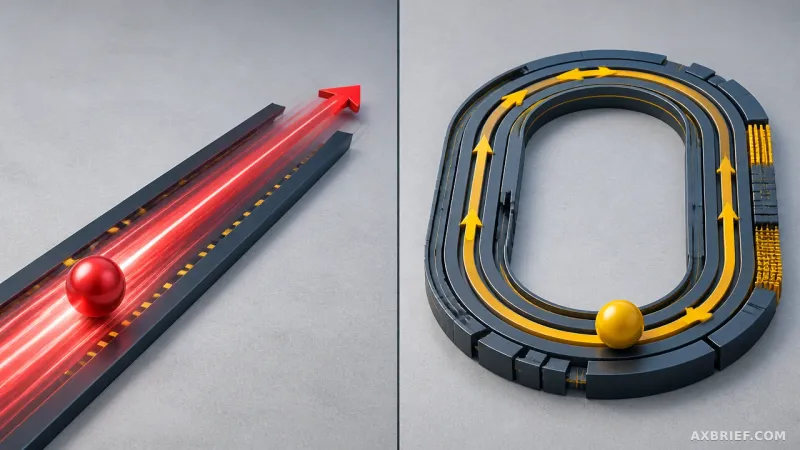
Most users today interact with artificial intelligence through a cycle of digital amnesia. You open a chat window, provide a mountain of context, guide the model through a complex task, and then close the tab. When you return the next day, you are greeted by a blank slate. Even with the advent of custom instructions or memory features, the fundamental unit of interaction remains the session—a temporary bridge between a prompt and a response. This ephemeral nature forces the human to act as the primary keeper of context, constantly rebuilding the mental and digital environment required for the AI to be useful.
The Architecture of Persistent Agency
Grok Bot fundamentally re-engineers this relationship by shifting the primary unit of the interface from the chat session to the bot itself. In this model, the user does not simply start a conversation; they own and manage a persistent agent with a distinct identity. This design is built upon five core conceptual pillars: the bot, the conversation, the task, the tool, and the computer. By placing the bot at the top of the hierarchy, the system ensures that identity and memory are decoupled from individual chat threads. A bot is defined by its name, avatar, and title, but more importantly, it possesses an internal memory that spans across all interactions.

Unlike standard LLM interfaces where the model operates in a vacuum, each Grok Bot is allocated its own dedicated computer and a specific set of tools. This allows the agent to perform computations and execute workflows in an independent environment without requiring the user to babysit every step of the process. When a user logs back into the system, they are not facing a void, but rather a teammate who has been maintaining a state of readiness. Because the bot retains its memory and access to its dedicated compute environment, the user can resume a complex project exactly where it left off, eliminating the friction of context reconstruction.

To manage a growing fleet of these agents, the interface relies on a visual identification system designed for peripheral vision. Rather than forcing the user to read labels, Grok Bot uses geometric shapes and distinct eye forms, augmented by unique accessories for each bot. This allows a user to scan a list of active agents and instantly recognize which one is the researcher, the coder, or the coordinator. This visual shorthand is paired with a sophisticated motion system that communicates the bot's internal state. The avatars transition through six distinct states: idle, thinking, working, waiting, blocked, and done. By integrating status updates into the avatar's movement and appearance, the system removes the need for clunky text indicators or progress bars, allowing the user to sense the health of their agent fleet at a glance.

For those who need deeper insight, a simple hover action over an avatar reveals the specific task currently in progress. The interface displays concrete objectives, such as drafting a follow-up email to a specific client, modifying a pricing page, or saving multiple introduction drafts to a CRM. This layering of information—from a glance at a moving avatar to a detailed hover state—ensures that the user maintains oversight without being overwhelmed by a constant stream of status logs.

From Micro-Management to Strategic Orchestration
The true shift in the Grok Bot paradigm is not visual, but operational. The system addresses the inherent tension between agent autonomy and user control through a three-tier access model for the bot's dedicated computer. In the first tier, no access, the bot operates entirely in the background, and the user only receives the final output. The second tier, glance, allows the user to peek at the bot's screen to verify the context of the work. The third tier, full control, grants the user direct access to the bot's environment to manually intervene or fix errors. This gradient of control allows the user to calibrate their level of supervision based on the bot's proven reliability or the criticality of the task.
To prevent cognitive confusion between the user's own desktop and the bot's environment, the interface employs a temporal lighting system. The wallpapers of the bot's dedicated computers shift in brightness and tone based on the actual time of day. This subtle physical cue reinforces the idea that the bot is operating in a separate, independent workspace, reducing the mental friction of switching between human and agent domains.
This operational philosophy extends to how information is delivered. Grok Bot moves away from the traditional linear chat transcript in favor of a heterogeneous transcript. In this system, the AI decides the best UI component for the data it is presenting. Narrative explanations are delivered as prose, while structured data, metrics, and actionable items are rendered as inline cards and interactive widgets. Furthermore, system events—such as the creation of a routine, a change in settings, or a message sent from one bot to another—are injected directly into the timeline. The chat window is no longer just a place for conversation; it is a living record of work, combining dialogue, system logs, and data visualizations into a single source of truth.
As the number of specialized bots increases, the system introduces the Chief of Staff Bot. This agent acts as a high-level orchestrator, sitting between the user and the specialized workforce. Instead of the user assigning tasks to five different bots and tracking five different progress bars, they provide a strategic objective to the Chief of Staff. The orchestrator analyzes the goal, decomposes it into sub-tasks, assigns those tasks to the appropriate specialized bots, and synthesizes the final results into a single report.
This architecture transforms the user's role from a task distributor to a strategic manager. The Chief of Staff Bot also handles the critical problem of context synchronization. When a research bot finds a piece of data that the analysis bot needs, the Chief of Staff ensures the information is refined and passed along without duplication or loss of nuance. By simplifying the command chain to a single point of contact, Grok Bot allows the agent ecosystem to scale in complexity without increasing the cognitive load on the human operator.
The transition from session-based chatting to identity-based agency marks the end of the AI as a tool and the beginning of the AI as a digital employee. By combining visual state signaling, tiered environmental control, and hierarchical orchestration, Grok Bot creates a blueprint for an interface where humans manage outcomes rather than prompts.