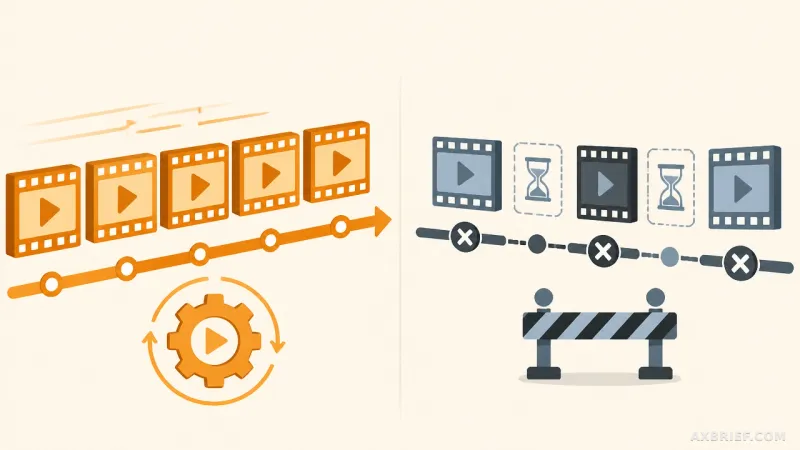
The robotics industry has long been trapped in a cycle of impressive demonstrations that fail to translate into commercial utility. For years, the tech world has watched videos of humanoids performing backflips or walking through warehouses, yet these machines rarely transition from the lab to a sustainable business model. The gap between a robot that can move and a robot that can actually work remains the primary barrier to the mass adoption of physical AI. This week, a new initiative in China attempts to bridge that gap by treating robots not as products to be manufactured, but as students to be educated.
The Institutional Framework of the Hangzhou Robot School
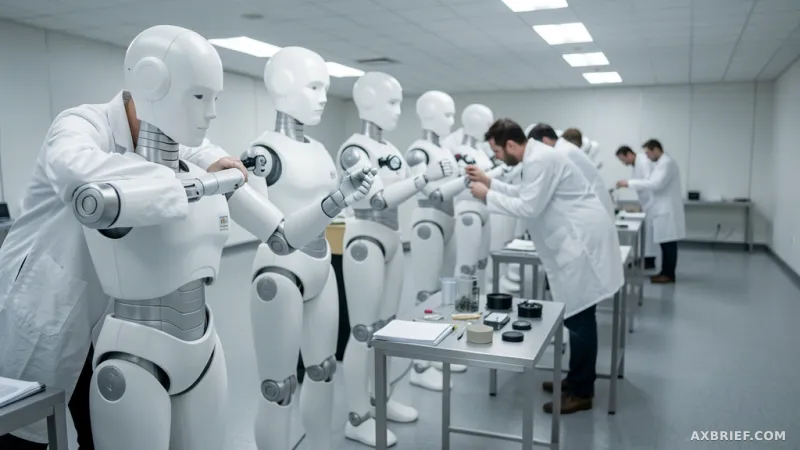
In Zhejiang Province, the Hangzhou Robot School has officially opened its doors, welcoming its first cohort of 30 robot students. This is not a traditional academic institution for humans, but a specialized platform designed to evolve the cognitive capabilities of humanoid machines. The school is the result of a strategic partnership between the Zhejiang University Robot Research Institute, the Zhejiang Provincial Institute of Quality Science, and a consortium of industry partners. Together, they are focusing on the integration of AI agents and the enhancement of the robotic brain to ensure that machines can comprehend and execute complex tasks in real-world environments.
The impetus for this school is rooted in a sobering statistical reality. According to industry data, the survival rate for global robotics companies is alarmingly low, with fewer than 10 percent surviving three years and fewer than 3 percent surviving five years. This attrition suggests that hardware excellence is no longer the primary competitive advantage. A company can build a robot with precision actuators and high-torque motors, but if that robot cannot navigate the nuances of a professional workplace, it becomes a costly ornament. The Hangzhou Robot School targets this failure by focusing on four key sectors: industrial manufacturing, home services, medical rehabilitation, and commercial performance.
To move beyond simple repetition, the 30 robots in the inaugural class are undergoing rigorous training in specific job functions. Their curriculum includes mastering the art of guiding and explaining information to humans, interacting with guests in a welcoming manner, controlling industrial equipment, and engaging in multilingual communication. Perhaps most critically, they are being trained in open-ended question-and-answer sessions, which requires the robot to not only process language but to infer intent and make autonomous decisions based on the context of the situation.
From Hardware Specifications to Professional Certification
The fundamental shift occurring at the Hangzhou Robot School is the transition from a hardware-centric development model to a software-driven certification model. In the past, a robot's value was measured by its spec sheet: the degrees of freedom in its joints, the capacity of its battery, or the resolution of its cameras. The school argues that these are merely prerequisites. The real value lies in the robot's ability to perform a job reliably, a metric that has previously been ignored in favor of raw technical power.
To standardize this, the school has implemented a comprehensive training and certification pipeline. The process begins with an initial phase of experience and classification, where the robot's baseline capabilities are assessed. This leads into specialized vocational training tailored to specific industrial demands. Upon completion of these courses, the robots do not simply return to the factory; they receive professional functional grade certificates issued by authoritative bodies. This creates a new economy for physical AI where a certified robot is more valuable to an employer than an uncertified one, regardless of the hardware brand.
This educational philosophy is structured around five distinct dimensions: intelligence, virtue, physicality, aesthetics, and labor. Intelligence focuses on the cognitive processing and decision-making capabilities of the AI. Virtue addresses the critical area of safety ethics and the robot's ability to operate without harming humans or violating social norms. Physicality covers the actual movement performance and mechanical stability. Aesthetics ensures that the robot's interaction and design are acceptable for human environments. Finally, labor focuses on the actual execution of the assigned professional tasks. By balancing these five pillars, the school ensures that the robots are not just functional, but socially and ethically integrated into the workforce.
This approach reveals a deeper truth about the current state of AI. The industry is realizing that the bottleneck for robotics is not the motor, but the mind. By creating a system where robots must earn their credentials through proven performance, the Hangzhou Robot School is attempting to replace the gamble of hardware deployment with a predictable, certified standard of labor.
The future of physical AI will not be decided by who builds the fastest robot, but by who creates the most capable professional.