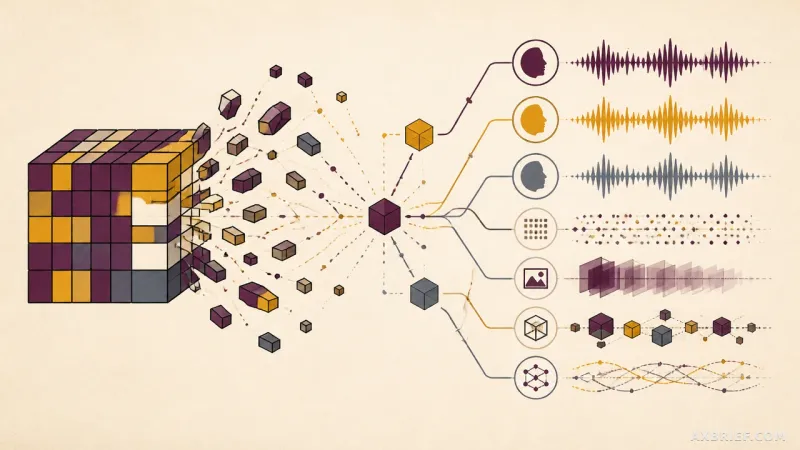
For the chief security officer of a global bank or a government agency, the promise of generative AI often crashes against the reality of the air-gap. In these environments, the risk of data leakage is not a theoretical concern but a systemic threat, forcing organizations to rely on isolated networks and grueling manual migrations. This friction has created a massive bottleneck, where the desire for AI-driven efficiency is paralyzed by the sheer cost and risk of moving legacy systems into a modern intelligence framework. This week, the industry is seeing a shift in how this barrier is dismantled, moving away from simple API integrations toward a deep, infrastructure-level implantation of large language models.
The Architecture of the DXC-Anthropic Alliance
DXC Technology and Anthropic have entered into a multi-year global alliance designed to embed Claude directly into the core systems of highly regulated industries. This partnership is not a standard software vendor agreement; it is a strategic deployment of human capital and technical integration. The primary target sectors include banking, aviation, insurance, manufacturing, and government agencies—industries where a single single point of failure in a mission-critical process, such as transaction processing or insurance claims, can lead to catastrophic operational collapse.
To bridge the gap between cloud-based AI and locked-down legacy environments, DXC is deploying a massive force of Forward-Deployed Engineers (FDEs). Unlike the traditional cloud model where a client connects to an external API, FDEs are specialized engineers who reside within the client's organization. These engineers handle the intricate task of modifying internal system architectures and optimizing them for Claude's integration, ensuring that the model operates within the specific security constraints and compliance mandates of the host organization. By placing the expertise inside the perimeter, DXC minimizes implementation errors and allows Claude to be woven directly into the business logic of the enterprise.
This operational scale is supported by the Claude Partner Network, where DXC now provides a specialized implementation path for corporate clients. The goal is to transform the LLM from a peripheral chatbot into a core component of the system's operational fabric, managed by a workforce trained specifically for high-stakes environments.
The 95 Percent Shift in Software Engineering
The true disruption of this alliance is visible in DXC OASIS, an AI-native orchestration platform released in April 2026. OASIS is designed to automate the deployment and management of IT services, with Claude serving as the foundational model for its agentic workflows. In this system, AI agents do not merely suggest actions; they independently judge and execute repetitive operational routines.
During the development of OASIS, DXC implemented a radical shift in the software development lifecycle. Claude was tasked with generating more than 95% of the platform's entire codebase. This flipped the traditional engineering hierarchy on its head. Professional software engineers ceased to be the primary authors of the code and instead transitioned into the role of auditors and final approvers. By shifting the human effort from creation to verification, DXC reported a 10x increase in development speed. The time previously spent on drafting and detailed implementation was replaced by a streamlined review process, drastically shortening the development cycle.
To ensure this was not a laboratory success, DXC stress-tested the platform in a massive real-world environment. The system was deployed to 115,000 internal operators across 70 countries. This internal rollout served as a rigorous validation phase, proving that Claude-generated code could maintain stability and logic under the heavy operational load of a global enterprise while adhering to the same strict security and compliance standards required by their external clients. Currently, OASIS is already in service for more than 50 customers, providing a blueprint for the phased rollout of AI-native systems across the globe.
To sustain this momentum, DXC has integrated the Anthropic Academy, a certification program for partner engineers. By adding a proprietary curriculum focused on mission-critical systems, DXC is creating a pipeline of certified FDEs who understand the specific constraints of secure, on-premises environments. This approach recognizes that in regulated industries, the ability to safely deploy a model is more valuable than the model's raw benchmark scores.
This strategy holds significant implications for markets with extreme regulatory hurdles, such as the South Korean financial and public sectors. In Korea, strict network separation laws and compliance mandates often make AI adoption a non-starter for core business logic. The DXC model suggests a way forward: using embedded engineers to optimize systems for on-premises or air-gapped environments, allowing AI to handle actual transaction logic rather than just surface-level queries. By controlling the security environment at the site level, the barrier to entry for LLM integration is lowered without compromising the integrity of the network.
The transition to AI-native systems in mission-critical environments is ultimately a problem of engineering scale rather than model intelligence. The deployment of thousands of certified engineers and the creation of a platform where 95% of the code is AI-generated demonstrates that the path to enterprise AI lies in the precision of the implementation and the scale of the verification process.