Every developer has experienced the demo-to-production cliff. You spend a weekend building an autonomous agent that seems brilliant in a controlled environment, only to watch it hallucinate a nonexistent API endpoint or spiral into an infinite loop the moment a real user interacts with it. The industry is currently hitting a wall where the raw intelligence of large language models is no longer the bottleneck. Instead, the crisis is one of control. The community is shifting away from the quest for the most powerful model and toward the architecture of the guardrails that keep those models from drifting. This week, the conversation has moved from how to prompt an agent to how to engineer its boundaries.
The Infrastructure of Autonomous Orchestration
Moving an agent from a prototype to a production-ready system requires a fundamental shift in how we handle state and deployment. This is where LangGraph enters the stack. Unlike simple linear chains, LangGraph provides a state-based workflow framework designed for scalable, multi-step reasoning loops. The core technical advantage here is stateful checkpointing. By recording the intermediate state of a task, LangGraph allows an agent to remember exactly where it is within a complex reasoning chain. If a process fails at step ten of a fifteen-step sequence, the system does not need to restart from scratch. It can recover from the last successful checkpoint, preserving the data and context gathered in previous steps. This transforms the agent from a fragile sequence of calls into a resilient system capable of error recovery.
While LangGraph handles the logic, KimiClaw addresses the operational overhead. KimiClaw functions as a managed AI workflow platform, providing a cloud environment that abstracts away the complexities of infrastructure. In a traditional setup, a developer must spend significant time determining server specifications, managing container orchestration, and scaling resources. KimiClaw removes this friction, allowing developers to deploy complex agent logic immediately without managing the underlying hardware. By eliminating infrastructure overhead, teams can redirect their energy toward prompt refinement and workflow optimization, which drastically lowers the initial cost of entry and accelerates the time to market.
This orchestration becomes critical when dealing with high-latency or high-sensitivity interfaces, such as voice-controlled agents. A production-grade voice agent is not just about speech-to-text; it requires a sophisticated coordination of streaming voice recognition, turn detection, and interrupt handling. The system must precisely identify the moment a user stops speaking to trigger a response, but it must also be capable of immediate interrupt handling. If a user cuts the AI off mid-sentence, the orchestration layer must instantly kill the output stream and return the system to a listening state. Without this level of control, the user experience suffers from awkward delays and fragmented conversational contexts.
The Shift from Probabilistic to Deterministic Control
If orchestration is the skeleton of the agent, constraint decoding is the nervous system that ensures precision. The fundamental problem with LLMs is that they are probabilistic; they guess the next token based on likelihood, which is anathema to systems that require strict data schemas. Constraint decoding solves this by forcing the model to adhere to specific regular expressions or data schemas through a process called logit masking. By utilizing finite state machines, the system tracks the current state of the generated output and masks the logits—the raw prediction scores for every possible next token.
When a token does not fit the required schema, its probability is set to negative infinity. For example, if the agent is generating a JSON object and has just produced a key, the finite state machine knows that the only logically valid next character is a colon. It masks every other possible token in the model's vocabulary, leaving the colon as the only option. The model is not choosing to be accurate; it is physically unable to be inaccurate. This removes the possibility of formatting errors entirely, ensuring that the output is always machine-readable.
This technique is particularly vital for Small Language Models (SLMs). Because SLMs have fewer parameters, they are more prone to ignoring complex instructions or collapsing under the weight of strict formatting requirements. By applying constraint decoding to a locally deployed SLM, enterprises can achieve the same structural reliability as a massive, expensive model without the associated latency or cost. It shifts the burden of reliability from the model's internal intelligence to the system's deterministic structure. When the output must feed into an API call or a database entry, relying on the model's probabilistic nature is a risk. Constraint decoding replaces hope with a guarantee.
This drive toward precision extends into the realm of data analysis. The traditional workflow of writing hundreds of lines of SQL or Python and then manually moving data into visualization tools is being replaced by integrated pipelines. However, as Harvard Business School (HBS) has noted, the success of AI adoption depends less on mastering complex algorithms and more on the clear definition of business goals and the preparation of high-quality data. The insight here is that a simple model applied to clean data consistently outperforms a state-of-the-art model applied to noisy data. The focus is shifting from the mathematical structure of the model to the integrity of the data pipeline.
To prevent hallucinations in data analysis, practitioners are now implementing verification loops where AI-generated insights are cross-referenced against real-world metrics like actual revenue or customer behavior. Even if the code generated by an AI is logically sound, data anomalies or missing values can lead to incorrect conclusions. The solution is the creation of benchmark sets—ground-truth datasets used to measure the error margin of the AI's output. Without this verification layer, the risk of making strategic decisions based on a hallucinated trend is too high. The goal is transparency; the tool must allow a human to inspect the intermediate steps of the analysis rather than presenting a black-box result.
For structured data problems, the most efficient path is often to bypass the LLM entirely in favor of specialized machine learning algorithms. For numerical prediction and category forecasting, regression and classification algorithms offer significantly lower latency and cost. In industries like finance or healthcare, where explainability is a legal requirement, these models are indispensable because their decision-making process is mathematically transparent.
When higher accuracy is required for tabular data, boosting methods such as LightGBM or XGBoost are the gold standard. Boosting works by sequentially combining weak predictive models, where each new model focuses on correcting the errors of its predecessor. When paired with ensemble techniques—which aggregate predictions through voting or averaging—the risk of overfitting is minimized. These models are faster to train and require less memory than deep learning models, making them ideal for production environments. For sequential data like system logs or sensor readings, LSTM (Long Short-Term Memory) networks remain the primary choice. By using a gate structure to selectively remember or forget information, LSTMs solve the vanishing gradient problem of traditional RNNs, allowing them to handle long-term dependencies in time-series data with minimal resource consumption.
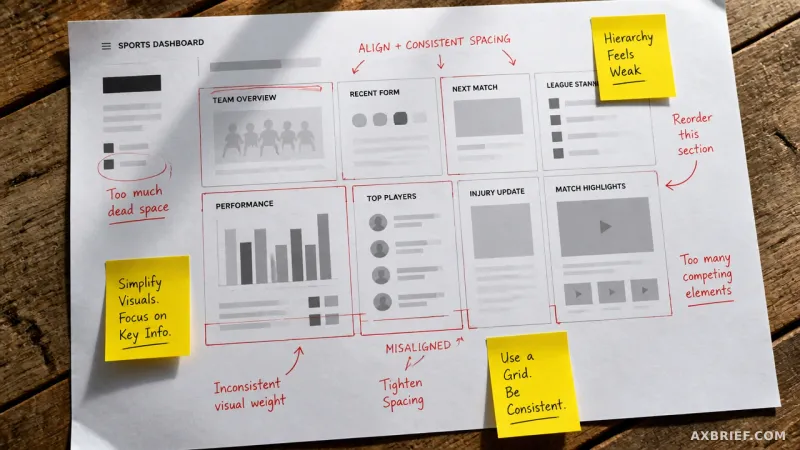
Finally, the bridge between these backend systems and the end user is being built through interactive prototyping tools like Claude Design. The utility of such tools depends on the structural integrity of the generated code. To avoid the fragmentation that occurs when an AI generates different styles for every page, developers are implementing structured design systems. By explicitly defining design tokens—naming conventions, color palettes, typography, and spacing rules—within the prompt, the AI is forced to maintain a consistent visual identity. This ensures that the resulting prototype is not just a visual mockup but a maintainable codebase with high reusability.
When transitioning from a Claude Design prototype to a live service, the decision between custom infrastructure and managed platforms like KimiClaw comes down to the availability of internal DevOps resources. While custom infrastructure allows for granular optimization, the cost of provisioning, monitoring, and versioning is high. For teams prioritizing speed and reduced operational overhead, a managed cloud approach is the pragmatic choice.
As we move toward 2026, the competitive advantage for AI practitioners will not be found in the ability to access the largest model. Instead, it will lie in engineering control: the ability to constrain intelligence, orchestrate complex workflows, and verify outputs with deterministic rigor.