Industrial warehouse managers today face a digital fragmentation that mirrors the chaos of a smart home filled with incompatible gadgets. When a facility deploys an autonomous mobile robot for pallet movement from one vendor and a cleaning robot from another, they rarely get a unified system. Instead, they inherit a collection of isolated silos, each requiring its own proprietary software, its own communication protocol, and its own dedicated management dashboard. This fragmentation creates a ceiling for automation, where the effort required to integrate a new piece of hardware often outweighs the operational gain it provides. The industry has long sought a universal translator for the physical world, a way to treat a fleet of diverse robots as a single, cohesive workforce rather than a collection of competing brands.
The Blueprint for Multi-Vendor Interoperability
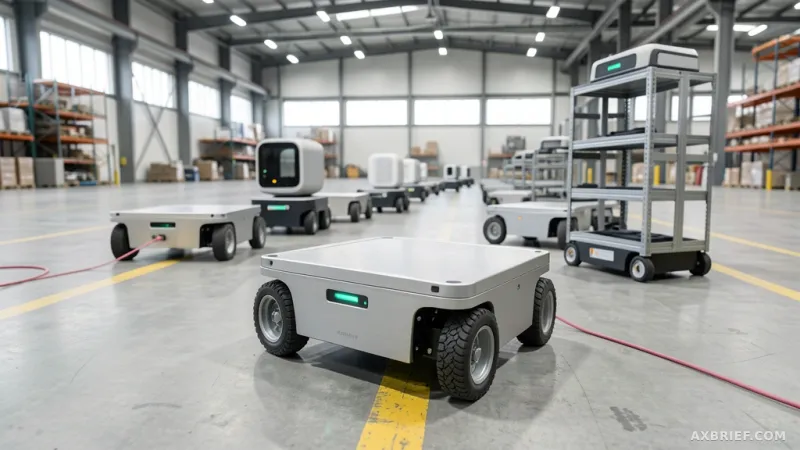
At Automate 2026, held from June 22 to 25 at the McCormick Place in Chicago, InOrbit.AI provided a concrete answer to this fragmentation through the world's first public demonstration of autonomous mobile robot (AMR) interoperability. In collaboration with the Association for Advancing Automation (A3), InOrbit.AI successfully coordinated a real-time environment featuring AMRs from eight distinct global companies: Arti Robotics, InOrbit, Karcher, Neura Robotics, Omron, Peer Robotics, Quaji Robotics, and Unitree. These robots varied not only in physical form and primary function but also in their internal communication protocols, yet they operated under a single system without collisions or command conflicts.
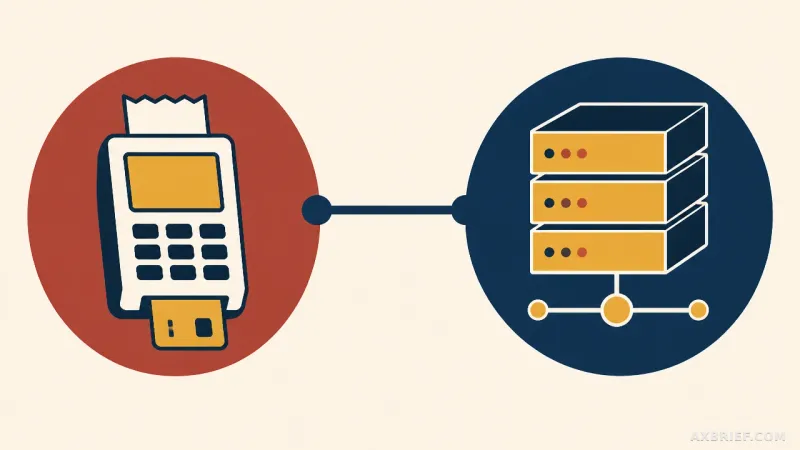
The technical foundation of this achievement is InOrbit Space Intelligence, an AI-driven orchestration platform designed to connect isolated automation islands into a resilient operational network. This platform sits above the individual vendor management systems, acting as a master conductor that deploys robots and coordinates their actions in real-time. To bridge the gap between high-level business intent and physical execution, InOrbit utilizes the Business Execution System (BES). The BES serves as a critical middleware layer that ingests orders from enterprise-level systems such as Warehouse Management Systems (WMS), Enterprise Resource Planning (ERP), and Manufacturing Execution Systems (MES), and translates them into optimized execution commands for a heterogeneous robot fleet. By providing real-time spatial awareness, traffic management, and collision avoidance across different brands, the BES ensures that operators do not have to manually configure every robot's specific technical parameters.
From Centralized Control to Federated Intelligence
The true shift in InOrbit.AI's approach lies in the transition from centralized control to a federated orchestration architecture. In a traditional centralized model, a single controller attempts to manage every state and command for every robot. While this works for a single-vendor fleet, it collapses in a multi-vendor environment because communication protocol mismatches often leave certain robots isolated or unresponsive. InOrbit's federated architecture solves this by allowing each manufacturer to maintain its own robot fleet manager while the orchestration layer mediates communication and coordinates the overall workflow. This allows the system to preserve the unique, high-performance features of each brand while ensuring they can still talk to one another.
This federated approach is not just a proprietary feature but is serving as a practical reference for the upcoming ISO/DIS 21423 international standard. This standard aims to define a common communication framework so that robots, fleet managers, and enterprise systems from different vendors can interoperate seamlessly. InOrbit CEO Florian Pestoni has been actively involved in the ISO working group developing this framework, which is currently in the voting phase and expected to be officially published by the end of the year. Once ratified, this standard will provide the technical legitimacy for companies to select hardware based on performance rather than ecosystem lock-in.
To further lower the barrier to entry, InOrbit introduced the RobOps Copilot, an agentic AI overlay that allows operations teams to manage end-to-end robot activities using natural language and voice commands. Instead of navigating multiple vendor dashboards, a manager can simply state a business goal, and the AI determines the necessary execution plan, retrieves real-time data, and generates performance reports. This shifts the operational focus from the technical specifications of how a robot works to the business objective of what needs to be achieved. This intelligence is bolstered by a heavy integration with NVIDIA's ecosystem. The platform utilizes NVIDIA Thor for edge inference and NVIDIA Metropolis for visual AI agents, ensuring high-precision coordination. For safety, InOrbit integrates InnoTech SafeGuard and NVIDIA Halos, employing outside-in intelligence to eliminate the blind spots of on-board robot sensors and prevent collisions through external spatial monitoring.
Florian Pestoni describes the current state of the industry as the Automation Paradox, where increasing the scale of robot deployment actually decreases operational agility because the management complexity grows exponentially. When companies are forced to build custom API bridges for every new vendor, the engineering cost erodes the return on investment and creates a dangerous dependency on a single supplier. By implementing a common communication framework, InOrbit.AI transforms the cost structure of robot adoption, reducing the need for repetitive operator training and expensive custom integration. For the modern enterprise, the primary metric for scaling automation is no longer the raw performance of a single robot brand, but the total cost of integration and the breadth of data connectivity across a mixed fleet.