Almost every traveler has encountered the modern service robot in a hotel lobby or airport terminal. These machines usually follow a rigid script, blinking vacantly while repeating the same three phrases regardless of the user's actual frustration or urgency. They are essentially kiosks on wheels, providing a sterile experience that feels more like a technical demo than a helpful interaction. This gap between autonomous movement and actual social utility is exactly what IntBot is attempting to bridge in one of the world's most tech-forward cities.
The Operational Blueprint for Physical AI
IntBot, a San Jose-based AI firm, has entered into a strategic partnership with the Certis Group in Singapore to move humanoid robots out of the lab and into high-traffic public environments. This is not a limited pilot program or a marketing stunt; the goal is the full-scale integration of humanoids into business operations. The partnership leverages IntBot's General Social Intelligence (GSI) and Physical AI platform alongside the operational scale of Certis. As a global security and facility management leader with a workforce of over 25,000 employees across markets including Australia and Qatar, Certis provides the necessary infrastructure to define real-world workflows and deployment requirements.
The target environments are specifically chosen for their volatility and high human density, including hotels, conference centers, and corporate campuses. By combining IntBot's intelligence layer with Certis's experience in managing complex human-centric missions, the two companies are building a framework where humanoids can handle visitor support, multilingual guest relations, and on-site operational assistance. This collaboration signals a broader shift in the industry toward Physical AI, where the value is measured not by the robot's ability to exist in a space, but by its ability to function within a professional business ecosystem.
The Great Pivot From Manipulation to Interaction
For the better part of a decade, the robotics industry has been obsessed with manipulation. The primary technical hurdle was dexterity: getting a robotic hand to pick up a grape without crushing it or fold a shirt with precision. However, as multimodal AI models have matured, the bottleneck has shifted. Ray Yang, co-founder and CEO of IntBot, argues that the critical challenge for embodied AI is no longer how the robot manipulates objects, but how it interacts with people.
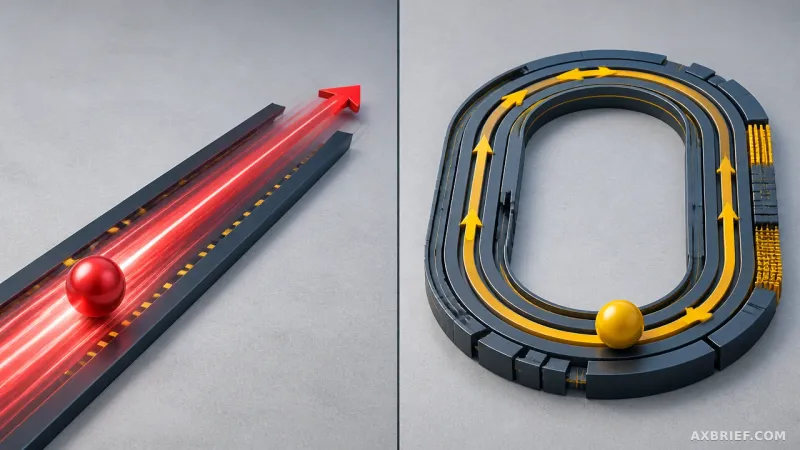
Historically, industrial robots operated behind safety fences, isolated from humans to prevent accidents. The new generation of humanoids is designed to operate without those fences, moving autonomously among crowds where social interaction is not a secondary feature but the primary task. In a public square or a hotel lobby, a robot's success is not determined by its grip strength or joint precision, but by its ability to read a room, interpret human intent, and respond with social nuance. This shift represents a fundamental reversal in robotics priority: the "head" is now more critical than the "hand."
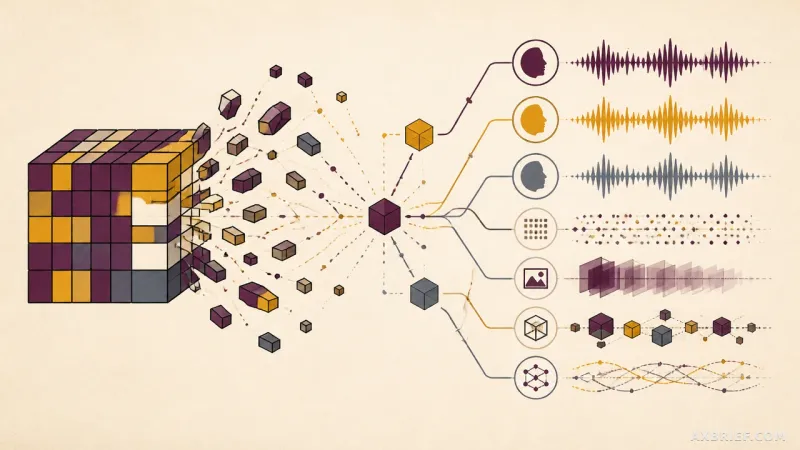
To achieve this, IntBot has implemented a system based on real-time multimodal perception and closed-loop interaction. Rather than following a linear decision tree, the robot processes visual and auditory data simultaneously to build a three-dimensional understanding of the user's state and the surrounding environment. The closed-loop system allows the robot to treat human reactions as immediate feedback, adjusting its behavior in real-time to correct misunderstandings. This creates a fluid, adaptive experience that mimics human intuition more closely than any previous service robot.
Redefining Efficiency Through Social Context
The operational success of a service robot now hinges on social context awareness rather than simple autonomous navigation. While many robots can move from point A to point B without hitting a wall, very few can determine if a human is hesitating because they are lost or if they are simply waiting for someone else. Rahul Kumar, CSO and Head of International and Robotics at Certis, notes that the next phase of enterprise robotics is defined by this ability to collaborate naturally within an operational environment.
IntBot and Certis plan to apply this social intelligence across several high-friction sectors, including transit hubs, hospitality, healthcare, and retail. By integrating these humanoids into structured operational designs—where processes, workflows, and resources are clearly defined—the AI provides a layer of coordination and visibility that was previously only possible through human supervision. The objective is to offload the repetitive, high-stress burdens of front-line staff while providing the general public with a more intuitive way to navigate complex urban environments.
This transition toward socially intelligent Physical AI suggests that the future of the humanoid is not as a replacement for human labor, but as a sophisticated interface between digital intelligence and physical space.