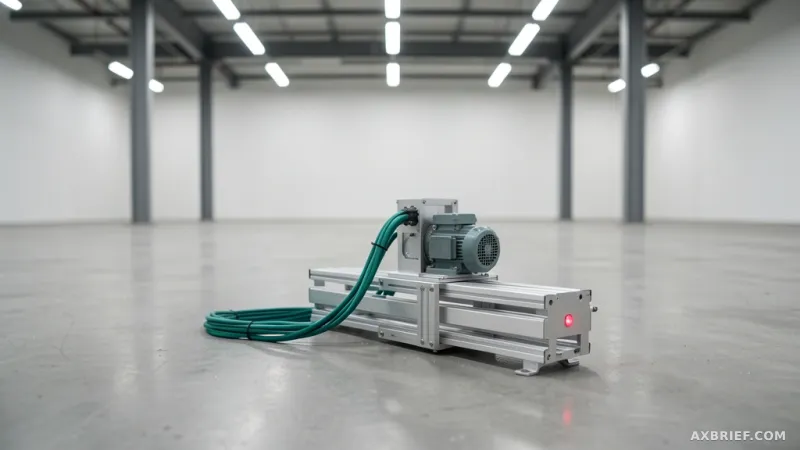
For decades, the industrial floor has been a place of rigid permanence. When a manufacturer needs to pivot a production line or adjust a robotic sequence, the process is rarely as simple as updating a line of code. Instead, it involves a grueling cycle of physical intervention: technicians disconnecting wires, swapping out controllers, and manually recalibrating hardware. This friction between the digital intent and the physical execution has long been the primary bottleneck in scaling smart factory initiatives.
The Architecture of an Integrated Ecosystem
At Automate 2026, Vention addressed this systemic inefficiency from booth #2848 with the unveiling of MachineMotion AI. This is not merely a standalone component but the centerpiece of a comprehensive automation ecosystem designed to collapse the gap between design and deployment. MachineMotion AI serves as a next-generation, AI-driven automation controller that orchestrates the movement and logic of industrial machinery.
To make this controller effective, Vention has built a full-stack platform that integrates four critical pillars: AI-powered robotics, industrial-grade motion control, modular workstations, and cloud-based software. By unifying these elements, the company has created a closed-loop environment where the hardware is designed to be natively compatible with the AI logic. This integration allows for a seamless flow of data and commands, ensuring that the physical assets on the floor respond in real-time to the instructions generated in the cloud. Detailed specifications and implementation guides for this ecosystem are available through Vention.
The Shift to Software-Defined Automation
The true significance of MachineMotion AI lies in the transition from hardware-centric configuration to what Vention calls software-defined automation. Under the slogan The Floor Runs on Us, the company is challenging the traditional manufacturing paradigm where the physical layout dictates the operational limit. In a conventional setup, changing a process often requires a physical overhaul of the machinery. With a software-defined approach, the hardware remains static while the behavior is modified through software parameter adjustments.
This shift fundamentally changes the economics of factory agility. When the logic of a machine is decoupled from its physical wiring, the time required to deploy or scale a system drops precipitously. The tension no longer exists between the desire for flexibility and the reality of hardware constraints. Instead of spending days on manual rewiring and controller synchronization, operators can iterate on their processes digitally and push those changes to the floor instantly. The competitive advantage in automation is therefore shifting away from the raw performance of a single robotic arm and toward the operational velocity of the entire platform.
This evolution means that the success of a smart factory is no longer measured by the sophistication of its individual tools, but by how quickly the integrated system can be reconfigured to meet new demands. By treating the factory floor as a programmable entity, Vention is moving industrial automation closer to the flexibility of a software deployment pipeline.
Manufacturing is evolving into a discipline where the ability to reprogram a floor is more valuable than the ability to build one.