
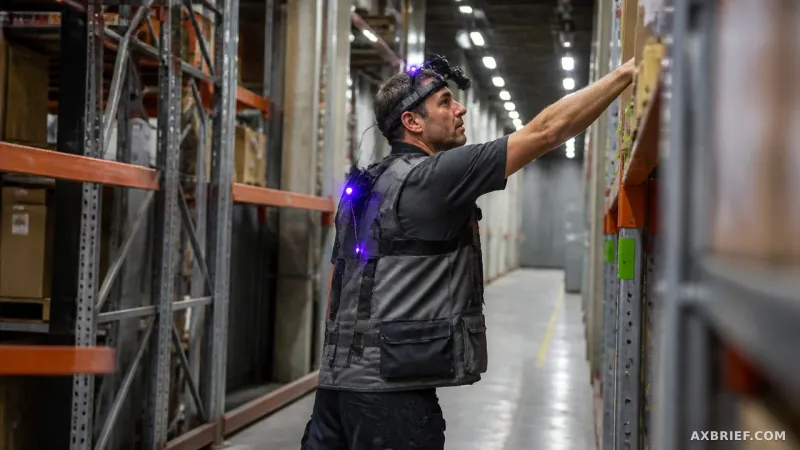
The artificial intelligence revolution has hit a physical wall. For a decade, the industry scaled by feeding large language models the entirety of the digitized human experience—billions of pages of text, code, and images scraped from the open web. But as the frontier shifts toward Embodied Intelligence, the playbook has broken. A robot cannot learn to fold laundry or assemble a circuit board by reading a manual or watching a YouTube video; it requires high-fidelity, proprioceptive data from the physical world. This scarcity of movement data has become the primary bottleneck for the next generation of humanoid robotics.
The Infrastructure of Embodied Intelligence
Mifeng Technology is positioning itself as the primary utility provider for this missing layer of the AI stack. The company recently secured a massive infusion of capital, raising hundreds of millions of yuan through a combination of angel and strategic investments. Among the key backers is Yuanqi Innovation Robot, a specialist in intelligent robot application solutions, signaling a tight integration between the data provider and the end-user of the robotics hardware.
Established in February 2026, Mifeng Technology operates as a strategic spin-off from the robotics developer AgiBot, which maintains a 75% equity stake in the venture. This relationship allows Mifeng to leverage AgiBot's internal incubation and hardware expertise while operating as a dedicated data services platform. The objective is the creation of a one-stop Physical AI data industry platform designed specifically to eliminate the data drought currently stalling the commercialization of embodied intelligence.
Solving the Cost of Failure
In the digital realm, a model hallucination is a textual error; in the physical realm, a robotic error is a shattered limb or a workplace accident. This risk creates a fundamental tension: the robots that need the most data are often the ones that are too expensive or dangerous to let fail in the real world. Mifeng Technology addresses this through a tripartite collection strategy that decouples learning from risk.
First, the company utilizes its proprietary MEgo series of data collection hardware and an automated data management engine. This hardware allows for the precise capture of physical movements, which are then tagged and organized for training. Second, Mifeng employs bodyless collection methods. By gathering data in sectors such as cultural tourism, education, commercial services, and industrial manufacturing without requiring a full robot chassis, they can scale data acquisition across diverse environments without the overhead of deploying expensive humanoid fleets. For specialized tasks like sorting, assembly, and domestic services, they rely on standardized physical device collection to build high-precision, domain-specific datasets.
The most critical pivot, however, is the implementation of high-precision virtual-real fusion modeling. By creating a digital twin of the physical environment that mirrors real-world physics with extreme accuracy, Mifeng can generate synthetic data for high-risk scenarios or extreme environments where real-world testing is impossible. This approach transforms the data problem from a manual collection task into a scalable simulation challenge. The strategic insight here is that the winner of the Physical AI race will not be the company with the most agile hardware, but the one that can most effectively replace physical constraints with high-fidelity virtual models.
The transition from digital intelligence to physical intelligence now depends entirely on the ability to industrialize the collection of movement.



