Most people experience generative AI as a tab open in a browser—a place to draft emails, summarize documents, or generate surreal images of cats in space. For the average user, the interaction ends at the screen. But for the world's largest creator, the boundary between the digital prompt and physical reality is dissolving. This week, the conversation shifts from how AI can write a script to how it can keep a human alive in the most hostile environments on Earth.
The Architecture of Extreme Survival
On September 5, a new project reveals the practical limits of Google's multimodal AI, Gemini, as it is deployed in a high-stakes survival challenge. MrBeast and his team are venturing into three of the most unforgiving biomes on the planet: the dense jungle, the arid desert, and the frozen Arctic. This is not a scripted promotional stunt, but a stress test of AI's ability to formulate real-time survival strategies where the cost of error is physical danger. The project serves as a live demonstration of how AI can identify environmental hazards and adapt to volatile weather patterns to increase the probability of survival.
This initiative is the first major output of a multi-year partnership between Beast Industries, the corporate entity behind MrBeast, and Google. The scope of this alliance extends far beyond simple YouTube integration. It represents a deep technical integration involving Gemini and Google Health, signaling a shift where massive content engines treat AI not as a peripheral tool for brainstorming, but as a core operating system for physical execution.

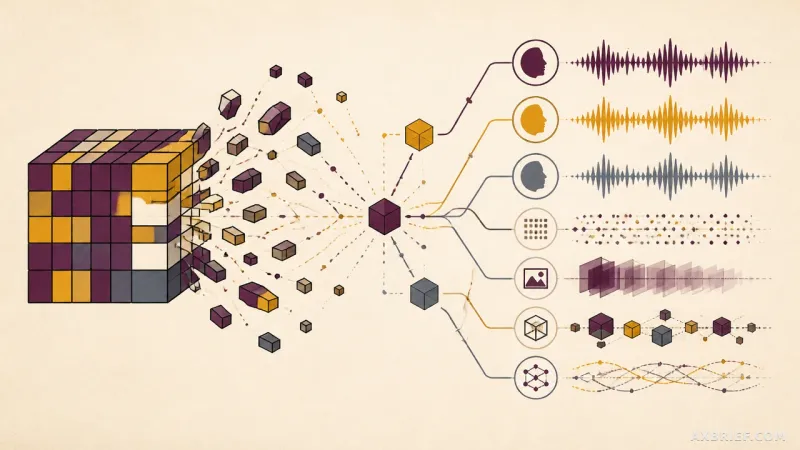
In the field, the team relies on Gemini's multimodal capabilities to process a stream of text and image data. By analyzing topographical features and climate datasets, the AI acts as a strategic guide, determining movement paths and behavioral protocols. The core objective is to see if AI reasoning can overcome the physical constraints of the wild. When the weather shifts unexpectedly, the team does not rely solely on human intuition; they turn to Gemini to generate immediate response plans, turning the AI into a critical variable in their survival equation.
Beyond the survivalist narrative, the partnership integrates hardware through Fitbit Air and Google Health. Participants wear Fitbit Air devices to track heart rate and activity levels in real time. This raw biometric data is fed into Google Health's analysis engines, which transform biological signals into objective health indicators. In an environment where exhaustion or hypothermia can set in invisibly, this system monitors whether participants are meeting their health and fitness goals or pushing toward a dangerous physical breaking point. The result is a closed-loop system where cognitive AI manages the environment while wearable hardware manages the human body.
From Creative Assistant to Operational Architect
To understand the significance of this partnership, one must look past the entertainment value and analyze the workflow. For years, the industry has viewed AI as a creative assistant—a tool for writing scripts or editing thumbnails. The MrBeast project flips this narrative by utilizing Gemini as a logistics and risk management partner. In the context of large-scale stunts, logistics refers to the precise movement of personnel, equipment, and materials across challenging terrain. Gemini is tasked with taking abstract goals—such as the scale of a stunt, a specific budget, and geographic constraints—and converting them into concrete resource lists and optimized deployment routes.
This represents a fundamental shift in how risk is analyzed. Traditionally, production safety relies on the intuition of experienced coordinators and historical precedents. This project replaces that intuition with an iterative AI workflow. The process begins with a logistics plan, which Gemini then audits to identify potential points of failure, such as equipment malfunctions or weather-induced bottlenecks. When a risk is identified, the AI generates a contingency scenario, which is then fed back into the primary plan for optimization. This loop continues until the plan is mathematically and logically hardened against the environment.
This operational shift will be detailed in an upcoming Gemini campaign, which will showcase the actual interfaces and prompts used to turn a creative vision into a physical logistics chain. The focus is on the transition from the abstract to the concrete. By demonstrating how a prompt can result in a coordinated movement of gear in the Arctic, Google is positioning Gemini as a tool for the physical world. The AI is no longer just suggesting what to say; it is directing where to move and how to survive.
This integration of AI, wearables, and physical activity creates a new entertainment format where digital data defines the boundaries of human experience. When a participant's heart rate or stress level, tracked by Fitbit Air, becomes a constraint or a challenge within the content itself, the technology is no longer a background utility. It becomes a primary character in the narrative. The data does not just record the event; it shapes the event.
For the broader AI industry, this is a signal that the era of the chatbot is evolving into the era of the operational agent. The value of an AI model is no longer measured solely by its linguistic fluency or its ability to pass a bar exam, but by its capacity to manage real-world variables. The transition from virtual creativity to physical optimization is the next frontier for generative AI. The ability to analyze a physical risk and translate it into an actionable plan is a far more complex task than generating a paragraph of text, as it requires a grounding in the laws of physics and the unpredictability of nature.
As AI moves out of the browser and into the jungle, the benchmark for success changes. We are moving toward a future where AI is judged by its reliability in the field and its ability to ensure the safety and efficiency of human operations in the real world.
The benchmark for AI success is no longer the fluency of its prose, but the precision of its execution in the physical world.