The modern AI agent developer is fighting a war of attrition against the token budget. While a standard chatbot provides a single response to a single prompt, an autonomous agent operates in a relentless loop of planning, tool calling, delegating tasks to sub-agents, and verifying results. This iterative cycle can repeat hundreds of times for a single complex objective, turning the cost of inference into a geometric progression that often outpaces the actual value of the task. The bottleneck is no longer just the intelligence of the model, but the economic viability of the reasoning loop.
The Architecture of Nemotron 3 Ultra
NVIDIA has addressed this operational ceiling with the release of Nemotron 3 Ultra, a model specifically engineered to optimize the high-frequency reasoning workloads of AI agents. The model is now available via Amazon SageMaker JumpStart with day-zero availability, allowing developers to bypass the traditional infrastructure struggle of hardware acceleration and library dependency management through one-click deployment.
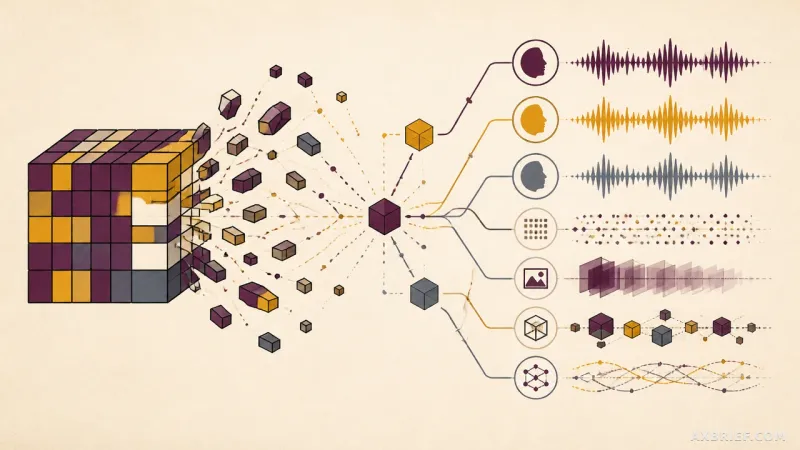
At its core, Nemotron 3 Ultra utilizes a Mixture-of-Experts (MoE) architecture with a total of 550B parameters. However, it does not activate the entire network for every request. Instead, it employs a sparse activation strategy where only 55B parameters are active during any single forward pass. This structural choice allows the model to maintain the knowledge capacity of a massive frontier model while operating with the computational footprint of a much smaller one.
To further break the efficiency barrier, NVIDIA implemented a hybrid Transformer-Mamba structure. While the Transformer components handle sophisticated context understanding, the Mamba layers provide linear scaling efficiency, significantly reducing the computational complexity as sequence lengths grow. This is paired with NVFP4 (NVIDIA Floating Point 4) format optimization, which minimizes memory bandwidth bottlenecks and accelerates hosting speeds. The result is a system that achieves 5x faster inference speeds and reduces operational costs by up to 30% compared to previous agent-centric environments.
Shifting the Metric to Cost-Per-Task
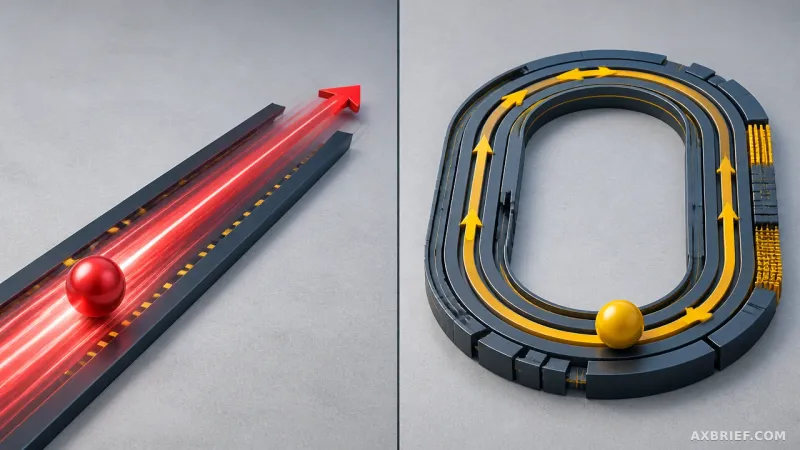
The technical shift from dense models to a hybrid MoE architecture changes the fundamental calculus of AI deployment. In traditional dense models, increasing the context window or the number of reasoning steps leads to a quadratic increase in compute requirements, often resulting in a sharp drop in throughput. Nemotron 3 Ultra counters this by providing a million-token context window that maintains high throughput even as the agent's memory fills with hundreds of turns of self-correction and planning data.
This capability is critical for high-complexity workloads such as deep research systems, autonomous coding agents, and enterprise-grade automation. In these scenarios, the primary tension is not whether the model can solve the problem, but whether it can do so before the cost of the compute exceeds the value of the output. By decoupling the total parameter count from the active compute cost, NVIDIA has shifted the focus from raw intelligence to the cost-per-task.
For practitioners deploying on Amazon SageMaker, this efficiency is realized through high-performance GPU instances like the ml.p5en.48xlarge. While these instances provide the necessary horsepower for million-token contexts, they carry significant hourly costs. Because SageMaker endpoints remain active and billable regardless of request volume, rigorous resource management is mandatory. Developers must ensure that endpoints are decommissioned immediately after the agent completes its task using the following command:
predictor.delete_endpoint()This operational discipline, combined with the model's inherent efficiency, allows enterprises to prove the ROI of automation by demonstrating that the cost of a digital agent is lower than the cost of the human labor it replaces.
The success of the next generation of AI agents will be decided not by who has the largest model, but by who can execute the most reasoning steps for the lowest price.