
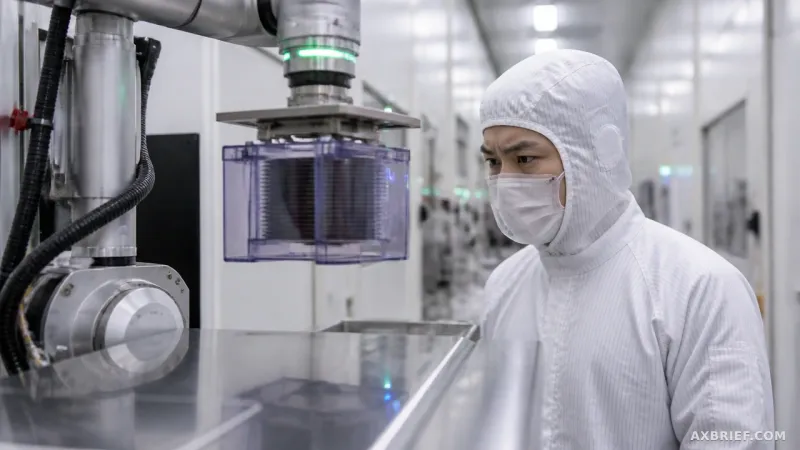
Robotics engineers are currently facing a wall that their counterparts in large language model development never had to climb. While an LLM can ingest the entire public internet in a few months, a physical AI agent is limited by the grueling pace of the real world. To collect a single hour of high-quality interaction data, a robot must physically move, fail, and potentially break in real-time. This creates a massive data bottleneck where the cost of failure is not a hallucinated sentence, but a shattered actuator or a ruined laboratory. The industry is now shifting toward a simulation-first paradigm to break this deadlock, moving the heavy lifting of trial-and-error from the factory floor to the GPU cluster.
The Architecture of Synthetic Experience
Physical AI requires a fundamental bridge between mathematical abstraction and tactile reality. To build this, developers rely on simulation environments that provide photorealistic visuals and rigorous physical grounding. These systems define gravity, friction, and contact dynamics through mathematical frameworks, allowing a robot to perform tens of thousands of iterations without risking hardware damage. By leveraging GPU parallelization, the industry has moved beyond simple playback to massive-scale data generation. Through techniques like teleoperation replication, a single human-guided session can be cloned into thousands of independent virtual environments, generating thousands of hours of experience data in a fraction of the time it would take in a physical lab.
This synthetic data feeds every stage of the AI pipeline. It creates the perception datasets that teach camera sensors to identify objects and the reinforcement learning policies that allow an agent to find the optimal path toward a goal. Beyond training, these simulations serve as the primary venue for adversarial testing, where developers can create extreme, high-risk scenarios to find the breaking points of a model before it ever touches a real-world surface.
For systems requiring absolute mechanical precision, MuJoCo (Multi-Joint dynamics with Contact) serves as the industry standard. As an open-source physics engine optimized for joint systems, MuJoCo focuses on the rigorous dynamics of robotics and biomechanics rather than visual flair. It utilizes a deterministic pipeline to ensure that the same input always yields the same output, which is critical for scientific reproducibility. By supporting inverse dynamics and generalized coordinate simulation, MuJoCo allows developers to calculate the forces required to achieve a specific movement, making it the go-to tool for validating control algorithms in robotic arms and parallel grippers.
When the priority shifts from precision to throughput, MuJoCo Warp (MJWarp) takes over. Built on the NVIDIA Warp CUDA-accelerated differentiable kernel framework, MJWarp migrates MuJoCo's multi-joint physics into a batch-processed GPU environment. While MuJoCo focuses on the latency of a single step, MJWarp maximizes the total number of samples processed per second. This architecture eliminates the data transfer bottleneck between the CPU and GPU, enabling the massive parallelization required for large-scale policy training.
Complementing these dynamics engines is Isaac Sim, an open-source framework built on NVIDIA Omniverse. Isaac Sim utilizes OpenUSD (Universal Scene Description) as its core data layer, representing robots, sensors, and materials as USD prim and schema. This standardization allows for seamless data exchange across different 3D tools. The system pairs PhysX for physics calculations with RTX real-time ray tracing for visualization. By simulating the actual physical path of light, RTX provides the high-fidelity visual data necessary for training Lidar, Radar, and depth sensors. This capability allows for the creation of digital twins—virtual replicas of real-world environments that include precise terrain and obstacle data, reducing the gap between simulation and reality.
The Shift Toward Differentiable Physics and Decoupled Learning
The real evolution in this ecosystem is the move toward modularity and differentiability, epitomized by Isaac Lab 3.0 and the Newton Engine. For years, simulation frameworks were monolithic, forcing developers to run heavy rendering engines even when they only needed raw physics data for reinforcement learning. Isaac Lab 3.0 breaks this dependency by separating the core API from the backend. Developers can now choose their tools based on the specific needs of the workflow. If a task requires high-fidelity sensor data, they can plug into the PhysX and RTX integration of Isaac Sim. If they need maximum throughput for a headless simulation, they can switch to the Newton physics engine, bypassing the rendering process entirely to maximize compute efficiency.
This flexibility is powered by the Newton Engine, a collaborative effort between NVIDIA, Google DeepMind, and Disney Research, managed by the Linux Foundation. Newton is not just another physics engine; it is designed to be differentiable. In traditional simulation, a robot tries an action, sees the result, and adjusts. In a differentiable system, the engine can mathematically calculate the gradient of the error between the current state and the target state. This allows the system to backpropagate the error directly through the physics, finding the optimal motion parameters through calculus rather than blind trial-and-error.
By integrating MuJoCo Warp as a core component and leveraging OpenUSD, the Newton Engine removes the CPU bottlenecks that have historically plagued robotics research. It provides a scalable, open standard where developers can add custom joint models or contact physics without rewriting the entire pipeline. This creates a tiered hierarchy of development: MuJoCo is used for initial mechanical validation, Isaac Sim builds the high-fidelity digital twin for perception training, and Isaac Lab combined with the Newton Engine scales the policy optimization across thousands of parallel GPU instances.
This transition from static simulation to a differentiable, multi-backend ecosystem transforms the way embodied AI is built. Instead of treating the simulator as a mere testing ground, developers are now treating it as a differentiable function that can be optimized just like a neural network.
The convergence of these tools suggests a future where the sim-to-real gap is no longer a barrier, but a tunable parameter in the development process.



