The dreaded CUDA Out of Memory error has long been the primary bottleneck for developers and artists pushing the boundaries of high-resolution AI image generation. As models grow in complexity and resolution targets shift toward 1024px and beyond, even top-tier consumer hardware often hits a wall. The industry has traditionally faced a binary choice: accept sluggish inference speeds or sacrifice model precision through aggressive quantization that degrades image quality. This week, the integration of Nunchaku Lite into the Diffusers ecosystem suggests a third path, turning high-end VRAM efficiency from a manual engineering chore into a simple configuration change.
The Mechanics of 4-Bit Efficiency and SVDQuant
Nunchaku Lite transforms the resource requirements for high-resolution synthesis. On an NVIDIA RTX 5090, generating a 1024px image using a standard BF16 (Bfloat16) pipeline typically consumes a peak of 24GB of VRAM. By implementing Nunchaku Lite, this requirement drops to 12GB, effectively halving the memory footprint. This reduction is not merely about saving space; it is about enabling high-resolution workflows on hardware that would otherwise crash. Beyond memory, the performance gains are tangible, with inference latency improving by approximately 30 percent, bringing the generation time for a 1024x1024 image down to roughly 1.7 seconds.
The technical foundation of this leap is SVDQuant. Standard 4-bit quantization often fails in diffusion transformers because of large outliers in the weights and activation values, which lead to significant precision loss. SVDQuant solves this by isolating these outliers. It shifts activation outliers toward the weights and then decomposes the weight matrix into two parts: a 16-bit low-rank branch that handles the critical high-magnitude components and a 4-bit residual branch for the remainder. This hybrid approach ensures that the model retains its expressive power while benefiting from the compression of 4-bit weights and activations (W4A4).
Integrating this into a project no longer requires a custom inference engine or complex local CUDA compilation. The setup begins with the installation of the core libraries:
pip install diffusers huggingface_hubOnce installed, the model can be loaded directly through the standard `from_pretrained()` method. The system handles the heavy lifting in the background, automatically downloading the necessary NVFP4 (NVIDIA 4-bit floating point) kernels via the kernels package upon first use.
pipe = DiffusionPipeline.from_pretrained("rootonchair/ERNIE-Image-Turbo-nunchaku-lite-int4-bnb4-text-encoder")To make this work within the Diffusers framework, Nunchaku Lite employs runtime patching. Before the model checkpoint is fully loaded, the system scans the architecture and replaces standard `nn.Linear` modules with specialized linear layers designed for quantized weights. Depending on the configuration, it may deploy `SVDQW4A4Linear` for 4-bit weights and activations or `AWQW4A16Linear` for 4-bit weights and 16-bit activations. This logic is governed by the `quantization_config` block within the `config.json` file, allowing for granular control over which layers are quantized.
"quantization_config": {
"modules": ["transformer.single_transformer_block.0.attn.qkv"],
"scheme": "svdq",
"layer_class": "SVDQW4A4Linear"
}
By specifying exact module paths, such as `transformer.single_transformer_block.0.attn.qkv`, developers can selectively apply quantization to the most memory-intensive layers while keeping others in high precision to preserve quality.
The Trade-off Between Fused Kernels and Generality
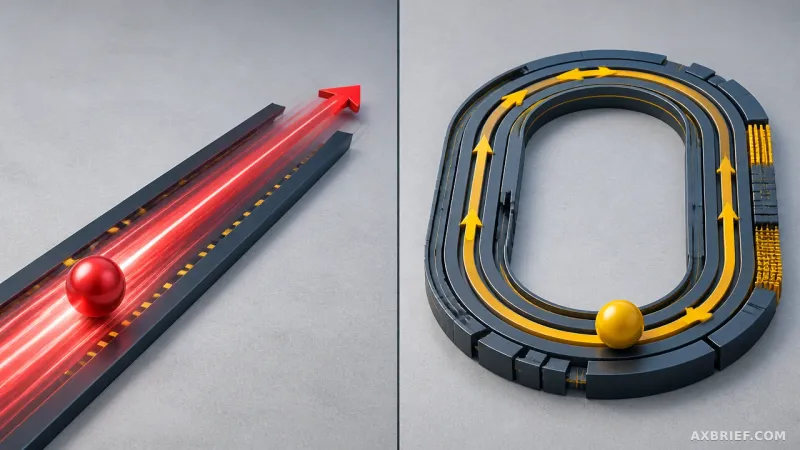
To understand the positioning of Nunchaku Lite, one must contrast it with the original Nunchaku engine. The original engine was designed for absolute maximum performance through fused execution paths. In a fused path, multiple operations—such as QKV projection, Q/K normalization, and rotary embeddings—are bundled into a single kernel. This minimizes the number of times data must be moved between the GPU memory and the processor, drastically reducing I/O overhead.
However, fused kernels require a structural rewrite of the model. For instance, in a model like FLUX.1-dev, the separate Q, K, and V projection modules must be merged into a single `to_qkv` module to enable fusion. This makes the original Nunchaku highly efficient but rigid, requiring model-specific integration for every new architecture.
Nunchaku Lite intentionally abandons these fused kernels in favor of a generic path. It does not rewrite the model's structure; instead, it uses a generic scanner to identify compatible linear layers. If the scanner finds a repeating transformer block, it assigns SVDQ W4A4; if it identifies a modulation linear layer, it assigns AWQ W4A16. Because it executes these operations sequentially rather than as a single fused block, it is slower than the original Nunchaku engine. Yet, it remains 30 percent faster than the BF16 baseline while maintaining universal compatibility across different model architectures.
This architectural decision shifts the value proposition from peak speed to accessibility. By maintaining the standard Diffusers module structure, Nunchaku Lite unlocks a suite of existing PyTorch optimizations that were previously incompatible with highly customized inference engines. The most significant of these is `torch.compile`. Because the quantized model retains the original graph structure, the PyTorch compiler can optimize the execution flow, pushing the end-to-end speedup from 1.35x to 1.8x.
pipe.transformer = torch.compile(pipe.transformer)Further efficiency is gained by targeting the text encoder. Large encoders like T5 or Qwen3 often consume a surprising amount of VRAM. By quantizing these using the NF4 (NormalFloat 4) format via the bitsandbytes library, users can shave another 22 percent off the peak VRAM usage. Because Nunchaku Lite's runtime patching preserves the underlying Diffusers hierarchy, it remains fully compatible with standard offloading tools like `enable_model_cpu_offload` and `enable_sequential_cpu_offload`.
When these optimizations are combined—SVDQuant, `torch.compile`, and NF4 text encoding—the results are striking. On an NVIDIA RTX PRO 6000 Blackwell, the `rootonchair/ERNIE-Image-Turbo-nunchaku-lite-int4-bnb4-text-encoder` model achieved a total pipeline speed of 1.68 seconds for 1024x1024 images.
Hardware Specialization and the Compression Workflow
The deployment of Nunchaku Lite is closely tied to the generation of the GPU being used. The NVIDIA Blackwell architecture (including the RTX 50 series and B200) supports the NVFP4 precision format, which offers superior performance for 4-bit operations. For users on older hardware, INT4 variants are required. To prevent system crashes, the quantization tools include a CUDA Capability check that blocks the loading of unsupported 4-bit kernels on older Volta or Hopper GPUs.
For those looking to create their own optimized models, the `diffuse-compressor` toolkit provides a complete end-to-end workflow. The process follows a strict pipeline: inspecting the model structure, calibrating the data distribution to identify outliers, quantizing the weights, and finally packaging the model for distribution. To apply SVDQuant to a model like FLUX.2 Klein 4B, the following command is used:
python -m diffuse_compressor.quantize --precision int4 --model flux-2-klein-4bIf the target hardware is Blackwell, the `--precision` argument is simply changed to `nvfp4`. Once the quantization is complete, the resulting weights must be converted into a distributable safetensors format:
python -m diffuse_compressor.convert --model_path outputs/checkpoints/svdq-int4_r32-flux-2-klein-4b.safetensorsThis workflow empowers developers to move beyond using pre-quantized checkpoints and instead build hardware-specific optimizations for their own custom fine-tuned models. By selecting the correct precision—NVFP4 for Blackwell or INT4 for others—and layering on `torch.compile`, the overhead of high-resolution image generation is effectively neutralized.
Nunchaku Lite represents a shift toward pragmatic optimization. By prioritizing the Diffusers ecosystem over proprietary fused kernels, it lowers the barrier to entry for high-performance AI art, ensuring that the next generation of high-resolution models can run on the hardware people actually own.