For the last few years, the narrative of the AI revolution has been confined to the invisible. We have spoken of weights, tokens, and the humming server racks of massive data centers where GPUs process abstract patterns of language and imagery. But a fundamental shift is occurring this week as the intelligence residing in those racks begins to migrate into the physical world. The boundary between the digital brain and the mechanical body is dissolving, turning the factory floor into the new frontier for large-scale compute.
The Blueprint for a Vertical AI Infrastructure
NVIDIA and Doosan Group are formalizing a strategic alliance to architect what they term Physical AI, a systemic integration of robotics, energy, and materials science. This is not a narrow partnership between two companies but a cross-sector convergence involving Doosan Robotics, Doosan Bobcat, Doosan Enerbility, and Doosan Electronics BG. The objective is to deploy NVIDIA's full-stack accelerated computing platform across the entire industrial value chain, moving from the high-level application of intelligent robots down to the very copper and power grids that sustain them.
At the architectural core, the partnership leverages the NVIDIA DSX AI Factory platform and NVIDIA MGX, a modular reference architecture for AI servers. By integrating these, Doosan aims to build a vertically integrated ecosystem. Doosan Electronics BG provides the foundational layer, supplying low-loss, high-reliability Copper Clad Laminate (CCL) essential for AI accelerators and server mainboards. As signal speeds increase in NVIDIA MGX-based systems, the physical material of the PCB becomes a bottleneck; high-performance CCL is the only way to maintain signal integrity and overcome the physical limits of hardware.
Simultaneously, the partnership addresses the most pressing crisis of the AI era: power. Doosan Enerbility is integrating its portfolio of gas turbines, steam turbines, and Small Modular Reactors (SMR) alongside Doosan Fuel Cell's hydrogen systems to power the NVIDIA DSX AI Factory. This ensures that the massive energy demands of accelerated computing are met with a stable, low-carbon power supply, effectively linking the energy grid directly to the AI compute cycle.
From Programmed Motion to Agentic Autonomy
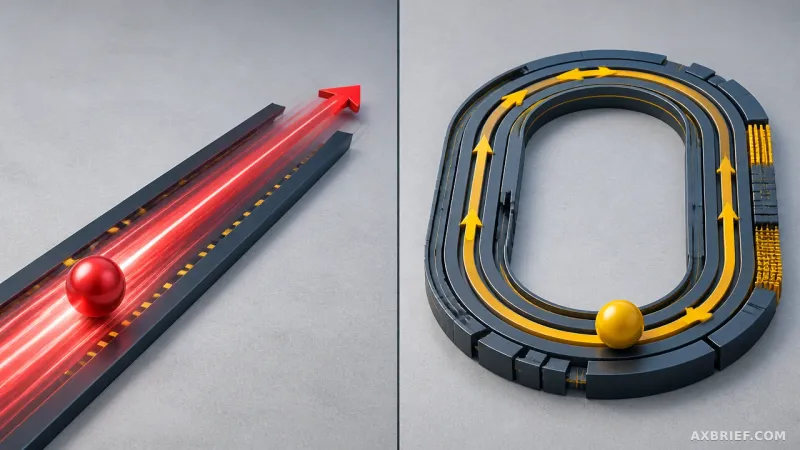
The true technical pivot in this alliance lies in the transition from traditional robotics to what Doosan calls an Agentic Robot OS. For decades, industrial robots have operated on fixed trajectories, repeating a pre-programmed path with millimetric precision but zero adaptability. If a part is shifted by two centimeters, the robot fails. The Agentic Robot OS changes the locus of control, transforming the robot from a tool into an AI agent capable of perception, reasoning, and autonomous decision-making.
This transformation is powered by a sophisticated software stack. The integration of NVIDIA Isaac Sim and Isaac Lab provides the open robotics framework necessary for high-fidelity simulation. By combining these with the Cosmos open-world foundation model and the open-source Newton physics engine, Doosan is creating a loop where robots learn in a virtual environment before executing in the real world. This Simulation-to-Real (Sim2Real) workflow, powered by Jetson Thor, allows robots to bridge the gap between synthetic training and physical reality, reducing the need for manual coding by field engineers.
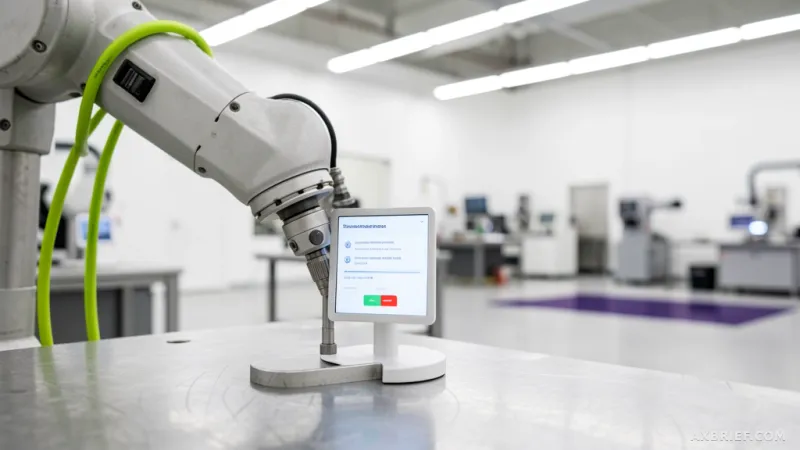
This intelligence is being applied to high-value industrial tasks such as depalletizing and sanding, where the robot must perceive the unique geometry of an object and adjust its pressure and angle in real-time. The ambition extends beyond the factory floor to unstructured environments. Doosan Bobcat is integrating these Physical AI technologies into construction, landscaping, and agricultural equipment. Unlike a warehouse, a construction site is chaotic and unpredictable. By developing specialized World Models, Bobcat's machinery can perceive changing terrain and autonomously reason through complex tasks, extending the reach of Physical AI from the sterile environment of a plant to the volatility of the outdoors.
As the compute power that once lived exclusively in the cloud descends into the actuators of a robot arm and the controllers of a nuclear reactor, the definition of an industrial company is changing. The competitive advantage no longer rests on the quality of the steel or the precision of the gear, but on the software layer that defines the hardware's intelligence.