
Marketing executives have long operated in a state of calculated guesswork. Despite pouring billions into digital ad spend, the industry has struggled with a fundamental analytical gap: the difference between correlation and causation. A dashboard might show a spike in clicks following a specific campaign, but proving that those clicks actually drove the revenue growth is a notoriously difficult task. For years, the industry has relied on proxy metrics like impressions and click-through rates, which often mask capital inefficiency and fail to identify the true drivers of business success.
The Shift to Causal AI and High-Performance Compute
To bridge this gap, a new architectural approach to marketing is emerging, centered on Causal AI—a branch of artificial intelligence that identifies actual cause-and-effect relationships rather than mere patterns. This transition requires immense computational power to run simulations that would be impossible on standard cloud instances. Alembic, a leader in Causal AI platforms, has addressed this by deploying NVIDIA DGX Vera Rubin NVL72 systems and SuperPODs. This infrastructure allows Alembic to process massive datasets without the need for over-simplification, enabling large-scale simulations that provide executives with a single source of truth regarding where capital is being wasted and which factors are genuinely driving growth.
Security and data sovereignty remain paramount in these high-stakes financial decisions. To ensure this, all inference tasks are executed within private supercomputing infrastructure located inside Equinix data centers, keeping AI workloads local and secure. World Wide Technology is further extending this Causal AI stack into highly regulated environments, ensuring that data leaders can move away from correlation-based assumptions and toward numerically proven causal evidence when deciding future marketing investments.
Beyond strategic analysis, the operational layer of advertising is undergoing a similar transformation. In the world of digital advertising, bid prices are determined in real-time auctions that last only milliseconds. Historically, these systems relied on rule-based decision-making—static if-then statements programmed by humans. Today, this is being replaced by AI models that optimize bids in real-time. Amazon Web Services (AWS) is facilitating this shift by providing reference implementation models using the NVIDIA Triton Inference Server. By maximizing deep learning inference speeds, Triton allows demand-side platforms (DSP) and supply-side platforms (SSP) to handle bid price optimization, dynamic audience activation, and deal scoring instantly within the live auction pipeline.
From Static Rules to Physical Inference Speed
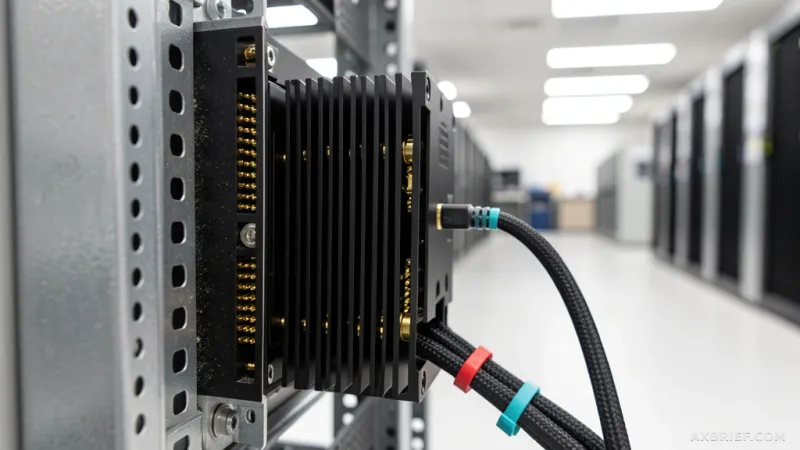
The critical realization for the industry is that the precision of a marketing campaign is no longer just a software problem; it is a hardware problem. When dealing with recommendation systems that process billions of user data points, the speed of model training directly dictates the quality of the recommendation. A delay in training means a delay in reflecting current consumer trends, which immediately erodes ad efficiency. This is where the NVIDIA Blackwell architecture and specialized acceleration libraries become decisive.
Criteo has demonstrated this by combining NVIDIA Blackwell GPUs with cuEmbed, a library designed to accelerate embedding operations. By efficiently processing high-dimensional vector data, Criteo increased its model training speed by approximately 2x, resulting in a reduction of roughly 17,000 GPU hours per year. Taboola is following a similar logic, expanding its GPU-based infrastructure to power DeeperDive, its AI-driven answer engine, and its chatbot monetization platforms.
This obsession with throughput extends to content analysis. KERV.ai has integrated the NVIDIA Nemotron 3 Nano Omni open model to power its Moment Match Engine, which analyzes scenes, objects, and products within video content. By leveraging this model, KERV.ai improved its processing pipeline speed and efficiency by more than 10x. According to the MediaPerf AI video understanding benchmark, this model achieved the highest throughput and the lowest inference cost among all open and closed-source models. To maintain this performance, PYLER utilizes NVIDIA DGX B200 systems, ensuring that the physical compute capacity matches the demands of the model.
However, the ultimate goal is not just faster bidding or better analysis, but full autonomy. For an AI agent to move from a creative tool to a digital colleague capable of managing a budget, it requires a rigorous control layer. This includes safety guardrails, auditability, and role-based access control. Higgsfield AI has built this trust layer by integrating the NemoClaw blueprint from the NVIDIA Agent Toolkit with the OpenShell security runtime.
This integration allows the Higgsfield Supercomputer agent to manage the entire marketing automation lifecycle—from initial ideation and detailed planning to creative production, publishing, and autonomous optimization—all through a single interface. The system orchestrates the Blackwell-based Soul and Soul 2.0 models alongside more than 35 other image, audio, and video models. The scale of adoption is already evident, with approximately 400 of the Fortune 500 companies currently using the platform to generate and optimize campaigns.
For any organization attempting to migrate from rule-based bidding to AI-driven real-time optimization, the primary KPIs have shifted. The focus is no longer solely on model size or parameter count, but on inference throughput and latency. In an environment with billions of daily transactions, the ability of an AI agent to calculate an accurate bid without creating a bottleneck is the only metric that matters. The physical inference speed guaranteed by the Blackwell architecture and DGX B200 has become the primary variable determining a company's final return on investment.



