The modern factory floor is a paradox of high-speed precision and fragmented intelligence. While robotic arms move with millisecond accuracy and sensors stream gigabytes of telemetry, the overarching management of these systems remains stubbornly manual. When a production line halts or a quality dip occurs, human managers often spend hours playing detective, cross-referencing disparate dashboards and digging through logs to find a root cause. The industry has mastered automation, but it has yet to achieve true autonomy, where the factory can reason about its own state and orchestrate its own recovery in real time.
The Architecture of the Factory Operations Blueprint
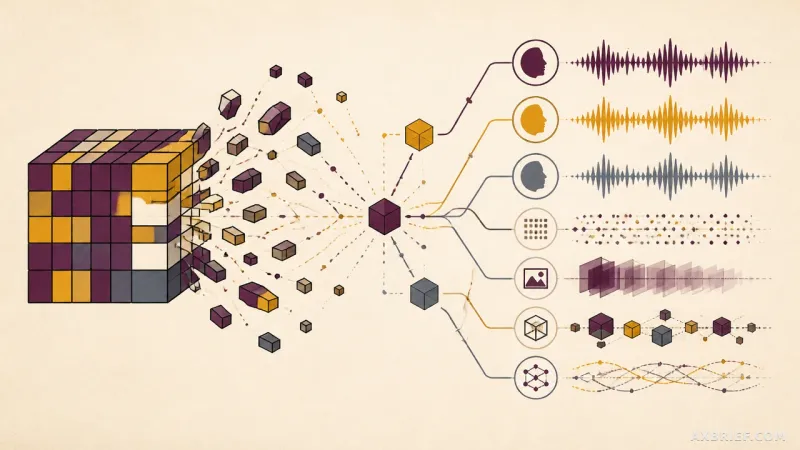
NVIDIA is addressing this intelligence gap with the NVIDIA Factory Operations Blueprint, known as FOX. Rather than treating AI as a series of isolated tools for specific tasks, FOX provides a reference design for a centralized, security-focused factory management agent. This central brain acts as an orchestrator, monitoring real-time data streams and delegating complex problems to a fleet of specialized industrial AI agents. These subordinate agents handle specific domains such as quality control, material logistics, and worker safety, while the FOX agent ensures their actions align with the broader operational goals of the facility.
The technical foundation of FOX rests on a sophisticated stack including NVIDIA NemoClaw, the AI-Q Blueprint, and NVIDIA Nemotron open models. This combination allows manufacturers to move beyond static scripts and toward a dynamic system that can reason through unstructured data. By integrating machine signals, quality management systems, and operational alerts into a single decision-making layer, the blueprint enables a level of coordination that was previously impossible. The system is designed to be scalable, allowing a manufacturer to start with a few critical agents and expand the intelligence layer as the facility grows.
To power this massive computational requirement, NVIDIA introduces a specialized hardware configuration: the NVIDIA DGX Station equipped with the NVIDIA GB300 Grace Blackwell Ultra Desktop Superchip. This is not a standard server but a desktop AI supercomputer designed specifically for the factory manager's office. The hardware delivers 20 petaflops of FP4 performance and features 748GB of coherent memory. This memory capacity is critical because it allows the system to run large-scale AI models with up to 1 trillion parameters locally. By keeping the model on-site, manufacturers avoid the latency and security risks associated with cloud-based inference, ensuring that the factory brain can react to a critical failure in milliseconds.
Internally, the system leverages the NVIDIA Blackwell Ultra GPU connected to a high-performance NVIDIA Grace CPU via the NVIDIA NVLink-C2C interconnect. This architecture maximizes communication speeds between the processor and the GPU, facilitating the immediate interaction required by NemoClaw and other resident AI models. The result is a local supercomputing environment capable of handling ultra-low latency data processing and complex reasoning tasks without ever leaving the factory perimeter.
From Fragmented Automation to Agentic Autonomy
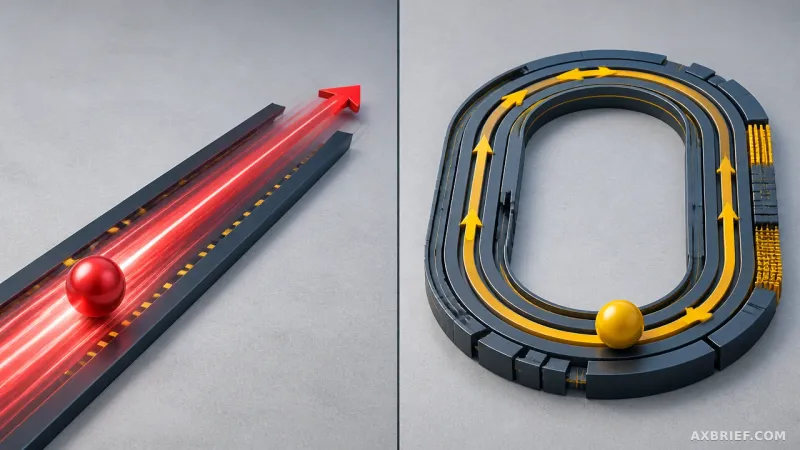
The shift from traditional automation to the FOX framework represents a fundamental change in how industrial logic is applied. Traditional automation follows a linear if-then logic; if a sensor detects a jam, the belt stops. Agentic autonomy, however, uses causal reasoning. If a sensor detects a jam, the FOX agent analyzes the frequency of similar jams, checks the current material batch quality, queries the maintenance log for that specific motor, and then instructs a logistics agent to reroute materials while alerting a technician with a precise diagnosis.
Real-world deployments in Taiwan are already validating this shift. Foxconn has implemented a multi-agent system called MoMClaw, which connects hundreds of specialized agents to a single operational layer. By utilizing a natural language interface protected by NVIDIA OpenShell safety guardrails, Foxconn managers can query the factory state in plain English and receive actionable execution plans. This transition has led to an 80% reduction in the time required for root cause analysis, a 15% increase in labor productivity, and a 10% decrease in machine failure rates.
Other manufacturers are finding similar efficiencies by targeting specific cost centers. Pegatron has focused on the orchestration of material transport and AI-driven inspections. By using agents to optimize robot utilization and synchronize standard operating procedures, Pegatron eliminated the need for expensive standby equipment, reducing asset redundancy costs by approximately 15%. Similarly, Advantech integrated an AI Factory Brain to autonomously manage HVAC and lighting systems, resulting in a 10% reduction in total energy consumption.
Wistron has taken a different approach by combining NVIDIA Cosmos, Nemotron open models, and the Metropolis VSS blueprint to build specialized SMT (Surface Mount Technology) agents. These agents perform real-time quality control and root cause analysis on the assembly line, catching defects before they propagate through the production cycle.
To further expand this ecosystem, NVIDIA has officially released the general availability of the Metropolis VSS (Video Semantic Search) Blueprint 3. This update transforms the factory's camera network from a passive recording system into a searchable database of events. The VSS components are now open to external agents such as Claude Code, Codex, Hermes, and NemoClaw. This means a manager can ask the system to find every instance where a worker bypassed a safety protocol in the last 24 hours, and the AI can pinpoint the exact video frames and correlate them with sensor data.
Companies like DeepHow, Overview AI, Roboflow, and Spingence are already leveraging the VSS blueprint to build specialized agents for process monitoring and SOP compliance. By turning visual data into semantic information, these tools allow the FOX brain to see the factory floor as clearly as it reads the machine logs. The convergence of high-parameter local compute, agentic orchestration, and semantic video analysis is effectively turning the factory into a living, reasoning organism.
This transition toward the AI-managed factory marks the end of the era where humans act as the primary integration layer between different automated systems.