The current state of AI agent development is defined by a frustrating paradox. We have models capable of reasoning through complex legal briefs or writing entire software modules, yet the actual delivery of that intelligence feels sluggish. Developers are finding that while a model can ingest a massive prompt almost instantly, the subsequent generation of tokens—the actual output—creates a perceptible lag that breaks the illusion of real-time interaction. This decode latency is the invisible wall preventing AI agents from moving from simple chatbots to autonomous systems that can interact with humans and other software at the speed of thought.
The 3,400 TPS Benchmark and the Token Factory
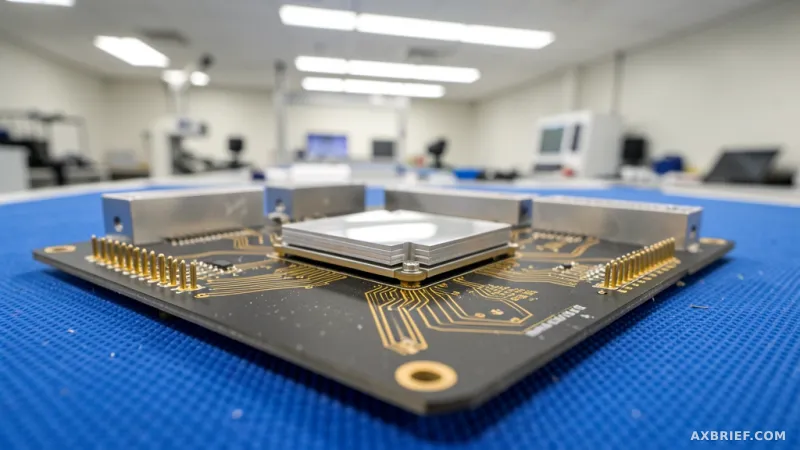
NVIDIA has addressed this bottleneck with the official production release of the NVIDIA Groq 3 LPX, an expansion module for the Vera Rubin NVL72 platform. The performance metrics are stark. In benchmarks conducted by Artificial Analysis using the open-source Gemma 4 31B model, the NVIDIA Groq 3 LPX generated 3,400 tokens per second (tps) within a long-context environment of 100,000 tokens. This represents a fourfold increase in speed compared to existing alternative platforms. For an AI agent, which must constantly read vast amounts of data, maintain state across long conversations, and communicate with other AI systems, this throughput is the difference between a tool that feels like a slow assistant and one that feels like a native part of the operating system.
This hardware is not merely a faster chip but a fundamental shift in how NVIDIA views infrastructure. The company is moving toward the concept of the token factory. In this paradigm, the infrastructure is no longer just a place to serve a model; it is a specialized production line designed to maximize throughput, maintain intelligence integrity, and ensure economic efficiency. By maintaining ultra-high responsiveness even as the context window expands, service providers can maximize their hardware utilization and drastically lower the operational cost per token. The Vera Rubin NVL72 integration ensures that the Groq 3 LPX operates as a seamless extension of the compute fabric, pushing the physical limits of how quickly an agent can reason and respond.
Extreme Codesign and the GPU-LPU Split
To understand why the NVIDIA Groq 3 LPX is fundamentally different from a standard GPU cluster, one must look at the division of labor. In a typical deployment, a single type of processor handles both the prefill stage (reading the input) and the decode stage (generating the output). This creates a conflict because these two tasks have different computational requirements. The NVIDIA Groq 3 LPX architecture solves this through a strategy called Extreme Codesign, where the hardware and software are built together to split the model's operational layers.
In this setup, the Rubin GPU handles the heavy lifting of large-context processing. It excels at the massive parallelization required to ingest and understand 100,000 tokens of input. Once the context is processed, the workload shifts to the LPU (Language Processing Unit), the Groq 3 LPX. The LPU is specifically engineered to accelerate the decode process, where tokens are generated one by one. Because the LPU is optimized for this sequential generation, it eliminates the micro-delays that usually accumulate during the decode phase. This prevents the cumulative lag that typically slows down agentic workflows, such as when an agent is using a tool or executing a multi-step reasoning chain.
This efficiency is further amplified by the physical layout of the system. A rack-scale deployment of NVIDIA Groq 3 LPX utilizes 256 LP30 accelerators connected via a chip-to-chip interconnect. This configuration allows the entire set of accelerators to function as a single, massive processor. The result is deterministic inference, meaning the system guarantees a consistent processing time for every input. In a large-scale AI factory, predictability is as valuable as raw speed, as it allows developers to orchestrate complex multi-agent systems without worrying about random spikes in latency.
Supporting this compute layer is the Spectrum-X Multiplane network, which provides a 1.6x performance increase over general-purpose Ethernet. By using multiple parallel switches, NVIDIA has created a flat, lossless network that minimizes the number of hops data must take between nodes. This architecture utilizes NVIDIA Spectrum-X Ethernet switches, SuperNICs, and a dedicated software stack to ensure that data moves without packet loss. In standard networks, packet loss triggers retransmissions, which are catastrophic for real-time AI inference. Spectrum-X Multiplane eliminates this jitter, ensuring that thousands of GPUs and LPUs can synchronize their work without waiting for delayed data packets.
From Nebius to SpaceXAI: Real-World Token Factories
Several industry leaders are already implementing this architecture to move beyond the limitations of traditional cloud AI. Nebius has become the first to deploy the NVIDIA Groq 3 LPX to build a dedicated Token Factory. By combining the Vera Rubin NVL72 system with Groq 3 LPX, Nebius is providing an environment where developers can deploy interactive services and complex coding agents that require near-instantaneous response times. For these applications, the speed of token generation is the primary driver of user experience.
CoreWeave has focused on the networking side, deploying Spectrum-X Multiplane in production environments. By linking multiple Vera Rubin racks through this lossless network, CoreWeave has effectively turned its cloud infrastructure into a single, giant computer. This removes the communication bottlenecks that typically occur between racks, allowing massive models to scale across hardware without a corresponding drop in efficiency.
SpaceXAI is taking a different approach by focusing on the orchestration layer. Their next-generation AI architecture, centered on the Vera Rubin platform, integrates the Vera CPU to handle CPU-intensive tasks. While the GPUs and LPUs handle the neural network calculations, the Vera CPU manages the agent's logical flow, including orchestration, tool usage, code execution, and simulation. This separation ensures that the high-speed inference pipeline is never stalled by the slower, logic-heavy tasks required for an agent to actually execute a plan in the real world.
For engineers building the next generation of AI agents, the metric for success is shifting. The industry is moving away from measuring simple throughput—the total number of tokens processed per second—and toward measuring decode latency. Because agentic AI operates in a loop of planning, acting, and verifying, the time it takes to generate a single token becomes the primary bottleneck. If the decode phase is slow, the entire agentic loop slows down, regardless of how fast the initial prompt was processed.
Transitioning to a role-based infrastructure—where Rubin GPUs handle context and Groq 3 LPUs handle decoding—removes the traditional trade-off between speed and volume. By treating the data center as a Token Factory, organizations can finally align their hardware capabilities with the iterative, recursive nature of agentic reasoning. The ultimate efficiency of an AI agent is no longer determined by the size of the model, but by the ability of the infrastructure to minimize decode latency and maximize GPU utilization simultaneously.