
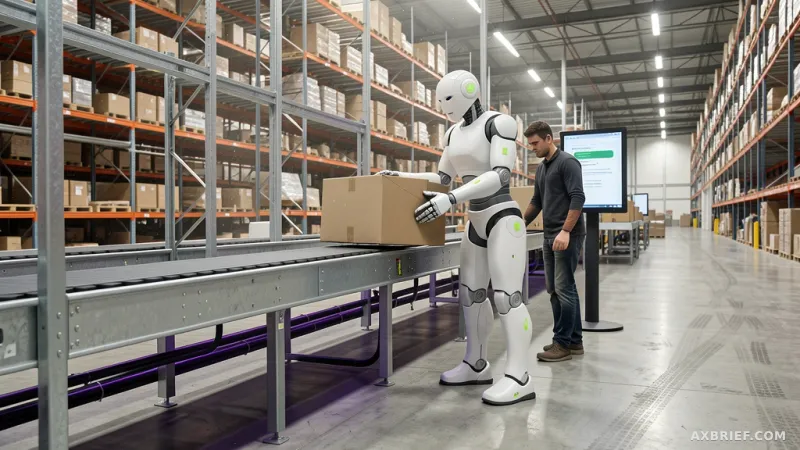
The current state of humanoid robotics is defined by a paradoxical tension. In controlled laboratory settings, machines can perform breathtaking feats of dexterity and balance, yet the moment they enter a shared workspace with humans, the conversation shifts from capability to liability. For a company to deploy a fleet of autonomous bipeds in a warehouse, the primary hurdle is no longer whether the robot can move a box, but whether the company can prove, with mathematical certainty, that the robot will not cause a catastrophic accident. This verification process is currently a fragmented, expensive, and slow ordeal that threatens to keep physical AI trapped in pilot programs.
The Full-Stack Architecture of Halos for Robotics
NVIDIA is attempting to break this bottleneck with the introduction of NVIDIA Halos for Robotics, a comprehensive safety platform designed to move physical AI from experimental prototypes to certified industrial tools. Rather than building its own robots, NVIDIA is positioning itself as the foundational infrastructure provider, offering a full-stack solution that spans from the silicon to the final safety certification. The platform integrates AI models, specialized chips, software, sensors, and development tools into a single ecosystem.
At the hardware level, the system relies on IGX Thor, an industrial-grade AI computing device engineered specifically for real-time robotics tasks and safety-critical functions. To handle the massive influx of data from the physical world, NVIDIA utilizes the Holoscan Sensor Bridge, which serves as the primary interface connecting various sensors to the computing core. Orchestrating these components is Halos OS, a dedicated software stack designed exclusively for robot safety, ensuring that the system's behavior remains predictable and secure under all operating conditions.
Crucially, the platform extends beyond hardware and software into the realm of legal and industrial validation. NVIDIA has established the Halos AI System Testing Lab, which stands as the world's first physical AI functional safety and AI safety laboratory to receive accreditation from the National Accreditation Board (ANAB) under the American National Standards Institute (ANSI). This allows developers to obtain third-party safety certifications without having to build their own multi-million dollar testing facilities from scratch.
This ecosystem is already being put to the test by Agility Robotics. As the first adopter of the platform, Agility Robotics intends to integrate Halos into the robots it deploys for high-profile clients, including Amazon, Toyota, Schaeffler, and GXO, specifically within logistics and manufacturing environments where human-robot interaction is constant.
Shifting the Bottleneck from Dexterity to Certification
For years, the robotics industry has been obsessed with the mechanics of movement—the torque of a joint or the fluidity of a gait. However, the launch of Halos for Robotics signals a strategic pivot in the industry's understanding of what actually constitutes a successful product. The real barrier to the commercialization of humanoid robots is not a lack of agility, but a lack of verifiable trust. When a robot weighs hundreds of pounds and operates autonomously, the cost of a single failure is too high for most enterprises to risk without an industry-standard safety guarantee.
By providing a standardized path to ANSI/ANAB certification, NVIDIA is effectively creating a safety moat. If the majority of the industry adopts the Halos stack to achieve certification, NVIDIA becomes the invisible arbiter of what is considered safe in the world of physical AI. This mirrors NVIDIA's broader strategy in the GPU market: instead of competing with every individual AI application, they provide the essential tools that make all those applications possible.
This approach transforms the safety process from a bespoke engineering challenge into a scalable utility. When a developer uses IGX Thor and Halos OS, they are not just buying hardware; they are buying a shortcut to regulatory approval. The tension is no longer between the developer and the regulator, but between those who use a standardized safety framework and those who attempt to build one in isolation. In this new landscape, the competitive advantage shifts from who can build the most humanoid-like machine to who can most efficiently prove that their machine is safe for human proximity.
Ultimately, the maturity of physical AI will not be measured by how closely a robot mimics human movement, but by the rigor of the safety certifications it carries.



