Medical robotics developers have long operated in a data desert. To train a surgical robot to navigate a complex vascular network or manipulate soft tissue, engineers typically face a grueling cycle of physical prototyping and limited clinical trials. The bottleneck is not just the cost of hardware, but the scarcity of edge-case data. Rare anatomical anomalies or unexpected surgical complications cannot be scheduled for a training session, and the ethical risks of testing unoptimized policies on human patients are absolute. For years, the industry has relied on slow, sequential simulations that struggle to mirror the chaotic fluidity of the human body.
The Architecture of Massive Parallelism
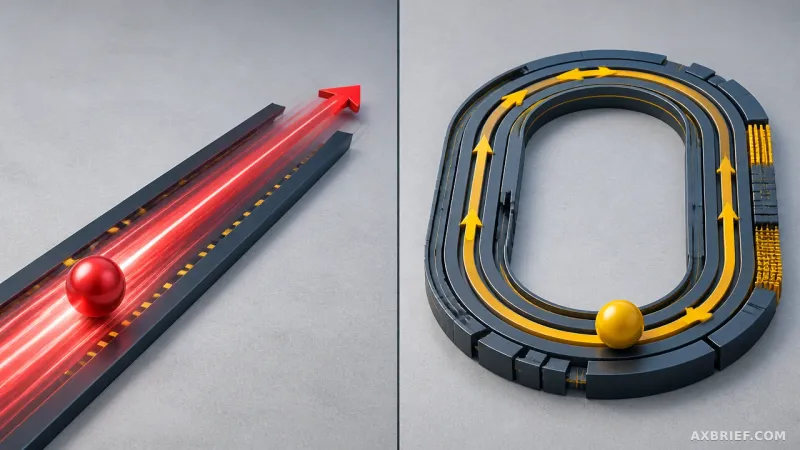
NVIDIA has addressed this bottleneck by introducing an open-source Medical Physics Simulation framework within NVIDIA Isaac for Healthcare. The core breakthrough lies in the shift from sequential learning to massive parallelization. By executing 8,192 robot learning environments simultaneously, the framework collapses training timelines that previously took over five hours down to less than two minutes. This acceleration allows developers to optimize robot motion policies in a virtual environment before a single piece of hardware is ever manufactured, drastically reducing the capital expenditure associated with physical prototyping.
The framework is built upon the NVIDIA CUDA parallel computing platform and integrates NVIDIA Warp and Newton to handle the heavy lifting of physical calculations. Because it is open-source, developers can inspect the internal logic and modify the system to fit specific medical devices or unique clinical workflows. This modularity allows the framework to plug directly into the NVIDIA Isaac Lab open robot learning framework and broader digital twin pipelines. By simulating X-ray sensors and integrating reinforcement learning, the system enables robots to learn control policies based on simulated visual feedback and physical deformation data, ensuring that the transition from virtual training to real-world application is seamless.
Bridging Classical Physics and Generative AI
While speed is a significant gain, the true technical tension in medical simulation is the conflict between precision and realism. Classical physics simulations are excellent at calculating rigid-body dynamics—such as the friction of a metal tool or the collision of two hard surfaces—but they fail miserably when faced with the unpredictable deformation of human organs. Soft tissues do not follow simple linear equations; they compress, slide, and stretch in ways that are computationally expensive to model using traditional mathematics.
To solve this, NVIDIA introduced Cosmos-H Dreams, a real-time generative AI physics simulation. Unlike classical models that rely on predefined formulas, Cosmos-H Dreams models visual scene dynamics learned from procedural data. It captures the visual flow of how an environment reacts to movement, filling in the gaps where classical physics becomes too rigid or too slow. The result is a hybrid system where classical simulation provides the structural skeleton—ensuring physical consistency and strict collision boundaries—while Cosmos-H Dreams provides the visual and dynamic flesh, simulating the nuanced behavior of soft tissues.
This combination transforms the simulation from a mere approximation into a high-fidelity testing ground. Developers no longer have to choose between a mathematically accurate but visually sterile environment and a visually realistic but physically inaccurate one. By blending the two, NVIDIA enables the validation of complex interactions, such as a catheter navigating a pulsing artery, with a level of detail that was previously impossible without physical models. This hybrid approach directly reduces the need for iterative hardware redesigns by identifying failure points in the virtual stage.
From Custom Prototypes to Scalable Infrastructure
Historically, medical simulations were bespoke creations. If a developer wanted to test a new surgical tool or a different anatomical structure, they had to rebuild the virtual scene from scratch. NVIDIA is shifting this paradigm toward reusable infrastructure. By modularizing anatomical structures and device behaviors, the framework allows developers to swap components—such as changing a vascular map or updating a catheter's flexibility—without reconstructing the entire environment. This standardization accelerates the time-to-market for medical innovations by removing the repetitive labor of environment setup.
This infrastructure is already being deployed by industry leaders to solve high-stakes engineering problems. Medtronic Structural Heart utilizes simulated X-ray sensing to generate the massive datasets required for catheter navigation research, bypassing the need for physical models. Johnson & Johnson MedTech has implemented a digital twin of the MONARCH platform to model complex urological anatomy and kidney stone scenarios, allowing them to simulate patient-specific risks before a procedure begins. Similarly, XCath employs the framework to train autonomous intravascular navigation policies, optimizing the paths robots take through the bloodstream.
One of the most significant contributions to the ecosystem comes from CMR Surgical and Cambridge Consultants. To refine soft tissue interaction, they contributed approximately 500 hours of anonymized clinical data from the Versius surgical robot system to the Open-H Embodiment open dataset. This data covers a wide array of procedures, including cholecystectomies, prostatectomies, hernia repairs, and hysterectomies. By sharing this real-world data, they provide the foundation for other developers to refine their soft tissue models, moving the entire industry toward a standardized level of precision.
The Path to In Silico Regulatory Approval
Beyond the engineering benefits, the move toward high-fidelity simulation is fundamentally changing the regulatory landscape. The most significant hurdle for any medical device is the acquisition of diverse clinical data for safety validation. Ethical constraints and the rarity of certain medical conditions make it nearly impossible to gather a statistically significant sample of every possible failure mode in a human trial.
Inner Logic is leveraging this framework to generate in silico evidence—computer-simulated proof of safety and efficacy—to support regulatory approval paths. By creating synthetic data that validates device dynamics across thousands of virtual patient variations, companies can provide regulatory bodies with a comprehensive safety profile before entering human trials. This does not replace clinical trials, but it optimizes them by ensuring that only the most refined and safe versions of a device ever reach a patient.
The open-source nature of the framework is critical here. In the medical field, black-box AI is a liability. By providing access to model weights and internal logic, NVIDIA allows developers to prove the reproducibility of their results. When a developer can show exactly why a robot reacted a certain way in a simulation, they build the technical trust required for medical certification. This transparency ensures that the evolution of physical AI in healthcare is not driven by proprietary secrets, but by a shared, verifiable standard of safety.
As medical AI moves from simple assistance to autonomous navigation, the ability to simulate the infinite variability of human anatomy becomes the primary competitive advantage. The transition from five-hour training cycles to two-minute iterations marks the end of the data-starved era of medical robotics.