
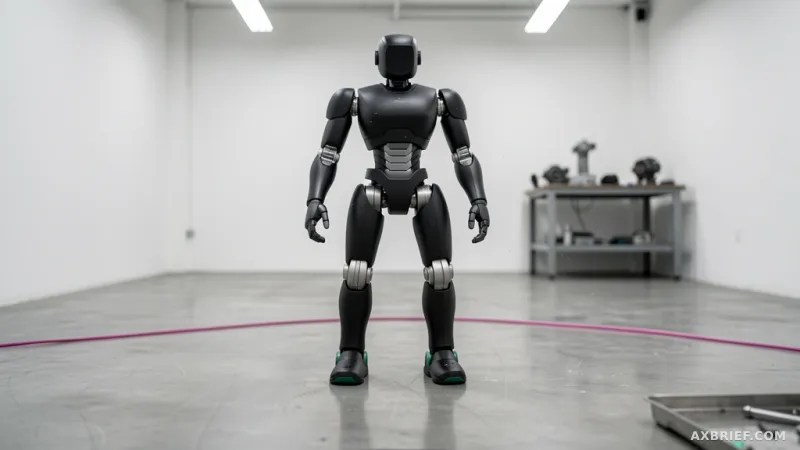
A humanoid robot falls in a laboratory, snapping a joint actuator and costing the research team thousands of dollars in repairs and weeks of downtime. This is the visceral reality of physical AI development. For years, the bottleneck in robotics has not been the lack of algorithmic creativity, but the crushing cost of real-world iteration. Every trial and error in the physical world carries a price tag in the form of hardware depreciation, safety personnel wages, and the agonizingly slow pace of linear time. To move a robot like the Unitree H1 from a controlled demo to a chaotic warehouse floor, developers must find a way to experience a decade of failure in a matter of days.
The Architecture of Massive Parallelism in Isaac Lab
NVIDIA Isaac Lab v2.3.2, running within the Amazon SageMaker AI ecosystem, transforms this linear struggle into a parallelized computation problem. Built upon the foundation of NVIDIA Isaac Sim, Isaac Lab is an open-source framework designed specifically to bridge the gap between simulation and reality. The core technical breakthrough here is GPU-accelerated parallel simulation. Rather than training a single robot instance, the system instantiates thousands of identical robots across a single or multiple GPUs. This allows the agent to collect diverse experience data at a scale that would be physically impossible in a real-world facility, effectively compressing months of real-world learning into a few hours of compute.
To illustrate this in practice, consider the Isaac-Velocity-Rough-H1-v0 task. The objective is to enable a Unitree H1 humanoid robot to track velocity commands while traversing procedurally generated, irregular terrain. This is a high-dimensional control problem involving the precise coordination of 19 joints. The robot must learn to adjust torque and joint angles in real-time to counteract slopes and friction changes. To solve this, the framework employs the PPO (Proximal Policy Optimization) algorithm via the skrl framework. PPO is critical here because it prevents the policy from making drastic, unstable updates that would lead to catastrophic failure in the learning curve. By scaling this across multiple nodes, the diversity of the experience buffer increases, allowing the robot to encounter rare failure states and extreme terrain edge cases much faster than it ever would in a physical lab.
The Infrastructure Pivot from Tuning to Production
While the simulation provides the data, the orchestration of that data determines the actual speed of development. The critical insight in the SageMaker AI integration is the realization that robot learning requires two entirely different infrastructure profiles depending on the stage of the project. Most teams make the mistake of using a single environment for both, leading to either wasted spend or unstable training runs.
During the experimental phase, the primary goal is reward function tuning. Engineers are constantly tweaking the observation space, adjusting the network architecture, or refining the reward penalties to stop the robot from vibrating or falling. For this, SageMaker Training Jobs are the optimal tool. This is an on-demand, container-based execution model. The system pulls a specific image from the Amazon ECR (Elastic Container Registry), executes the training script, uploads the resulting model weights to Amazon S3 (Simple Storage Service), and immediately terminates the instance. This eliminates idle computing costs during the hyperparameter sweep phase, where short, iterative bursts of training are more valuable than long-term stability.
However, once the reward function is locked and the goal shifts to final model convergence, the requirements flip. Long-term stability becomes the priority. This is where SageMaker HyperPod enters the pipeline. Unlike on-demand jobs, HyperPod is designed for persistent, large-scale distributed training. It utilizes health monitoring agents on every node to perform deep state checks. If a node fails during a multi-week training run, HyperPod automatically detects the fault, replaces the instance, and triggers an auto-resume from the last saved checkpoint. This removes the need for human intervention and ensures that the computational momentum is never lost.
Control over these resources is managed through Amazon EKS (Elastic Kubernetes Service) or Slurm orchestration. By implementing Kueue-based task governance, teams can divide clusters into namespace-level queues with strict computing quotas and priority levels. To further optimize costs, NVIDIA MIG (Multi-Instance GPU) allows developers to partition a single GPU into multiple smaller instances, ensuring that vCPU and memory are allocated with surgical precision based on the specific needs of the task.
Eliminating the Undifferentiated Heavy Lifting of Physical AI
The true value of this integration lies in the removal of what AWS calls undifferentiated heavy lifting. In traditional robotics setups, a significant portion of an engineer's time is spent on driver installations, networking configurations, and manual node monitoring. SageMaker AI automates this entire lifecycle, allowing the researcher to focus exclusively on the policy logic.
Deployment is streamlined through a unified container strategy. By using the `nvcr.io/nvidia/isaac-sim:5.1.0` Docker image, the same environment is maintained across both HyperPod and Training Jobs. The specific execution parameters are decoupled from the image and managed via a `config.yaml` file. This allows for a highly automated workflow where a developer can generate the necessary Kubernetes manifests and launchers with a single command:
python generate.pyThis command reads the templates and populates the `generated/` folder, ensuring that the transition from a local experiment to a massive cluster is seamless. To maintain visibility into this process, the pipeline integrates Amazon Managed Prometheus and Grafana. These tools provide real-time visualization of GPU utilization, memory pressure, and network throughput, which is essential for diagnosing bottlenecks in distributed training. Furthermore, the use of SageMaker managed MLflow allows teams to track every iteration of the reward function and model structure. This creates a searchable history of experiments, enabling a data-driven approach to determine exactly which configuration led to the most stable gait.
By shifting the focus from server maintenance to reward function engineering, the entire development cycle is accelerated. The friction between a quick experiment and a production-grade training run is virtually eliminated, creating a high-velocity pipeline for Physical AI.
For practitioners deploying robots into warehouses or factories, the standard has shifted. It is no longer enough to have a high-fidelity simulation; one must have a production-grade pipeline that can handle the volatility of distributed compute. The ability to bifurcate the infrastructure—using on-demand jobs for tuning and resilient HyperPods for convergence—is now the benchmark for high-performance model development. The success of a robotic agent is no longer determined by the raw number of GPUs available, but by the architectural intelligence used to deploy them.



