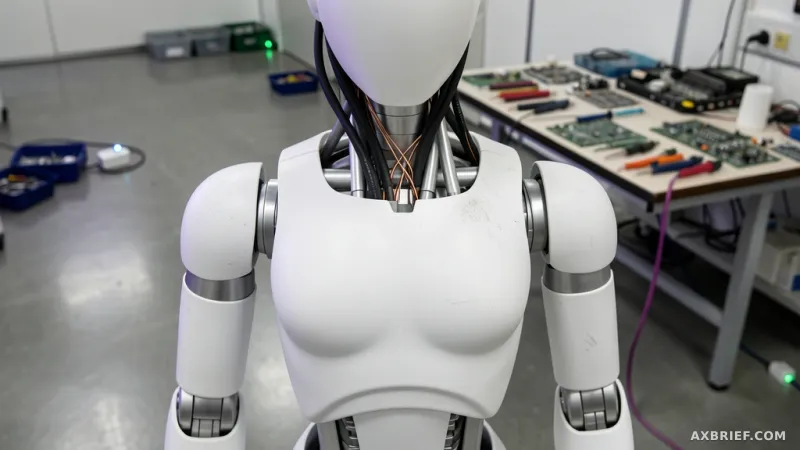
For years, the divide between a robotics laboratory and a commercial warehouse has been measured in cables and cooling fans. In the lab, a humanoid prototype can afford to carry a massive, power-hungry computer on its back because the goal is proof of concept. But in the field, every gram of weight and every watt of power consumed directly impacts the robot's battery life, agility, and cost. The industry has long sought a way to shrink the brain without lobotomizing the intelligence. NVIDIA is attempting to close this gap with the introduction of the Jetson T3000 and T2000 modules, built on the Thor architecture, designed to move foundation models from the server rack to the edge of the physical world.
The Hardware Blueprint for Autonomous Machines
The technical specifications of the new modules signal a shift toward extreme density in edge computing. The Jetson T3000 serves as the flagship of this lineup, delivering 865 FP4 teraflops of AI compute performance. At its core, the T3000 integrates the Blackwell GPU architecture paired with an 8-core Neoverse Arm CPU. To handle the massive data throughput required for real-time spatial awareness, it features 32GB of LPDDR5X memory with a bandwidth of 273GB/s and 25 GbE connectivity. For developers targeting less complex tasks, the Jetson T2000 provides a more accessible entry point, offering 400 FP4 teraflops of compute and 16GB of memory, making it ideal for visual AI agents, autonomous mobile robots, and industrial manipulators.
Beyond raw performance, NVIDIA is addressing the critical requirement of functional safety for robots that operate alongside humans. The IGX T3000 integrates the performance of the T3000 with a dedicated functional safety design and the NVIDIA Halos safety system, ensuring that high-performance AI does not come at the cost of human security. This creates a scalable edge AI platform that spans from 70 TOPS to 2,000 teraflops, providing a clear upgrade path for different robotic tiers. While the official commercial release is slated for the first quarter of 2027, NVIDIA is allowing developers to begin validation immediately. This month, the release of `JetPack 7.2.1` introduces a T3000 emulation mode, enabling teams to test their software stacks before the physical hardware arrives. Industry leaders including 1X, Boston Dynamics, Amazon Robotics, and FANUC are already utilizing the Jetson AGX Thor developer kits to optimize their next generation of systems.
The Software Pivot and the Memory Efficiency Paradox
Raw hardware specs are only half the story. The real breakthrough lies in how NVIDIA is using software to decouple performance from physical size. The centerpiece of this strategy is Cosmos 3 Edge, a robot foundation model with 4 billion parameters designed to understand physical environments and predict actions. By utilizing on-device inference, Cosmos 3 Edge eliminates the latency associated with external server calls, allowing a robot to perceive its surroundings and generate immediate behavioral responses. This shift to the edge is facilitated by the Open Cosmos framework, which allows developers to complete post-training in approximately one day. By adjusting the model's input and output layers to match specific sensor configurations, developers can rapidly bridge the sim-to-real gap, moving intelligence from a virtual simulation to physical hardware with minimal friction.
This optimization extends to the deployment pipeline through Jetson agent skills. Historically, memory optimization and system configuration were manual, grueling processes that took specialized engineers weeks to perfect. Jetson agent skills automates this by analyzing the entire software stack to eliminate memory waste and increase deployment efficiency, compressing weeks of work into a few days. The result is a surprising reversal in hardware requirements: when software is perfectly optimized, the need for expensive, high-capacity hardware diminishes. This allows companies to select lower-memory modules without sacrificing performance, effectively lowering the bill of materials for mass production.
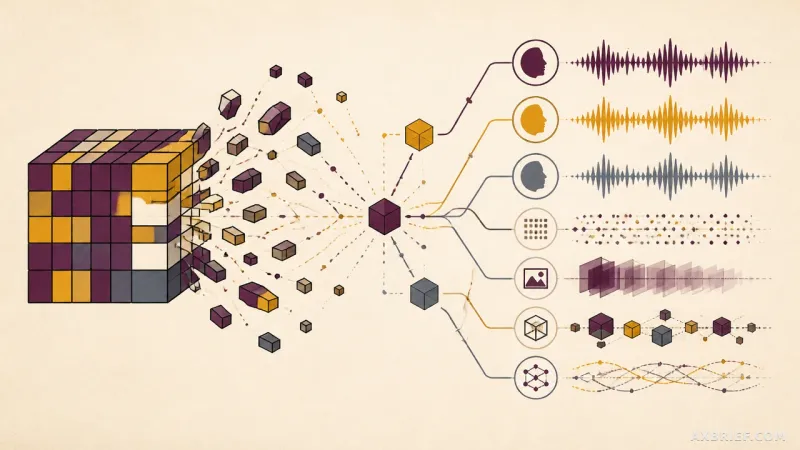
This synergy is most evident when comparing the T3000 to its predecessor, the T5000. The T3000 manages to reduce both physical size and power consumption by approximately half compared to the T5000, yet it maintains equivalent inference performance. This is particularly true for multimodal workloads, including Large Language Models (LLMs), Vision Language Models (VLMs), Vision-Language-Action Models (VLAMs), and World Foundation Models. The ability to process text, imagery, and action data simultaneously without a performance drop means that humanoid robots can now house a T3000 in cramped chassis spaces that previously could not support the necessary cooling or power delivery for a T5000.
Breaking the Hardware Entry Barrier
The practical impact of these optimizations is already appearing in industrial deployments. Companies like UBTech, Agile Robots, and Connect Tech have successfully reduced their memory footprints by up to 15GB. These firms were able to migrate their workloads from the NVIDIA Jetson AGX Orin 64GB module down to a 32GB module while maintaining identical performance levels. Similarly, SandStar, a smart retail solution provider, reduced memory usage by 4GB, allowing them to deploy systems on an 8GB module instead of the Orin NX 16GB. Even in older environments, NoTraffic reduced memory usage by 30% on the Jetson TX2 NX, using the reclaimed space to add new AI features to their intelligent traffic platform.
These gains are not accidental but are the direct result of using Jetson agent skills to downshift memory SKUs. In a market where memory prices can be volatile, the ability to maintain performance while using a lower-tier memory module provides critical supply chain flexibility. It transforms the hardware selection process from a quest for the highest possible specs into a strategic exercise in efficiency. By lowering the hardware entry barrier, NVIDIA is making it feasible to deploy high-performance foundation models across a much larger fleet of edge devices.
For the broader AI ecosystem, the path from a laboratory prototype to a mass-produced product now has a clearer roadmap. The Jetson AGX Thor developer kit allows engineers to validate the performance of T3000 and T2000 modules and optimize their software long before the hardware is integrated into the final chassis. Because the T2000 and T3000 share the same Thor architecture, companies can scale their product lines—using the T2000 for simple mobile robots and the T3000 for complex humanoids—without rewriting their entire software stack or facing massive migration costs.
Support from partners like Antmicro and RidgeRun further streamlines this transition, providing dedicated solutions to help customers migrate to new modules without getting bogged down in driver modifications or library optimizations. By maintaining compatibility with the NVIDIA Isaac simulation and perception suite, Nemotron LLMs, and the Isaac GR00T humanoid foundation model, NVIDIA has created a closed-loop pipeline from virtual learning to physical action. The combination of 865 FP4 teraflops in the T3000 and the 4-billion parameter efficiency of Cosmos 3 Edge sets a new benchmark for what is possible in low-power, high-intelligence robotics.