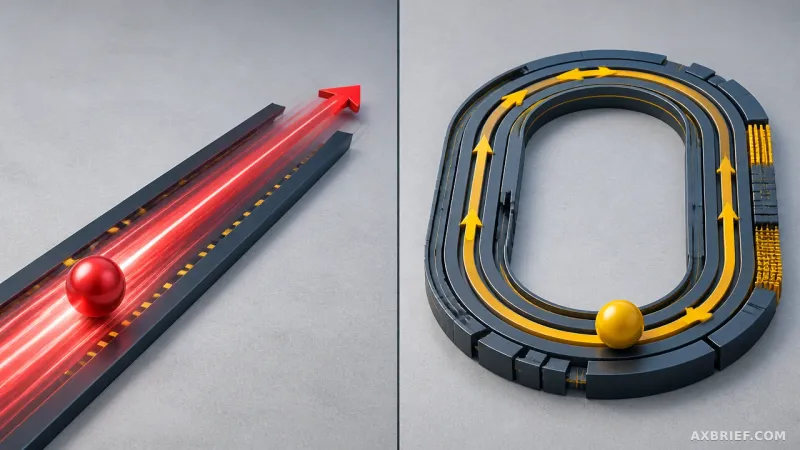
The global race for AI supremacy has shifted from a battle of algorithms to a battle of physical deployment. In the current landscape, the speed at which a company can stand up a massive data center is the primary variable determining market dominance. This urgency has transformed the supply chain from a logistical necessity into a strategic weapon. NVIDIA has recognized that the bottleneck for its next generation of compute is no longer just chip design, but the physical orchestration of millions of components across a fragmented manufacturing landscape.
The Physical Foundation of the Vera Rubin Era
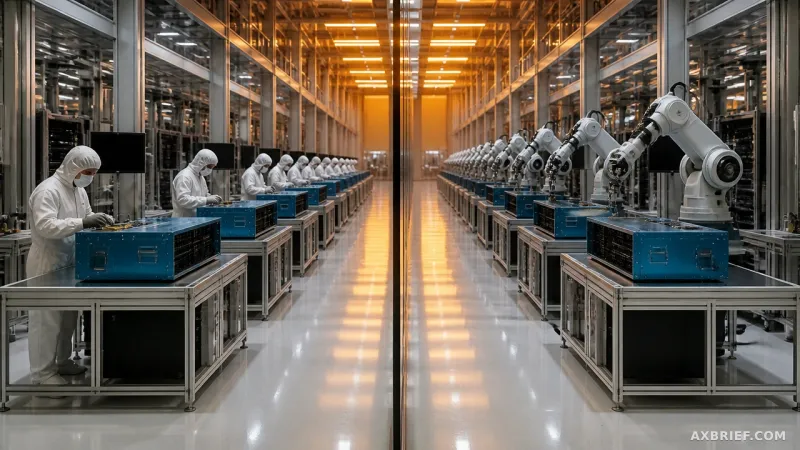
To secure the rollout of its next-generation AI infrastructure, known as Vera Rubin, NVIDIA has effectively turned Taiwan into a single, integrated production campus. The company has synchronized 25 different factory sites across the island to operate as one cohesive manufacturing hub. This massive operation is designed to integrate more than 1 million components of the NVIDIA MGX (Modular GPU architecture) racks. By consolidating the production cycle within a tight geographic cluster, NVIDIA is minimizing logistics overhead and slashing lead times to meet an insatiable global demand for AI compute.
This supply chain is supported by an ecosystem of over 500 partners. At the bleeding edge of the process, the wafer and chip fabrication are handled by a powerhouse group including TSMC, SPIL, Kinsus, KYEC, and UMTC. Once the silicon is ready, the final system assembly is handed off to a tier of elite manufacturers: Foxconn, Pegatron, QCT (Quanta Cloud Technology), Wistron, and Inventec. This vertical integration ensures that every step—from the initial chip design and advanced packaging to the final assembly of server racks—happens within a controlled, high-speed loop. This is the blueprint for the Agentic AI factory, a facility capable of autonomous goal-setting and execution to ensure the hardware arrives before the market shifts.
When the Factory Becomes the AI
For decades, hardware manufacturing relied on the intuition of master technicians and grueling cycles of manual trial and error. The twist in NVIDIA's current strategy is that they are not just using AI to design chips; they are embedding AI into the very machines that build those chips. The manufacturing process is evolving from a series of static assembly lines into a dynamic AI system where the factory itself is a reflection of the intelligence it produces.
TSMC has led this charge by implementing cuLitho, a computational lithography library that optimizes the most critical stage of chip fabrication. By pairing this with cuEST, a semiconductor material simulation library, TSMC has accelerated the analysis of new materials. These tools, powered by the CUDA-X accelerated computing libraries, have shifted the foundation of hardware manufacturing from physical experimentation to accelerated computation. The result is a dramatic shift in efficiency: TSMC has improved cycle times by 20% to 50% compared to traditional CPU-based computational lithography, while semiconductor material simulation speeds have surged by an average of 50 times. This allows the company to compress the time-to-market for new silicon by reducing the number of physical iterations required.
Foxconn has taken this a step further by deploying MoMClaw, a manufacturing operations management agent. This system combines the NVIDIA Factory Operations Blueprint with the NemoClaw blueprint to create a real-time intelligence layer over the factory floor. Instead of managers staring at complex dashboards, they now interact with the factory via natural language interfaces, asking AI agents for the current status of a line and receiving immediate corrective action plans. To ensure this doesn't compromise corporate secrets, the OpenShell security control system manages data privacy and safety guardrails in real-time. The impact is quantifiable: Foxconn has reduced root cause analysis time by 80%, increased labor productivity by 15%, and decreased machine failure rates by 10%. Furthermore, their first pass yield has risen by 3%.
Meanwhile, QCT and Wistron are utilizing the Omniverse 3D design and collaboration platform to erase the gap between blueprint and reality. QCT uses Omniverse-based digital twins to design factory layouts, allowing engineering and logistics teams to modify the physical space in a virtual environment before a single machine is moved. Wistron has integrated the Omniverse DSX Blueprint and the PhysicsNeMo framework to simulate burn-in environments—high-temperature operational tests—in a virtual world. By performing stress tests on virtual server racks, Wistron has increased layout analysis speed by up to 70% and reduced facility power demand by 20%, directly lowering operational expenditure (OPEX).
Quality control has also been revolutionized through synthetic data. Pegatron has linked the Cosmos world foundation model with Isaac Sim, a robotics simulator, to generate synthetic data for rare defects that seldom occur in real-world production. This allows AI models to learn how to spot anomalies they have never actually seen on a physical line. Inventec has integrated this capability into its Observation Agent, enhancing the precision of Automated Optical Inspection (AOI) systems. This shift has reduced the need for manual data collection and labeling by 30%, shortened AI deployment time by 25%, and improved anomaly detection performance by 10%.
The Rise of Physical AI and Humanoid Labor
While software simulations optimize the layout, the final assembly still happens on the factory floor. The industry is now moving beyond traditional automation—which simply repeats a fixed trajectory—toward Physical AI, where robots can perceive their environment and make real-time decisions. This is the final frontier of the Vera Rubin production line.
Techman Robot, a subsidiary of QCT, is utilizing the QuantaGrid system for data generation and model training. By leveraging the Jetson Thor AI computer for robots and the Isaac GR00T humanoid foundation model, they have developed the TM Xplore I humanoid. Unlike traditional robots that only perform pick-and-place tasks, the TM Xplore I is designed for high-precision work, such as assembling server fans and fastening screws. These tasks require dual-arm coordination and precise force control, areas that previously relied entirely on the tactile sense of human experts. By transferring this expertise to AI, NVIDIA and its partners are eliminating human error in the most delicate stages of assembly.
Foxconn is already deploying wheel-based humanoid robots in its facilities. These robots integrate Isaac Teleop for remote control, alongside Isaac Sim and Isaac Lab for virtual training. Operating on ROS 2 (Robot Operating System 2), these machines optimize their movement and tasks within the complex geometry of a factory. Because these robots have undergone millions of iterations in a virtual environment, they can execute complex physical judgments instantly upon deployment. This transforms the production line from a rigid conveyor belt into a flexible, robot-centric ecosystem.
To close the loop, Foxconn is investing $1.4 billion into an AI cloud supercomputing center featuring 10,000 GPUs and the GB300 NVL72 hybrid cooling architecture. This center serves as a living laboratory where the optimal processes for producing AI servers are first implemented and validated using the very infrastructure they are building. This creates a recursive manufacturing loop: AI is used to build the hardware that runs the AI that optimizes the building of the hardware.
For the broader electronics industry, this shift signals that traditional automation is no longer a competitive advantage. The new benchmark is the ability to translate AI intelligence into precise physical motion. The speed of the product launch cycle is now dictated by how quickly a company can replace static machinery with real-time, decision-making AI robots.
As the Vera Rubin infrastructure begins to flow from 25 Taiwanese sites into the world's data centers, the lesson is clear. The winners of the AI era will not just be those with the best models, but those who have successfully turned their entire supply chain into a programmable, self-optimizing AI system.