A software engineer standing in a modern logistics hub knows exactly how a fleet of robots should navigate a warehouse to optimize throughput. They have the logic, the data, and the domain expertise to solve the problem. Yet, for years, that engineer has been sidelined, forced to wait months for a specialized robotics engineer to arrive and write the low-level drivers necessary to make a machine move. This gap between conceptual logic and physical execution is the primary bottleneck of the robotics industry, where the ability to innovate is often held hostage by the complexity of the toolchain.
The Infrastructure Gap in Physical AI
Ollo Robotics, a Sheffield-based startup, has launched a commercial platform designed to dismantle this barrier by treating robot development as a standard software task rather than a specialized engineering project. The core of the platform is a ROS2-native environment accessible entirely through a web browser. ROS2, the Robot Operating System 2, serves as the industry-standard open-source framework for robot application development, but it has historically been plagued by a steep learning curve and a grueling setup process. By moving this environment to the cloud, Ollo Robotics eliminates the need for local installations, dependency management, and the version conflicts that typically consume the first few weeks of any robotics project.
To ensure immediate global scalability, Ollo Robotics has established strategic manufacturing and distribution partnerships with three major hardware players: Deep Robotics in China, Inmotion Robotics in Germany, and Fiction Lab in Poland. These partnerships focus specifically on quadrupeds and mobile robots, reflecting a broader industry shift toward making hardware accessible to general software teams rather than a tiny elite of robotics PhDs. Nick Thompson, CEO of Ollo Robotics, argues that the industry has spent a decade incorrectly diagnosing the talent shortage. According to Thompson, the expertise already exists within factories and research labs, but it remains trapped because the infrastructure to implement ideas instantly is missing.
Eleanor Tangsmith, the company's COO, echoes this sentiment, noting that most clients do not suffer from a lack of technical vision, but from a lack of tools. This tooling gap leads to projects that are delayed indefinitely or abandoned entirely because the friction of the initial setup outweighs the perceived value of the solution. By positioning their platform as a seamless extension of the existing software stack, Ollo Robotics allows companies to build and deploy robotic systems without needing a dedicated ROS2 expert on staff.
From Dependency Hell to Sim-to-Real Deployment
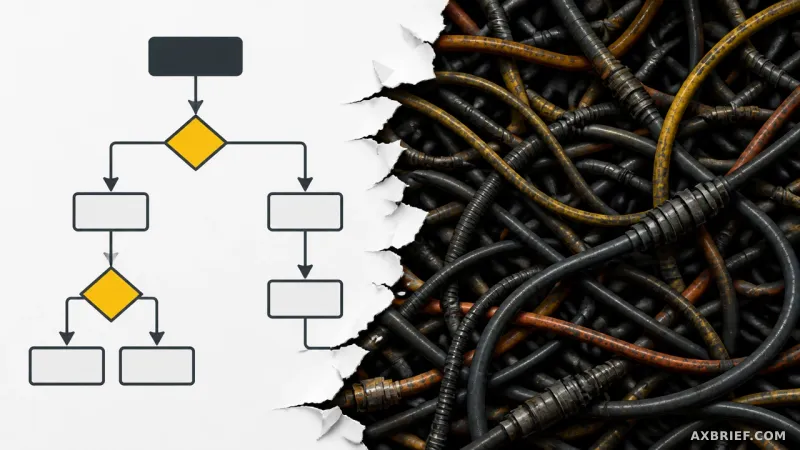
The traditional robotics workflow is a fragmented nightmare of proprietary Software Development Kits (SDKs). If a company operates three different brands of robots, their developers must master three different APIs, three different communication protocols, and three different sets of command structures. This fragmentation means that even if the hardware is world-class, the software layer acts as a throttle, slowing deployment to a crawl. Ollo Robotics solves this by providing an accessibility layer on top of ROS2, allowing developers to use universal languages like JavaScript and Python to define robot behavior.
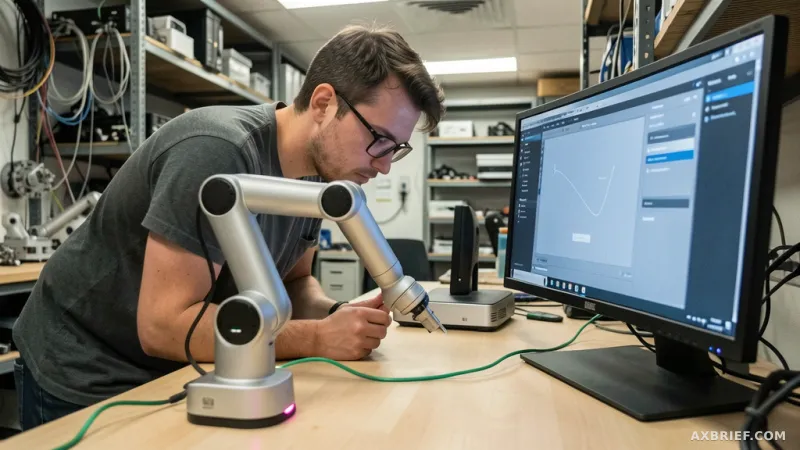
This shift transforms the development cycle through a Sim-to-Real architecture. Instead of waiting for hardware to be shipped, cleared through customs, and bolted to the floor, developers begin programming in a cloud-based simulation. They use AI-assisted coding tools and real-time visualization to verify the robot's state and environment. Once the logic is perfected in the virtual world, it is deployed directly to the physical hardware. Because the platform connects natively to ROS2 drivers, there is no translation layer required, and the cloud infrastructure handles the heavy computational lifting, leaving the physical robot to focus on execution.
This approach fundamentally changes the relationship between the manufacturer and the end-user. For partners like Inmotion Robotics, the platform removes the burden of developing and maintaining custom SDKs for every unique client use case. System integrators (SIs) can now deploy global hardware without investing months into driver development. Yatao Zhang of Deep Robotics noted that their robots are compatible with the Ollo platform from day one, eliminating the integration projects that previously delayed deployment. This allows manufacturers to focus on physical durability and motor performance while software teams focus on high-level service logic and AI integration.
To further accelerate this process, Ollo Robotics offers a bundle featuring the LEO Rover, a modular platform from Fiction Lab. This bundle allows users to start programming a virtual LEO Rover the moment they sign up, ensuring that by the time the physical rover arrives at their facility, the code is already tested and ready for deployment. Piotr Ślachcic, CEO of Fiction Lab, emphasizes that this workflow removes the need for expert intervention during the deployment phase, effectively turning the hardware into a plug-and-play asset.
By removing the requirement for custom driver development and local environment configuration, Ollo Robotics is shifting the center of gravity in robotics from hardware-centric engineering to software-centric iteration. The result is a drastic reduction in lead time, where the distance between a domain expert's idea and a robot's first movement is reduced from months to minutes.
The bridge between digital intelligence and physical action is no longer a specialized engineering hurdle, but a standard software deployment.