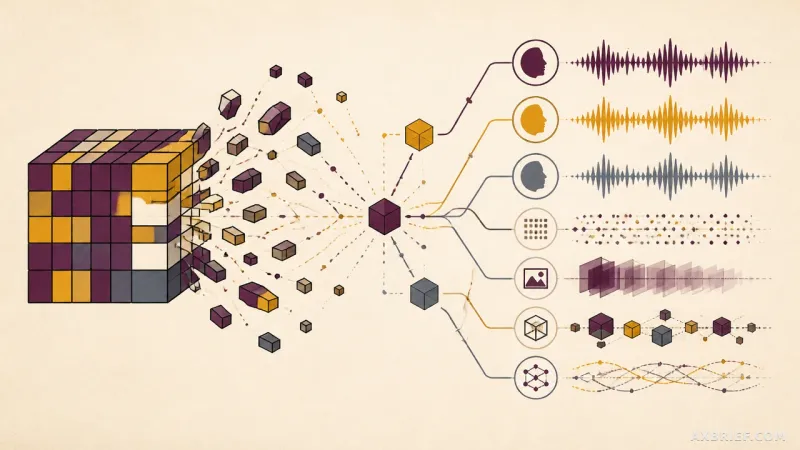
The modern AI developer is currently trapped in a cycle of subscription fatigue. For years, high-fidelity text-to-speech and voice cloning have been gated behind expensive API keys and monthly credits, where every single character generated adds to a growing bill. This dependency creates a precarious environment where a change in pricing or a revoked API key can instantly break a production pipeline. The community has been searching for a way to decouple high-end voice synthesis from the cloud, shifting the compute burden from the provider's server to the user's own GPU.
The Local Alternative to Cloud TTS
OmniVoice Studio emerges as a direct answer to this dependency, offering a completely local execution environment that eliminates subscription fees and API constraints. The most striking differentiator is the sheer scale of its linguistic reach. While industry leaders like ElevenLabs support 32 languages, OmniVoice Studio expands this capability to 646 languages. This massive increase in support allows creators to produce multilingual content without being limited by a provider's predefined list of supported regions. The tool integrates a comprehensive suite of features including voice cloning, video dubbing, real-time transcription, and a dedicated voice design module that allows users to engineer specific vocal characteristics from scratch.
Because the system runs entirely on the user's machine, data privacy is inherent rather than promised. Reference audio used for cloning, input scripts, and the resulting audio files never leave the local storage, removing the security risks associated with uploading sensitive voice data to third-party servers. This commitment to local-first architecture has resonated with the developer community, as evidenced by the project's 7.1k stars and 1.1k forks on GitHub. The latest version, v0.2.7, released on May 3, 2026, provides pre-built installers for macOS, Windows, and Linux, allowing users to bypass complex dependency chains and start generating audio immediately.
The Hardware Tax and Architectural Trade-offs
While the software is free, the actual cost of OmniVoice Studio is shifted to the hardware. The system is built on a sophisticated stack where a Rust-based Tauri shell handles the desktop environment, wrapping a React frontend and a FastAPI backend. This architecture allows the app to maintain high system resource efficiency via Rust while leveraging Python's extensive AI library ecosystem through FastAPI. The entire operation is managed via 97 API endpoints, and state management for task history and configurations is handled by a local SQLite database. For those who prefer a headless setup, the backend can be deployed via Docker to serve as a standalone API server.
docker run -p 8000:8000 omnivoice-studio-backendOnce the backend is live at `http://localhost:8000`, developers can integrate OmniVoice's capabilities into their own pipelines using the specifications found in the repository's docs directory. However, the performance of this pipeline is strictly tied to VRAM availability. The system automatically routes processing through CUDA for NVIDIA, MPS for Apple Silicon, ROCm for AMD, or the CPU as a last resort. If VRAM falls below 8GB, the TTS model offloads to the CPU, resulting in synthesis speeds that are approximately three times slower than GPU-accelerated paths. This latency becomes particularly evident during long-form video transcription tasks.
Apple Silicon users benefit from a more optimized path, as the system automatically selects MLX-based Whisper and TTS backends. By distributing the load between the Apple Neural Engine and Metal Performance Shaders, Mac users typically see a 2x increase in throughput compared to standard CPU paths. Windows users face a different hurdle: those with less than 16GB of VRAM often encounter memory crashes when using the CosyVoice engine. This happens because `torch.compile` triggers a kernel compilation that spikes VRAM usage, leading to an `OutOfMemoryError: CUDA out of memory`. To stabilize the system, users must navigate to the performance menu and enable the Disable torch.compile (Windows) toggle.
Deployment and the Dubbing Pipeline
Setting up OmniVoice Studio requires an initial download of approximately 2.4GB in model weights. For the most stable experience with the v0.2.7 beta, the developers recommend cloning the source and running it via the Bun runtime. On Windows, the installation is handled through PowerShell:
git clone ... && bun install && bun run desktop-prodmacOS users must deal with Apple's security quarantine for external apps, which can be resolved via the terminal:
xattr -d com.apple.quarantine /Applications/OmniVoice\ Studio.appLinux users must ensure their system libraries are up to date to support the Tauri web view. Debian and Ubuntu users require `libwebkit2gtk-4.0-37` and `libgtk-3-0`, while Fedora users need the `webkit2gtk3` package. Furthermore, accessing advanced speaker diarization requires a Hugging Face account. The `pyannote/speaker-diarization-3.1` model is a gated resource, meaning users must agree to the terms on the model page and provide a read token within the app to download the weights.
The core power of the tool lies in its zero-shot voice cloning and automated dubbing workflow. Zero-shot cloning allows the model to replicate a voice using only 3 to 10 seconds of reference audio, analyzing frequency and tone on the fly without the need for expensive fine-tuning. This feeds into a complex dubbing pipeline: a YouTube URL or local file is processed by WhisperX for transcription and translation, then analyzed by Pyannote to segment the audio by speaker. Finally, OmniVoice synthesizes the translated text using the cloned voices of the original speakers, mixing the result back into an MP4 file aligned with the original timecodes.
To achieve professional results, the purity of the reference audio is critical. Background noise significantly degrades cloning quality. Users are encouraged to use the Vocal Isolation tab to strip background music or noise before registering a reference file. Once processed, the final audio can be exported in MP3, WAV, or FLAC formats.
This shift toward local, high-capacity voice AI signals a move away from the centralized API economy and toward a future of sovereign, hardware-driven content creation.