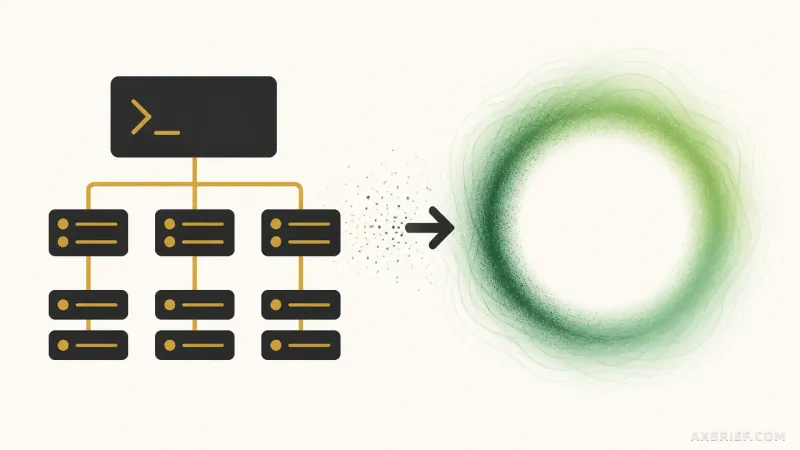
For thousands of families worldwide, the journey to a medical diagnosis is not a straight line but a grueling odyssey. Even after undergoing the most advanced genomic sequencing available, nearly half of patients with suspected rare diseases leave the clinic without an answer. They possess the data—thousands of genetic variants and fragmented clinical notes—but the sheer volume of information, coupled with the dizzying speed of new scientific literature, creates a bottleneck that human expertise alone cannot always break. This gap between having the data and understanding it is where the next frontier of precision medicine is being fought.
The Architecture of a Diagnostic Breakthrough
In a collaborative effort involving the Manton Center at Boston Children's Hospital and Harvard University, researchers deployed the OpenAI o3 Deep Research model to tackle this exact bottleneck. According to a study published in NEJM AI on June 18, 2026, the model was tasked with re-analyzing 376 unsolved cases that had already passed through commercial pipelines and multidisciplinary expert reviews without a conclusion. The results were significant: o3 successfully identified the cause of 18 cases that had previously stumped human specialists, representing a 4.8% increase in the diagnostic rate.
To achieve this, the model did not simply guess a disease. It operated within a rigorous research workflow designed to generate evidence-based hypotheses for human verification. The input process was highly structured, utilizing de-identified data packets containing patient symptoms described in Human Phenotype Ontology (HPO) terms, clinical notes, and demographic metadata such as age and gender. This was supplemented by filtered variant tables that detailed the rarity of specific mutations, their predicted impact on proteins, ClinVar classifications, and signal quality data from family members. In most instances, the model analyzed genomic data from both the pediatric patient and their biological parents to isolate the pathogenic variant.
From Black Box to Lead Generator
What separates this application of o3 from standard LLM queries is the implementation of an explanation-first reasoning layer. Rather than jumping to a conclusion, the model is required to construct a logical chain of evidence before proposing a diagnosis. It connects clinical features, genetic patterns, and the latest scientific literature to provide a molecular biological explanation. This allows medical reviewers to trace the AI's logic step-by-step, challenging the hypothesis or asking follow-up questions to refine the search.
This shift in utility transforms the AI from a diagnostic authority into a high-precision lead generator. The hypotheses generated by o3 are not treated as final diagnoses but are instead validated using the American College of Medical Genetics and Genomics (ACMG) and the Association for Molecular Pathology (AMP) frameworks. Every candidate variant is reviewed by at least two experts, with a consensus required for any final decision. The process only concludes when a CLIA-certified laboratory confirms the variant as pathogenic or likely pathogenic, at which point the clinical team delivers the news to the family.
Before tackling the unsolved cases, the team validated the model using 51 previously diagnosed rare disease cases. In two separate runs, the model accurately recovered the gene and variant in 48 of those cases. The accuracy remained high across specialized subsets, such as neuromuscular diseases, where it hit 45 out of 57 cases. Most impressively, in a set of 15 long-read genome cases—which are typically used to find complex structural variants—the model correctly identified the gene in every single case and identified the specific causal allele in 12 of them.
The Signal in the Noise
One of the most practical outcomes of the study was the correlation between the model's self-reported confidence scores and actual accuracy. The average minimum confidence score for correct diagnoses was 85.6, while incorrect or unconfirmed cases averaged 42.1. This numerical gap provides a critical filtering mechanism for clinicians; instead of reviewing hundreds of variants with equal weight, doctors can use these scores to prioritize which cases deserve the most immediate human attention.
The real-world utility of this approach is best illustrated by a case involving a patient with early-onset psychosis. The o3 model analyzed low-quality calls in a section of chromosome 22 and linked them to the patient's cardiac, immune, and neurodevelopmental symptoms. This led to a hypothesis of a 22q11.2 deletion, associated with DiGeorge syndrome, which was subsequently confirmed through follow-up genomic sequencing. The AI essentially inferred a structural variant that was not explicitly flagged in the input data by correlating clinical signs with genomic noise.
Other successes included the identification of a digenic case where mutations in both the LAMA2 and FOXP1 genes combined to explain a complex set of muscular and neurodevelopmental traits. In another instance, the model proposed a new mechanistic explanation for a vitiligo patient by identifying an 11-amino acid deletion within the S1PR1 gene. Perhaps most telling is that 7 of the 18 successful diagnoses were based on information already present in public databases but missing from the hospital's internal records. The AI's ability to synthesize fragmented data across different identifiers and formats solved a data integration problem that had previously hindered human researchers.
The end of a diagnostic odyssey depends on the relentless re-analysis of data against an ever-expanding library of human knowledge. By acting as a reasoning filter rather than a replacement for the physician, OpenAI o3 has demonstrated that the path to a cure begins with the ability to find the right question in a sea of genetic noise.
Medical professionals can now maximize diagnostic efficiency by using AI-driven confidence scores to determine exactly when and where human intervention is most needed.