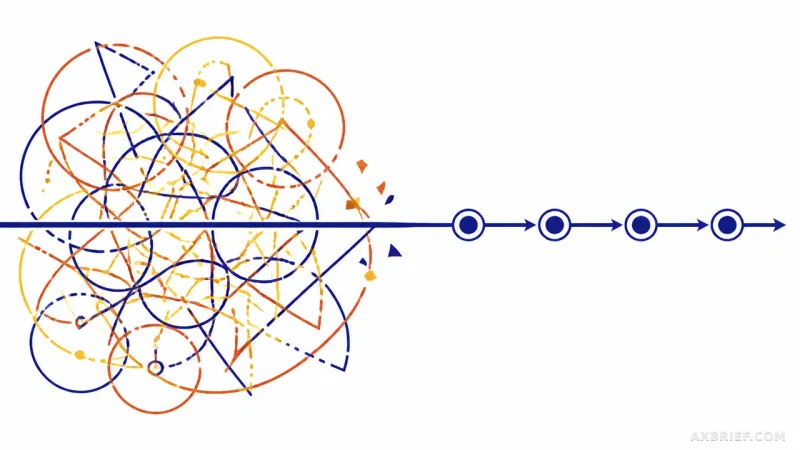
Every developer building an AI agent eventually hits the same wall: the plumbing. You spend a week perfecting a reasoning loop, only to realize that moving your agent from a Linux terminal to a web browser requires rewriting nearly every line of your interface code. This is the hidden tax of the open-source ecosystem. While the models themselves are becoming commodities, the environments they inhabit remain fragmented silos. Developers are forced to act as human adapters, manually stitching together models, inference engines, and execution harnesses with fragile glue code that breaks the moment a version number changes.
The Architecture of a Universal AI Socket
To break this cycle of repetitive labor, the OpenEnv project has undergone a fundamental structural shift, moving its primary operations to huggingface/OpenEnv. This is no longer a standalone tool but a coordinated effort governed by a high-powered committee. The coalition includes industry titans like Meta-PyTorch, Nvidia, and Hugging Face, alongside specialized AI infrastructure players such as Unsloth, Modal, Prime Intellect, Mercor, Fleet AI, and Reflection. This transition signals a move toward a common infrastructure for agentic reinforcement learning, moving away from proprietary silos and toward a shared utility.
The technical foundation of OpenEnv is designed to act as a standardized interface library that sits between the agent's harness, the execution environment, and the trainer. To achieve this, OpenEnv adopts a Gymnasium-style API, which is the gold standard for reinforcement learning environments. Instead of requiring developers to learn the unique API of every new tool, OpenEnv mandates a three-command communication protocol. Every environment must respond to `reset()`, which restarts the environment; `step()`, which inputs an action and returns the result; and `state()`, which provides the current snapshot of the environment. By reducing the entire interaction to these three primitives, OpenEnv creates a common socket where any model can be plugged into any environment without custom integration code.
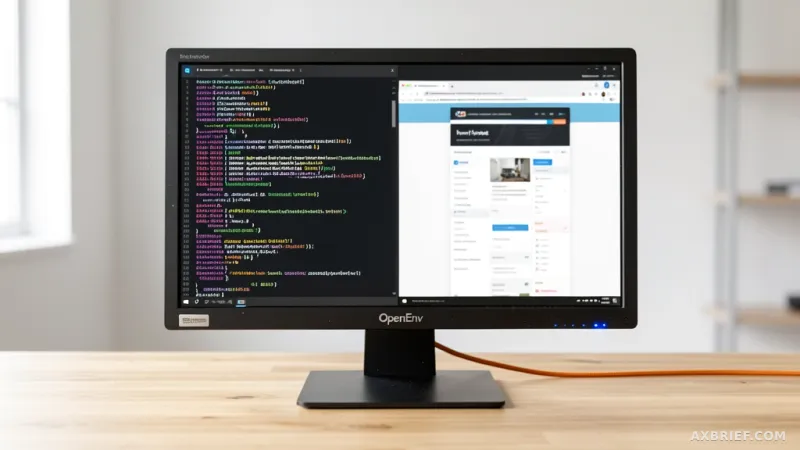
Under the hood, the system utilizes a client-server architecture. The execution environment operates as a standalone server, while the AI model acts as a client requesting actions. This separation is maintained through standard web protocols, specifically HTTP for data transfer and WebSockets for real-time, bidirectional communication. To ensure that these environments are portable across different hardware configurations, OpenEnv leverages Docker packaging. This allows a developer to replicate a complex execution environment on any computing resource instantly, removing the "it works on my machine" friction that plagues agent development.
Furthermore, OpenEnv integrates the Model Context Protocol (MCP), a standard that allows models to access external data and tools without needing a custom translation layer. A critical technical achievement here is the parity between simulation and production. In traditional agent workflows, a model trained in a simulated environment often fails in production because the interface differs slightly. OpenEnv ensures that the simulation mode used for training and the production mode used for deployment are identical, effectively eliminating the interface gap that causes agents to hallucinate or crash when they hit the real world.
The Battle Between Bespoke Integration and Modular Flexibility
There is a widening gap in how AI agents are built. On one side, closed-source labs like OpenAI and Anthropic employ a strategy of vertical integration. When a model like GPT-5.5 or Claude 3.5 is released, it is often co-optimized with its execution harness, such as Claude Code. The model is trained specifically to understand the quirks, latency, and API structure of its own proprietary tools. This is the equivalent of a bespoke suit; the fit is perfect, and the efficiency is maximized because the model and the tool were designed as a single unit.
Open-source development, by contrast, is a world of modular assembly. A developer might choose a Llama-3 model, run it through a vLLM inference engine, and connect it to a custom browser-based harness. While this provides immense freedom, it creates a performance penalty. Because the model was not born into that specific environment, the developer must spend countless hours tuning the connection. The result is often a fragmented experience where the model's raw intelligence is throtted by the inefficiency of its connection to the world.
OpenEnv attempts to bring the efficiency of the bespoke approach to the modular world. By providing a standardized interface, it allows open-source models to achieve the same level of environmental fluency as closed-source models without sacrificing the ability to swap components. If a developer decides to switch from one inference engine to another, or from a terminal environment to a database environment, they no longer need to rewrite the API. They simply plug the new component into the OpenEnv socket. This shifts the developer's focus from the plumbing of the system to the actual intelligence of the agent.
This standardization also accelerates the trend toward model specialization. For many enterprises, using a massive, general-purpose model for every task is financially unsustainable. The cost of GPU compute becomes a bottleneck. The logical alternative is to train smaller, highly specialized models that excel at one specific task. However, the cost of setting up the training environment for ten different small models is often higher than just using one giant model. OpenEnv removes this barrier. When the environment is standardized, the cost of deploying and training a specialized agent drops precipitously. Developers can now focus on designing sophisticated reward systems—the logic that tells the AI what a "good" job looks like—rather than worrying about how the AI sends a keystroke to a virtual terminal.
This ecosystem is further expanded by the integration of verifiers and environment repositories. Because the interface is common, a verifier built by one organization to check the correctness of code can be used by another organization regardless of their underlying infrastructure. The boundary between different AI toolchains disappears, creating a fluid marketplace of environments and trainers. The competitive advantage in AI development is shifting; it is no longer about who has the most proprietary glue code, but who can design the most effective logic and reward structures within a standardized framework.
As the industry moves toward autonomous agents that can operate computers independently, the need for a universal language between the brain and the hand becomes critical. OpenEnv provides that language, ensuring that the open-source community is not just building better models, but building a more scalable way for those models to interact with the digital world.