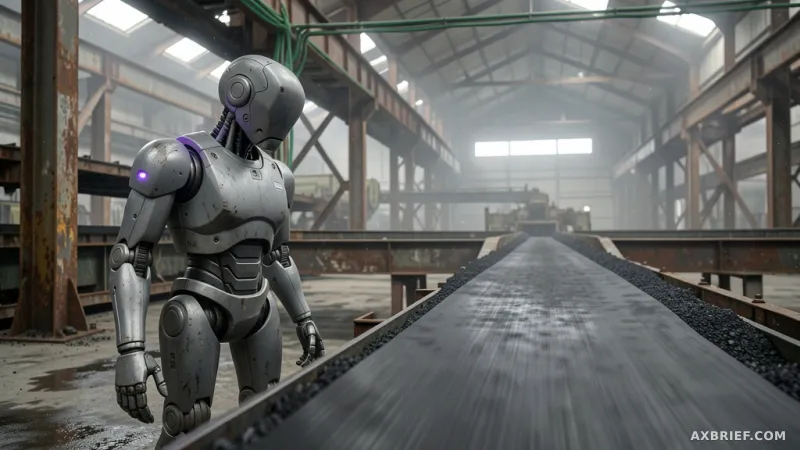
Construction sites remain some of the most hostile environments for human labor, characterized by unpredictable terrain, extreme weather, and constant safety hazards. For decades, the industry has relied on manual inspections for critical infrastructure, where workers walk kilometers of rugged terrain to spot a single hairline crack or a worn bearing. This reliance on human sight and physical endurance creates a persistent tension between the need for rigorous maintenance and the inherent risk to worker safety. The industry has long sought a way to decouple the act of inspection from the risk of human exposure, but the complexity of physical environments has kept most robotic solutions confined to controlled laboratory settings.
The Scale of the PowerCHINA Robotic Initiative
A massive shift in this paradigm is now underway as PowerCHINA, a state-owned giant in power equipment and infrastructure, enters a landmark agreement to deploy 5,000 embodied intelligence robots across its operational sites. This agreement is a tripartite collaboration involving the PowerCHINA Chengdu Survey and Design Research Institute, the Chengdu Humanoid Robot Innovation Center, and Zichengruijin. The scale of this deployment is unprecedented, representing the largest single rollout of embodied intelligence technology within the Chinese industrial sector to date.
These robots are destined for high-stakes environments including hydroelectric power plants, transportation engineering projects, and green mining operations. Unlike traditional automation, which follows rigid, pre-programmed paths, these units utilize embodied intelligence. This approach allows the AI to interact with the physical world through a robotic body, processing environmental feedback in real-time to navigate and perform tasks. By integrating 5,000 units, PowerCHINA is moving beyond the pilot phase and treating physical AI as a standard component of its industrial infrastructure.
From Single-Model Intelligence to Fleet Integration
The true technical challenge addressed by this rollout is the automation of long-distance conveyor belt monitoring. In mining and power generation, conveyor belts can stretch for several kilometers, and a single failure can halt entire production chains. Traditionally, detecting wear or cracks required manual patrols in dangerous zones. The solution deployed here is a multimodal intelligent inspection system that integrates text, image, and sensor data to identify anomalies autonomously.
This multimodal approach allows the robots to do more than just record video; they can synthesize diverse data streams to determine the severity of a fault and report it with precision. However, the real insight lies in the operational architecture. Zichengruijin provides the specialized operating platform, while PowerCHINA contributes its vast expertise in planning, design, construction, and investment. This creates a symbiotic relationship where the AI is not just a tool, but a layer of the digital application infrastructure.
This transition reveals a critical evolution in the AI race. For the past few years, the industry has focused on the performance of single models—the intelligence of a single brain. PowerCHINA's move suggests that the next frontier of competitive advantage is system integration. The ability to deploy, manage, and maintain a fleet of 5,000 autonomous agents across diverse geographical sites is a far more complex engineering feat than training a high-performing model in a vacuum. The focus has shifted from the capability of the individual robot to the stability of the entire robotic swarm.
This deployment signals the end of the era of AI demonstrations and the beginning of the era of physical AI at scale.