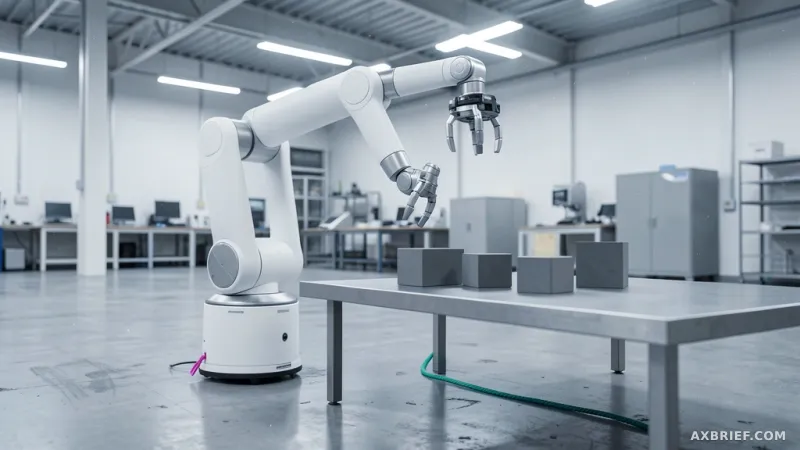
The modern AI experience is largely confined to a glass rectangle. Whether it is a sophisticated chatbot drafting an email or a generative model creating a photorealistic image, the intelligence remains trapped in a digital vacuum. For developers and engineers, the current frontier is no longer about increasing the parameter count of a language model, but about breaking that glass. The industry is shifting toward Embodied AI, where the goal is to translate digital reasoning into physical torque and movement in an unpredictable, three-dimensional world.
The Benchmarks of Physical Intelligence
Alibaba has entered this race with the unveiling of the Qwen Robot Suite, a specialized family of AI models designed specifically for robotics. Developed by Tongyi Lab, Alibaba's premier AI research organization, the suite represents a strategic pivot from general-purpose Large Language Models (LLMs) toward what the company calls Physical AI. While the suite is currently in a pilot phase for a select group of Alibaba Cloud enterprise customers, its technical capabilities have already been validated through rigorous external testing.
The most significant evidence of the suite's efficacy comes from the RoboChallenge, a recognized platform for evaluating general-purpose robot performance. In the general category, the Qwen Robot Suite secured the top position, recording a process score of 59.83 and a task success rate of 45%. While a 45% success rate might seem low in the context of software, in the realm of general-purpose physical manipulation—where variables like lighting, friction, and object geometry change constantly—it represents a state-of-the-art milestone.
Central to this performance is the Qwen-RobotManip model, which handles the actual physical interaction with the environment. To achieve this level of dexterity, Alibaba trained the model on over 38,000 hours of open-source robotics data. This massive dataset allowed the model to evolve into a Vision-Language-Action (VLA) system, capable of interpreting visual inputs and linguistic commands to produce precise motor coordinates. The underlying architecture is built upon the Qwen 3.5-4B model, leveraging its computational efficiency to ensure that the latency between perception and action is minimized.
Decoupling Perception from Execution
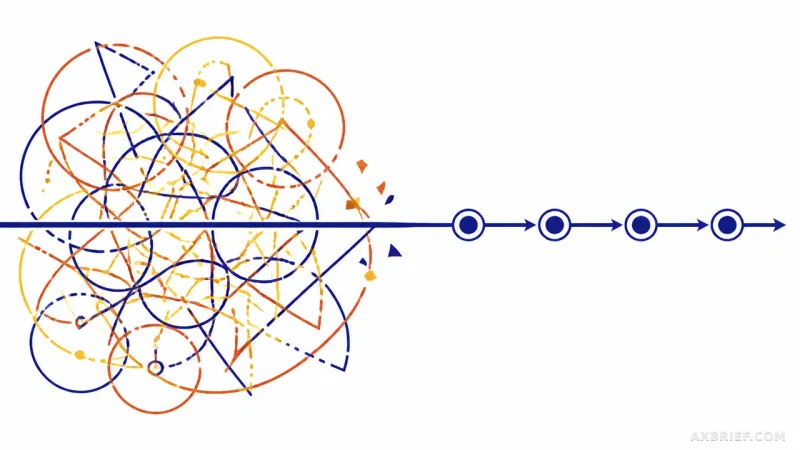
Most early attempts at robotics AI tried to create a single, monolithic model that could see, think, and move simultaneously. Alibaba's approach differs by implementing a strict three-layer intelligence structure that separates perception, prediction, and execution. This modularity is the key to solving the instability often found in embodied systems.
The first layer, Qwen-RobotNav, serves as the sensory and navigational hub. It combines visual data with language processing to understand the surrounding environment and plot an autonomous path. However, simply knowing where to go is not enough; the robot must understand how the world will react to its presence. This is where the second layer, Qwen-RobotWorld, comes into play. As a video-based world model, Qwen-RobotWorld simulates the physical consequences of an action before the robot actually performs it. By predicting the change in the environment through a simulated video sequence, the system can discard dangerous or inefficient movements before they happen in the real world.
Only after the navigation is set and the outcome is predicted does the third layer, Qwen-RobotManip, take over. By utilizing the VLA framework, this layer converts the high-level plan into specific physical actions. This separation of concerns ensures that a failure in navigation does not crash the manipulation logic, and a prediction error in the world model can be corrected before the robot touches a physical object. This architectural choice transforms the robot from a reactive machine into a predictive agent.
This strategic move puts Alibaba in direct competition with a growing ecosystem of Physical AI developers. Tencent is pushing its HY-Embodied model, while hardware-centric firms like Unitree, Agibot, UBTECH, and Galbot are racing to integrate foundation models into their chassis. Even automotive giants like Xpeng and Xiaomi are leveraging their autonomous driving stacks and manufacturing pipelines to claim a stake in the embodied AI market. The competition has shifted from who can write the best poem to who can most reliably pick up a fragile object in a cluttered room.
Alibaba's Qwen Robot Suite demonstrates that the path to true physical intelligence lies not in a larger model, but in a more disciplined architecture that respects the boundary between digital prediction and physical reality.