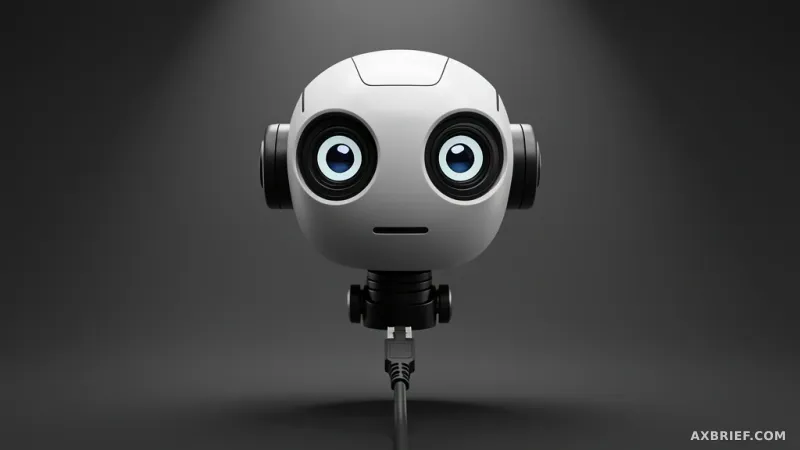
In a robotics lab at 2:00 PM, a Reachy Mini robot engages in a fluid conversation with a developer. The ethernet cable is unplugged, and the only sound in the room is the hum of a laptop cooling fan working at high speed. The robot processes queries and generates responses instantly, entirely independent of external servers. This shift represents a departure from the industry standard, where voice-enabled robotics have historically been tethered to the latency and privacy risks of cloud-based APIs.
The Anatomy of a Local Voice Stack
Traditional voice AI relies on a four-stage pipeline: Voice Activity Detection (VAD), Speech-to-Text (STT), Large Language Model (LLM) inference, and Text-to-Speech (TTS). When these stages are distributed across various cloud services, network overhead creates a fragmented user experience. Reachy Mini bypasses this by implementing a fully local stack, where the robot’s intelligence is governed by the local GPU rather than a remote data center.
To build this environment, developers can leverage speech-to-speech for the core loop. For LLM inference, the system supports multiple backends, including llama.cpp, MLX for Apple Silicon, and vLLM. Installation is straightforward:
brew install llama.cpp
pip install speech-to-speech
The default configuration utilizes Parakeet for STT, Qwen3TTS for speech synthesis, and the Qwen3-4B-Instruct-2507 model for reasoning. By using a cascade structure, developers can swap these components independently. If a specific language requires better recognition, only the STT model needs to be replaced, allowing for a modular approach that balances speed and quality based on specific hardware constraints.
Cascade Architecture and the Responses API
The system’s efficiency relies on the Responses API protocol, which decouples the LLM inference from the voice processing loop. This separation is critical; by running the LLM as a distinct process, the inference engine’s load does not bottleneck the voice loop. For those using vLLM, version 0.21.0 or higher is mandatory to support tool-call streaming. Using older versions will cause the assistant to hang when attempting to trigger external tools.
To further minimize latency, developers can enable Multi-Token Prediction (MTP) by using the `--speculative-config` flag during vLLM execution. This allows the model to predict multiple tokens simultaneously, significantly reducing the time-to-first-token. Furthermore, the system supports LAN binding, allowing the inference engine to run on a powerful workstation while the robot hardware connects via a local IPv4 address. The complete source code for this implementation is available at the speech-to-speech repository.
The Economic and Operational Shift
Moving away from hosted APIs changes the cost structure from variable, usage-based billing to a fixed-cost model based on hardware ownership. Beyond the financial implications, the primary driver for this transition is data sovereignty. By keeping all processing on-device, developers eliminate the compliance costs associated with transmitting sensitive data to third-party servers. This allows teams to prioritize performance over provider policies, enabling the use of open-source models like Gemma or Mistral via the reachy_mini_conversation_app CLI.
Latency as the Determinant of Interaction Quality
The perceived intelligence of a robot is often tied to the speed of its response. In a four-stage pipeline, the LLM inference stage is the primary bottleneck. If the delay between the end of a user's sentence and the robot's reply is too long, the interaction feels mechanical rather than conversational. By optimizing the hardware-model pairing—such as running Qwen3-4B-Instruct-2507 on Apple M-series chips or dedicated CUDA environments—developers can achieve near-instantaneous response times. The trade-off between TTS quality and processing speed remains a design choice, but the ability to tune these parameters locally ensures that the robot's responsiveness can be tailored to the specific needs of the environment.
As local inference engines continue to mature, the reliance on cloud-based voice interfaces will likely diminish in professional robotics applications.