'Love, Rendered': Recreating Memories Without Records from 70 Years Ago
Memories from 70 years ago, for which no photos or video records existed, have been visualized using AI. The result of recreating the past based solely on an individual's memory, without physical evidence in the form of archives, expands the options for those contemplating methods of record preservation.
Google DeepMind and a film crew restored the fading memories of an elderly couple suffering from cognitive decline through a short documentary titled *Love, Rendered*. The subjects are Bert Schatz and Ethel Schatz, who have been married for 70 years. The project specifically focused on the situation where precious shared memories were disappearing due to the cognitive decline experienced by Bert.
The core objective of the restoration was to recreate the day the couple first met at a student cooperative in Cleveland. Since there were no photos or videos to prove the circumstances of the time, the memory existed only in the minds of the couple. The production team deployed Google DeepMind's technological capabilities to visualize this unrecorded past.
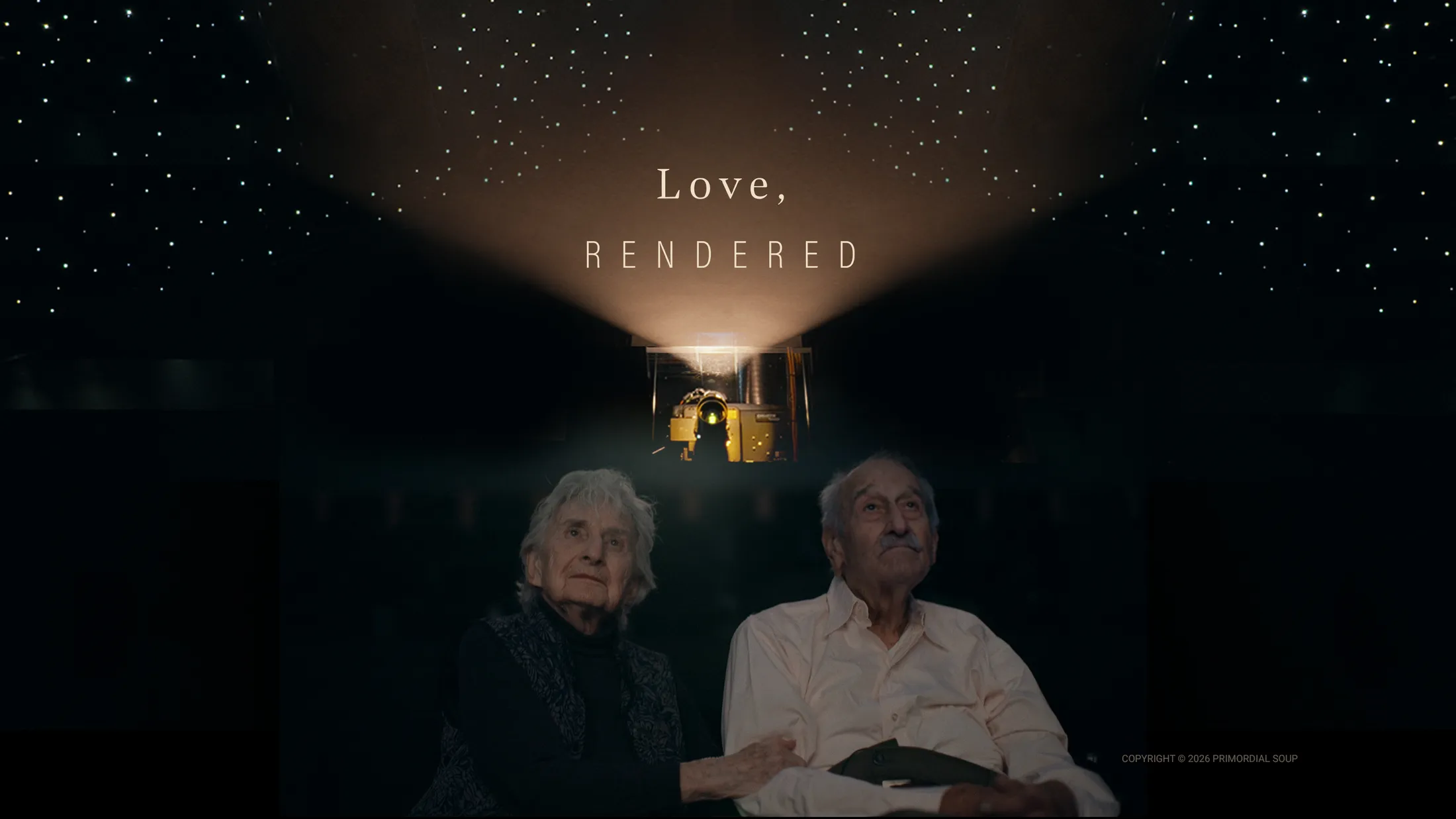
This project was directed by Academy Award nominee Liz Garbus and produced by Dan Cohen and Darren Aronofsky. The technical implementation was a collaboration between Google DeepMind and Primordial Soup, Aronofsky's creative venture. It is not a simple technical demonstration, but a form that combines cinematic narrative with technical restoration.
During the production process, the wife, Ethel, participated not as a mere subject, but as an active co-creator. She increased the accuracy of the memories by personally correcting detailed elements, such as the curve of the stairs or the shape of the shoe heels in the generated video. This indicates that the AI did not create the output alone, but that human memory and feedback were precisely involved.
Darren Aronofsky explained that tools like brushes or hammers do nothing until they are guided by a human hand. In *Love, Rendered*, machine learning (technology where a machine learns on its own through data) was utilized as a tool to guide the couple back to a moment in their past.
[AX BRIEF Analysis] The visualization of memories without records shows that the role of AI has expanded beyond simple image generation to emotional restoration. Practically, the key is that AI can approach an individual's subjective truth when combined with sophisticated human feedback. However, since such recreation depends on the conditions of the subject's memory and ability to describe details, it is a method more suitable for creating personalized content for emotional satisfaction rather than the restoration of objective facts.
The Two-Step Pipeline: Image Restoration and Performance Capture
The first stage of the pipeline consists of restoring and colorizing black-and-white photos from their youth using generative models. This is a process of filling in low-resolution areas of black-and-white photos and adding color to secure a visual reference point. These restored photos serve as anchors in the subsequent video generation stage to ensure that the facial features and proportions of the individuals are not distorted. This is because precise mapping in the next stage is only possible if high-resolution data is secured while maintaining the identity of the original photo.
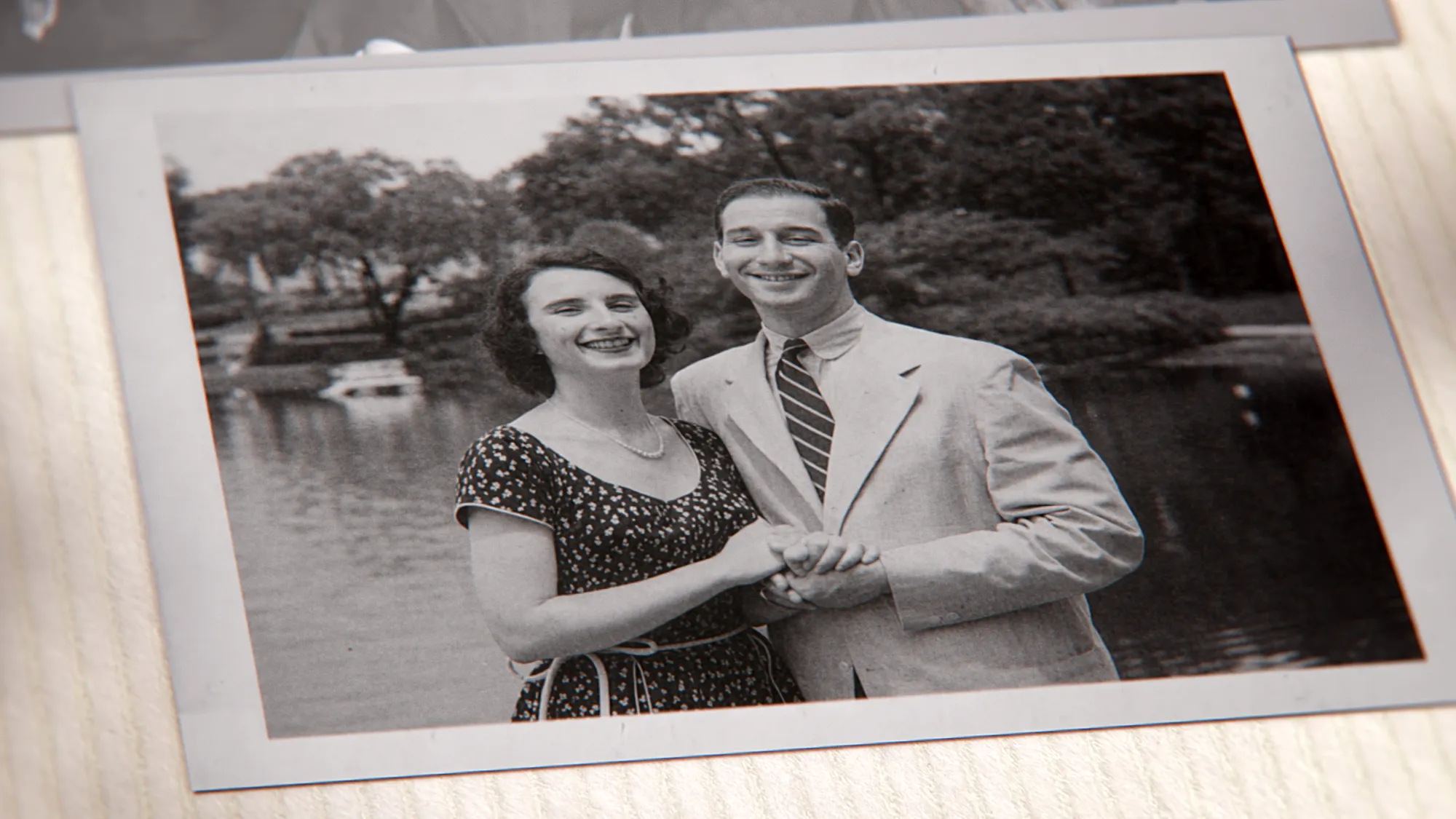
A performance capture model is then used to overlay current movements onto the restored appearance. Performance capture is a technology that records movements, such as facial expressions and gestures, as digital data. Rather than just large movements like walking or talking, it precisely extracts micro-mannerisms, such as the angle at which Bert tilts his head, short hesitations between words, or the fine wrinkles that appear around the eyes when smiling. By mapping this extracted current dynamic data onto the appearance model of their youth, the liveliness of the actual person is implemented within the static photo.

This method secures both consistency of appearance and realism of behavior through a two-step pipeline that separates visual restoration and dynamic mapping. It demonstrates the practical significance that a path of digitizing and applying an individual's unique behavioral patterns possesses much higher emotional persuasiveness than simple visual cloning. However, the specific model names, the scale of training data, and the specifications of the capture equipment used for performance capture were not disclosed. Therefore, based on the released results alone, there are limits to determining how much of a dataset must be secured in a general engineering environment to implement a similar level of micro-mannerisms.
AI Co-creation Process with Human Directing
AI models were defined not as simple automated generation tools, but as artistic media and toolkits (a collection of tools gathered for a specific purpose), and human direction was intervened in the entire process. Instead of accepting the results produced by the AI as they were, the production team designed a control structure where humans decided and modified the details. This is a method of increasing the precision of the output by prioritizing the specific intentions of the creator over the efficiency provided by technical automation.
Ethel, the actual owner of the memories, participated as a co-creator to personally correct visual details. Ethel closely examined detailed elements, such as the curve of the stairs or the shape of the shoe heels in the generated video, and requested corrections if they differed from her actual memories. By utilizing AI like a sophisticated digital brush, fragments of memory were refined into concrete shapes, reducing visual errors and increasing the resolution of the memory.
The technical aim of this work was to secure "emotional truth"—what the subject feels is real—beyond simple visual reproduction. Subjective alignment felt by the person remembering was given higher priority than physical accuracy at the pixel level. This is a process of making technology closely align with human internal experiences by restoring the specific memories and emotions of an individual that are easily missed by average reproductions based on large datasets.
The method of closely combining human directing with the AI video generation process shows a practical path for producing high-quality personalized content. When external data, such as a user's domain knowledge or actual memories, is combined with the model's inference results, the emotional reliability of the output can be dramatically increased. However, this method requires the prerequisite that the owner of the memory must directly participate and provide feedback. The fact that the objective factual relationship of the final output may vary depending on the participant's memory or subjective judgment remains a technical limitation.
Personal Application via the Gemini App and Practical Implications
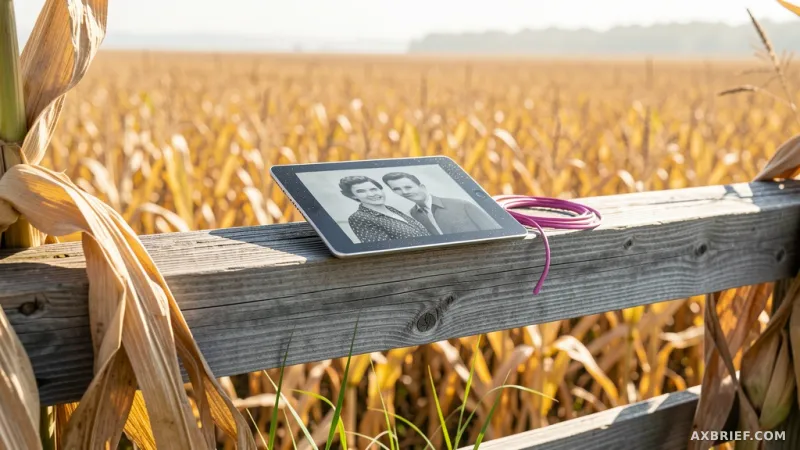
By uploading a photo and entering a specific prompt in the Gemini app, general users can immediately use basic photo restoration functions. After uploading a family photo they wish to restore, the user enters the prompt: `Can you restore and colorize this photo? Preserve the appearance, expression, and pose of the people.` This command guides the AI to convert the black-and-white image to color and repair damaged parts while maintaining the appearance, expression, and pose of the people in the photo. The core is the removal of entry barriers, bringing past visual records up to current quality through a conversational interface without complex editing software.
From AX BRIEF's perspective, the practical implication of this implementation is that the core path of AI video generation has evolved from simple visual cloning to a method of digitizing and applying an individual's unique habits. This project extracted micro-mannerisms—such as hesitations when speaking or slight tremors around the eyes—of the current person and precisely transplanted them into the appearance of their youth. This proves that when producing high-quality personalized content, how behavioral patterns that define a subject's identity are defined and mapped as data is more important than simply generating high-resolution images. Practically, in addition to the image dataset used to train the appearance, the combination of performance data recording the person's unique movements becomes the variable that determines the completeness of the content. However, this method is only valid if the current person is alive or if sufficient behavioral data has been secured; if data is lacking, it has the limitation of relying on the generative model's arbitrary inference.
When changing a static past photo into a dynamic video, the precise transplantation of current behavioral habits, rather than simple visual reproduction, becomes the final criterion for increasing the emotional sense of presence felt by the user.
Image source: Google AI