
The modern gaming experience is often defined by the waiting room. For many, the ritual of launching a new season or a major expansion begins not with gameplay, but with a progress bar tracking a 50-gigabyte patch. This friction creates a psychological barrier between the player and the content, where the excitement of a release is dampened by the technical requirement of storage management and bandwidth consumption. As game worlds grow in complexity and fidelity, the gap between clicking play and actually playing continues to widen, leaving developers and players in a constant struggle against the limitations of local hardware.
The New Standard of Cloud-Native Gaming
GeForce NOW is attempting to erase this friction by integrating RTX 5080 resources for its Ultimate membership tier, effectively decoupling high-end performance from physical ownership. This hardware shift coincides with a significant content update featuring nine key titles, most notably the July 24 release of Path of Exile: Curse of the Allflame. This expansion introduces a fundamental overhaul of the socket and link systems, which govern how skills are equipped and connected within items. By hosting this on the cloud, players bypass the massive patch downloads typically associated with such systemic changes, moving immediately into the practical work of reconfiguring character skill combinations.
The expansion takes players to the Frozen Seas, where the narrative is driven by Captain Valeria and the cursed navigator Vesper. The gameplay loop now centers on collecting treasure maps and navigating the legendary ship Sovereign toward the abyss. A critical new mechanic, the Allflame Lanterns, allows players to dive into deep waters to excavate artifacts, adding a layer of risk-reward exploration to the environment. On the character side, the Scion class receives the Luminary Ascendancy, offering new stat distributions and skill operations. This is complemented by the return of the Mercenaries of Trarthus and the introduction of Atlas Anomalies, which serve as unpredictable variables in the game world. Furthermore, the Abyss, Legion, and Talisman mechanisms have been refined with dedicated rewards to streamline the farming process and clarify player objectives.
Simultaneously, the service is leveraging the RTX 5080 to handle the immense computational load of Battlefield 6 Season 4. The update expands the theater of war with the Tsuru Reef map and a two-stage rollout of Wake Island. Both environments feature fully operational aircraft carriers, integrating flight deck operations with naval combat. To enhance realism, the developers implemented a dynamic wave system that calculates water movement in real-time. This is not a mere visual effect; the physics of the ocean directly influence the tactical movement of vehicles and units during a match. To support community engagement, the update also introduces Custom Lobbies and a Spectator Mode, allowing for more curated and observable competitive play.
Beyond the cutting edge, the platform is addressing the preservation of gaming history by streaming Capcom classics and early access titles. Breath of Fire IV returns with its intricate narrative involving Ryu and Puru, maintaining its strategic RPG growth structure and dragon transformation systems. The survival horror experience is also represented through Dino Crisis and Dino Crisis 2, where resource management and the threat of prehistoric predators are rendered without the need for legacy consoles or CD-ROM drives. For those looking forward, Halo: Campaign Evolved is now available via early access for Premium Edition buyers, preceding its global launch on Tuesday, July 28. These titles are delivered via direct data transmission from the server, ensuring that even pre-order titles require zero local installation time.
Decoupling Performance from Physicality
The true shift here is not the addition of games, but the total removal of the hardware bottleneck. When a user launches Battlefield 6 on a Chromebook or a Fire TV, they are not using the local processor to render the dynamic wave system or the dense unit clusters on an aircraft carrier. Instead, the RTX 5080 in the data center handles the heavy lifting, streaming only the resulting frames to the device. This transforms the GPU from a piece of expensive hardware that depreciates over three years into a scalable service tier. The tension between wanting the highest graphical settings and the cost of a hardware upgrade is resolved by shifting the investment from a one-time purchase to a membership model.
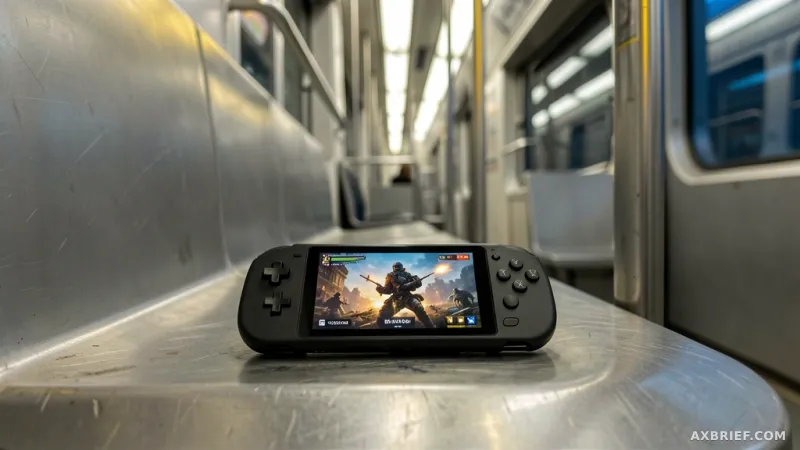
This architecture extends to the concept of the gaming ecosystem. By supporting a vast array of devices—including Mac, mobile, Steam Deck, and various smart TVs—the service eliminates the concept of a primary gaming station. A player can start a session on a living room TV and transition seamlessly to a Steam Deck during a commute without worrying about save-game synchronization or patch versions. The physical ownership of a console or a high-end PC is no longer the gatekeeper to the experience; rather, the access right to the cloud resource becomes the primary determinant of performance. This is particularly evident in the return of users to the Ultimate membership, who cite the flexibility of handheld transitions as a primary motivator.
By removing the need for legacy hardware to play Capcom classics or the need for a $1,500 GPU to run Battlefield 6 at max settings, the platform is redefining the user workflow. The process of deleting old files to make room for a new patch or waiting hours for a download to complete is replaced by an instant-on experience. The hardware is now an invisible utility, much like electricity or internet connectivity, providing a consistent performance baseline regardless of the end-user's device.
The era of the hardware upgrade cycle is being replaced by the era of the subscription tier.



