
For years, the local AI community has lived in a state of constant compromise. Developers and power users have navigated a frustrating trade-off between model intelligence and hardware constraints, often forced to aggressively quantize models or sacrifice inference speed just to fit a decent LLM into limited VRAM. The dream of a truly autonomous, always-on local agent has remained largely theoretical, hampered by the physical reality that high-performance compute usually requires a server rack or a massive power bill. This week, the conversation shifted from optimization to liberation as the industry caught a glimpse of a future where the VRAM wall finally collapses.
The Hardware Foundation of the Local Agent Era
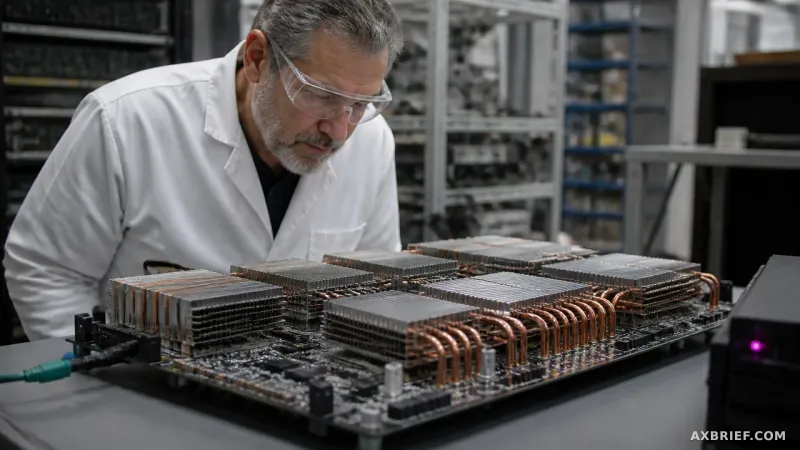
NVIDIA is preparing to redefine the edge computing landscape with the RTX Spark, scheduled for release in October 2026. This is not a mere incremental update to the GeForce line but a specialized architectural leap designed specifically for the era of autonomous agents. At its core, the RTX Spark features a Blackwell GPU capable of 1 Petaflop of performance, meaning it can execute one quadrillion operations per second. To solve the memory bottleneck that has plagued local AI, NVIDIA has equipped the system with up to 128GB of unified memory.
This unified memory architecture is the critical unlock. By integrating a 20-core Grace CPU with the Blackwell GPU, the system allows both processors to share the same memory pool, drastically reducing the data transfer bottlenecks that typically occur when moving tensors between system RAM and VRAM. This design enables the RTX Spark to host large-scale models in a state of constant readiness without needing to offload to the cloud. The physical footprint is equally ambitious, with NVIDIA targeting high-performance slim laptops and compact desktops.
Industry partners have already begun showcasing the form factors for this hardware. At IFA 2026, Acer revealed a compact desktop concept, while Lenovo announced the Yoga Pro 9n and the Yoga 9n 2-in-1. With six major OEMs participating in the October launch, the 1 Petaflop threshold is moving from the data center into the home office. This hardware does not operate in isolation; it integrates directly with the Windows Agent framework, allowing AI workloads to run at the OS level. This means an agent can manage background tasks, file organization, or complex workflows in parallel while the user continues to play a AAA game or edit 8K video, effectively treating AI as a native system service rather than a standalone application.
From Manual Configuration to One-Click Autonomy
Until now, deploying a local agent required a gauntlet of manual steps: selecting the right GGUF or EXL2 quantization, hunting for compatible inference servers, and wrestling with CUDA environment variables. The new RTX and DGX ecosystem replaces this friction with a one-click deployment model. Three primary agent applications now leverage llama.cpp with NVIDIA-specific optimizations to automate the entire setup process.
Perplexity Portable Computer has already begun supporting the Linux-based NVIDIA DGX Spark, with Windows support arriving shortly. This tool requires a minimum of 24GB VRAM and packages the model, orchestration layer, and toolsets into a single executable. One of its most significant features is selective escalation. The system processes the entire workflow locally to eliminate credit costs and latency, but it can intelligently route highly complex reasoning steps to over 15 different cloud-based frontier models. Crucially, this escalation requires explicit user permission before any sensitive data leaves the local environment.
Similarly, the Hermes Agent and OpenClaw are bringing one-click setups to Windows RTX and DGX systems. These applications automatically detect the available GPU hardware and apply the optimal configuration settings during installation. For those looking for the technical specifics of these optimizations, the OpenClaw blog provides a detailed breakdown of how the software simplifies the local agent pipeline. By embedding hardware detection and library optimization directly into the app, NVIDIA is removing the barrier to entry for non-technical users.
This software shift is backed by massive gains in raw throughput. On a GeForce RTX 5090, llama.cpp has seen inference throughput increase by up to 1.9x. This jump is driven by kernel optimizations and the implementation of speculative decoding, where the model predicts subsequent tokens to reduce the total number of necessary computations. Furthermore, improvements in prefill speeds have significantly reduced the time between the initial prompt and the first generated token.
For professional environments, vLLM has shown varying but impressive gains. On the RTX PRO 6000 Blackwell workstation edition, throughput increased by 1.2x, while a cluster of two DGX Spark units saw a 1.4x increase. These gains are powered by the FlashInfer library's new XQA attention kernel, which redesigns how the model calculates relationships between words to better suit the Blackwell architecture. By optimizing the backend data path, NVIDIA ensures that the compute units remain saturated, eliminating idle cycles during heavy inference loads. These improvements are immediately accessible through popular local LLM runners like LM Studio and Ollama via simple backend updates.
Distributed Compute and the Creative Pipeline
Recognizing that even 128GB of memory can be exhausted by massive ensembles of agents, NVIDIA is introducing PAIR (Personal AI Router). PAIR is a free, open-source software layer that transforms a local network into a virtual compute pool. It automatically discovers any device on the network equipped with an NVIDIA GeForce RTX 20 series GPU or newer, or an Apple M4 silicon chip, and distributes inference requests based on available capacity.
This solves the problem of resource contention. If a user is utilizing their primary workstation for a GPU-intensive task like 3D rendering, PAIR can route the AI agent's reasoning tasks to a secondary laptop or an older desktop sitting idle in the room. Because agent workflows are inherently modular and can be split into parallel tasks, this distributed routing prevents any single GPU from becoming a bottleneck. PAIR is currently in beta and supports Windows, macOS, and Linux, integrating seamlessly with Ollama and LM Studio to provide a server-grade infrastructure without the need for actual servers.
This local-first philosophy extends into the creative arts through the CyberLink PhotoDirector AI PC Mode. Launching alongside the RTX Spark in October, this software integrates diffusion models directly into the editing workflow for generative fills, image enhancement, and object removal. By utilizing TensorRT-RTX and FP8 (8-bit floating point) precision, the software reduces memory overhead and latency, allowing high-resolution image manipulation to happen in real-time.
By moving these creative workflows entirely on-device, NVIDIA has effectively eliminated the token costs associated with generative AI. Artists can now iterate on hundreds of versions of a concept without worrying about API credits or the security risks of uploading proprietary assets to a cloud server. The environment is entirely closed, providing a level of data sovereignty that is impossible in a cloud-centric model.
However, the transition to this ecosystem requires a clear understanding of the hardware floor. To run these local agents effectively, a minimum of 24GB VRAM is the non-negotiable baseline. While PAIR allows for the integration of older Turing-based RTX 20 series cards, the actual inference performance remains heavily dependent on the architecture and memory capacity of the host GPU. Without at least 24GB of VRAM, users will encounter model loading errors or severe performance degradation, making the RTX Spark and high-end RTX 50-series cards the practical standard for professional local AI deployment.
The era of the cloud-dependent AI is ending, replaced by a world where the most powerful models live and breathe on the hardware beneath our fingertips.



