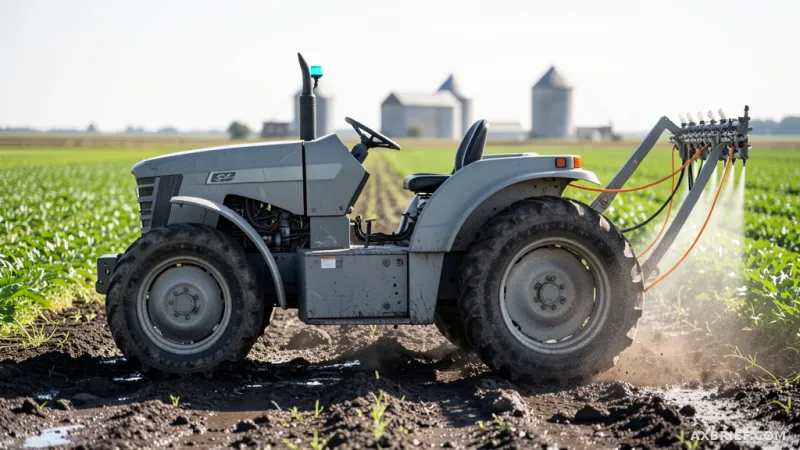
The modern farm is often a place of grueling, repetitive labor that defies the high-tech image of the digital age. For hours on end, a farmer sits in a tractor cab, fighting the mental fatigue of steering a massive machine in perfectly straight lines while simultaneously scanning the soil for weeds. This duality of operation—managing the vehicle's path while executing precise crop care—creates a cognitive bottleneck that limits efficiency and increases the likelihood of human error. The industry has long sought a way to decouple the driver from the machine, but the challenge has always been bridging the gap between simply moving a tractor and actually performing the work.
The Integration of Navigation and Precision Spraying
Sabanto Inc. and Verdant Robotics have addressed this bottleneck by merging two distinct technological specializations into a single, cohesive ecosystem. Sabanto operates as a retrofit specialist, providing the hardware and software necessary to transform traditional, manually operated farm equipment into autonomous vehicles. Instead of requiring farmers to invest in entirely new, prohibitively expensive autonomous fleets, Sabanto allows them to upgrade the machinery they already own. This retrofit approach lowers the barrier to entry for autonomous adoption across diverse farm sizes.
Complementing this navigation layer is the SharpShooter system developed by Verdant Robotics. Unlike traditional sprayers that blanket a field in chemicals, SharpShooter utilizes plant-level precision to identify and treat individual plants. This ensures that chemicals are applied only where necessary, reducing waste and environmental impact. By integrating these two systems, the companies have created a workflow where the autonomous navigation provided by Sabanto communicates directly with the precision spraying of Verdant Robotics. Detailed specifications and operational capabilities of this integration are available through Verdant Robotics.
Moving From Autonomous Driving to Autonomous Work
To understand the significance of this partnership, one must distinguish between autonomous driving and autonomous operation. Many companies in the AgTech space have successfully solved the problem of navigation, creating tractors that can follow a GPS path without a human at the wheel. However, navigation is merely the transport mechanism. The actual value of the machine lies in the task it performs once it is in motion. When navigation and task execution operate as separate silos, the system remains fragile and often still requires human oversight to ensure the work is being done correctly.
The integration between Sabanto and Verdant Robotics shifts the paradigm from driving to working. By linking the navigation system directly to the SharpShooter spraying mechanism, the tractor no longer just moves through a field; it perceives and reacts to the crop in real-time without any human intervention. The tension in previous autonomous attempts was the disconnect between the steering wheel and the nozzle. When these two functions are unified into a single control loop, the tractor becomes a true robot rather than just a self-driving vehicle. This synergy is the critical benchmark for any real-world deployment of unmanned machinery in precision agriculture.
Furthermore, the decision to utilize a retrofit model rather than a proprietary new machine changes the economic calculus of the farm. The ability to add Physical AI capabilities to existing assets means that the transition to autonomy is an incremental upgrade rather than a capital-intensive overhaul. The success of this deployment depends entirely on whether the movement and the action are synchronized. If the spraying system cannot communicate with the navigation system, the efficiency gains of autonomy are lost to the friction of fragmented software.
This convergence of retrofit navigation and plant-level precision marks the end of the era where the tractor cab was a mandatory workstation for the farmer.