The Shift Toward Agentic Creative Workflows
Creative teams are currently facing a significant bottleneck: 78% of these teams report that their current workload exceeds their operational capacity. Simply increasing the speed of generative AI tools is no longer a viable solution, as it fails to address the underlying fragmentation of the creative process. To scale effectively, media organizations are moving toward reusable agent harnesses—orchestration layers that maintain context, support long-form media tasks, and enforce human-in-the-loop review stages. By decoupling workflow instructions from the underlying tool infrastructure, teams can create repeatable, high-fidelity production environments.
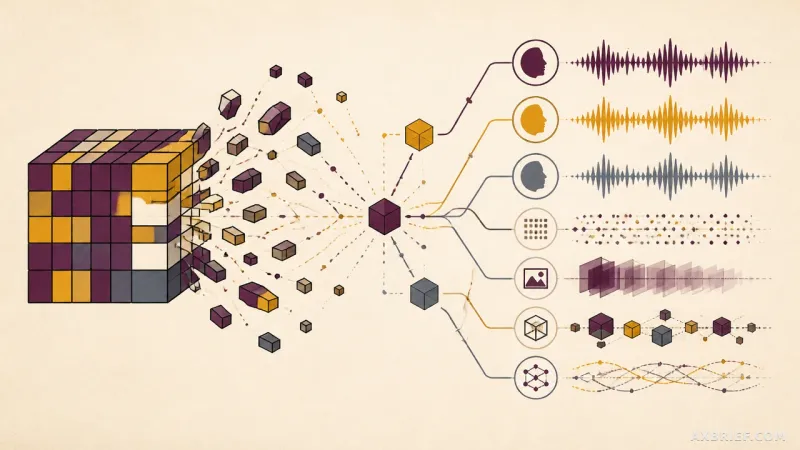
This architecture relies on the integration of three core components: Amazon Quick, which serves as the agent workspace and orchestration layer; fal, a generative media platform offering over 1,000 image, video, and audio models; and the Model Context Protocol (MCP), an open standard that allows AI applications to interface with external tools consistently. In this setup, Amazon Quick acts as the MCP client, while fal hosts the MCP server, exposing its media generation capabilities as standardized tools that the agent can discover and execute on demand.
Connecting Infrastructure via MCP
To bridge the gap between Amazon Quick and the vast library of models available on fal, users must configure the MCP connector. The process begins by generating an API key within the fal dashboard. This key serves as the authentication bridge, allowing the agent to maintain a consistent loop—essential for tasks like character reference sheet management. Once the key is generated, it is entered into the MCP connector settings within the Amazon Quick interface.
Upon inputting the credentials, the system automatically discovers the available fal models and tools. This integration requires no complex coding, allowing the agent to treat fal’s infrastructure as an internal toolkit. To verify the connection, users can initiate a simple image generation command in the Amazon Quick chat. If the system successfully processes the request through the fal MCP server, the environment is ready for complex, multi-stage production tasks, such as generating multi-angle character sheets or detailed storyboard sequences.
Standardizing Production with Reusable Skills
One of the most significant advantages of this architecture is the ability to capture successful workflows as Skills. These are reusable, step-by-step creative instructions that include built-in approval gates. For instance, when producing an eight-panel storyboard, a team can define the style, aspect ratio, and character constraints once. By saving this as a Skill, the team ensures that subsequent projects maintain the same artistic direction and quality standards without needing to reconfigure the agent for every new campaign.
In a traditional production cycle, an eight-panel storyboard might take a week, involving multiple briefings, designer assignments, and several rounds of feedback. By utilizing an agentic loop within Amazon Quick, this process is condensed into a single session. The workflow begins with the agent drafting the story plan, shot list, and character descriptions. Crucially, the agent pauses generation until the human operator approves the character reference sheet—covering details like hair, clothing, and accessories. Only after this quality gate is passed does the agent proceed to generate the panels using the FLUX.1 Kontext model, which ensures visual consistency across the entire sequence.
From Manual Handoffs to Assetized Workflows
By moving from fragmented manual processes to an agentic loop, teams eliminate the context loss that typically occurs during handoffs between planning and visualization. Because the entire session—from the initial prompt to the final approved panel—is captured within the Amazon Quick workspace, the successful execution becomes a permanent asset. This shift transforms the creative process from a series of isolated tasks into a standardized, scalable pipeline.
Once a session is finalized, the user converts the successful interaction into an AI Storybuilding Skill. This Skill acts as a template that can be shared across the organization, ensuring that every team member applies the same quality control standards. By treating the workflow itself as a reusable asset, organizations can effectively scale their creative output while maintaining the precision and consistency required for professional media production.