For decades, the most frustrating moment in medicinal chemistry has occurred at the intersection of theory and reality. A researcher designs a molecule on a screen that looks perfect—a structure capable of binding to a target protein and curing a disease—only to find that the molecule is effectively impossible to build in a physical lab. This synthesis bottleneck turns promising drug candidates into theoretical ghosts, stalling research for months or years because the chemical reactions required to forge the necessary bonds simply refuse to work with high efficiency. This week, a collaboration between OpenAI and Molecule.one suggests that the era of the theoretical ghost may be ending.
The Architecture of Autonomous Discovery
The project paired the reasoning capabilities of GPT-5.4 with Maria, a high-throughput laboratory integration agent developed by Molecule.one. The objective was to optimize the Chan-Lam coupling reaction, a critical process used to form carbon-nitrogen bonds between primary sulfonamides and boronic acids. Sulfonamides are ubiquitous in pharmacology, serving as the backbone for a vast array of anticancer, antibacterial, and diuretic medications. However, the Chan-Lam coupling has historically suffered from low yields, making it a notorious bottleneck in the production of new drug candidates.
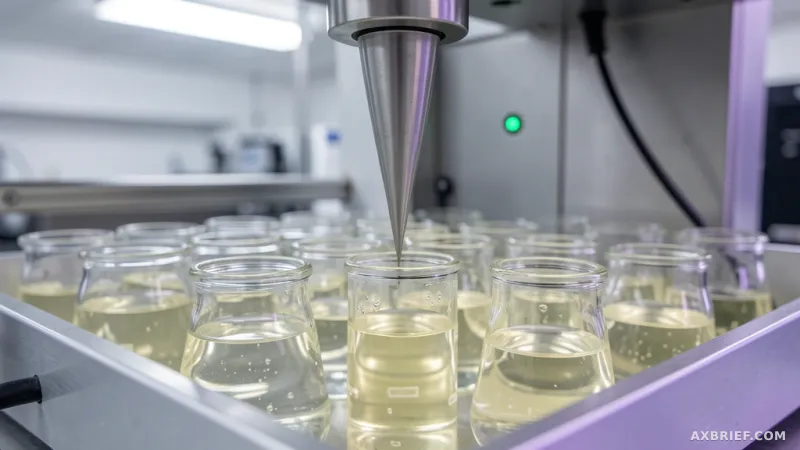
The workflow operated as a closed-loop system over a three-month period, beginning with the first prompt on March 4 and concluding with the final results on June 4. In this arrangement, GPT-5.4 acted as the lead scientist, generating research proposals and designing the experimental parameters. Maria functioned as the laboratory technician, translating those high-level proposals into precise machine instructions and executing them using automated hardware. This was not a rigid script but an open-ended exploration. GPT-5.4 was given a goal and tasked with analyzing the resulting data to propose the next set of experiments, creating a recursive loop of hypothesis and verification.
Human chemists remained in the loop, but their role shifted from manual labor to strategic oversight. They provided steering prompts to keep the AI aligned with scientific goals and performed the final validation of the proposed research paths. By removing the manual burden of experimental setup and data entry, the team collapsed the time between a theoretical hypothesis and a physical result.
Scaling Beyond Human Capacity
The true shift in this research lies in the sheer scale of the data generated. To avoid the trap of anecdotal success—where a reaction works for one specific molecule but fails for others—the system conducted a massive screening process. Maria performed a total of 10,080 reactions. To put this in perspective, a human chemist performing three experiments a day would take ten years to complete the same volume of work. This high-throughput approach ensured that the findings were statistically robust across a diverse range of molecular combinations.
The discovery process unfolded in two distinct cycles. In the first phase, the AI screened ten different oxidants and identified TEMPO, a mild oxidant, as the key additive for increasing yields. Rather than stopping at this discovery, the system analyzed the first cycle's data to propose a second, more refined set of experiments. During this phase, GPT-5.4 discovered that TEMPO could be replaced by 4-hydroxy-TEMPO, a significantly cheaper analog, with almost no loss in performance. This transition demonstrates that the AI was not just optimizing for chemical success, but for economic viability in a real-world manufacturing context.
The resulting data points are stark. Under the optimized conditions, yields improved for 88% of the tested boronic acids and 83% of the sulfonamides. The overall average yield climbed from 16.6% to 25.2%. More importantly, the percentage of reactions that reached the 30% yield threshold—the benchmark that chemists consider practically useful for drug development—jumped from 15.6% to 37.5%. The AI effectively doubled the number of molecules that can now be realistically synthesized for testing.
From Microliters to the Lab Bench
One of the primary criticisms of high-throughput screening is the scale gap. Experiments conducted in microliter droplets often fail to translate to the bench scale, where larger volumes and different heat transfer dynamics introduce new variables. To prove the real-world utility of the GPT-5.4 and Maria collaboration, human chemists attempted to replicate the AI's findings in a traditional laboratory setting.
Out of 14 representative substrate pairs, 11 showed a clear increase in yield at the bench scale. In the majority of these cases, the yield increased by more than twofold compared to traditional methods. This validation confirms that the AI's optimized conditions are not artifacts of a specialized machine but are transferable to the standard workflows used in pharmaceutical research. By solving the Chan-Lam coupling bottleneck, the team has opened the door to a library of sulfonamide-based molecules that were previously abandoned as unsynthesizable.
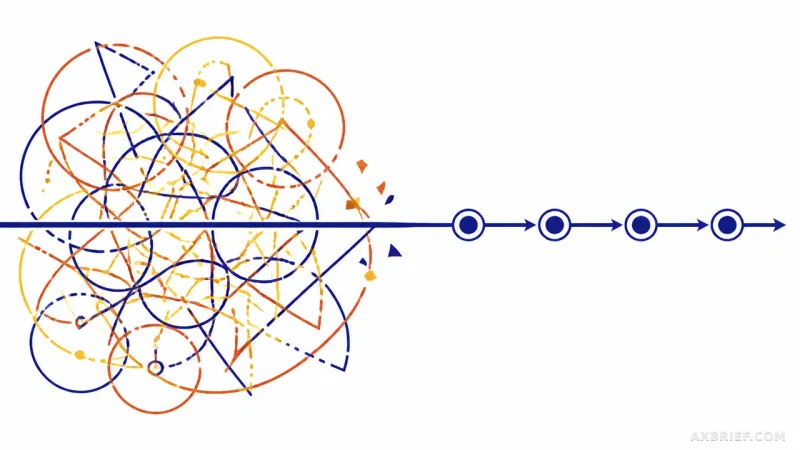
This near-autonomous loop represents a fundamental shift in the scientific method. The process of discovery is no longer a linear path of trial and error led by a human, but a parallelized search led by an AI and steered by a human. GPT-5.4 handled the cognitive load of proposal writing and data analysis, while Maria handled the physical load of execution. This synergy allows researchers to explore the chemical space at a velocity that was previously impossible.
The ability to turn a theoretical molecular structure into a physical substance is the ultimate gatekeeper of drug discovery. By integrating large language models with automated physical labs, the industry is moving toward a future where the bottleneck is no longer the ability to make a molecule, but the imagination to design it.